Canada's Historical Literacy Declines as Greatest Generation Fades Away
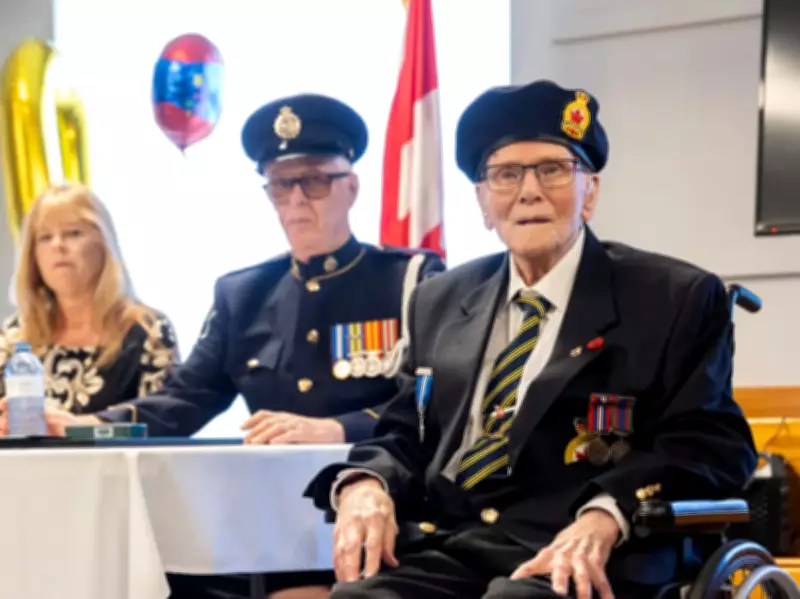
The recent passing of Burdett Sisler, Canada's oldest living person and last surviving Second World War veteran at nearly 111 years old, marks more than just the loss of an individual. It represents the fading away of what has been called "the greatest generation" and highlights a disturbing trend of declining historical literacy across the nation.
A Veteran's Legacy and Historical Amnesia
Sisler, from Fort Erie, Ontario, served as an army telecommunications mechanic during the war, working with then-top-secret radar technology to help shoot down German bombers. Though initially rejected by the Royal Canadian Air Force due to poor vision in one eye, he found another way to contribute significantly to the Allied effort against Nazi Germany.
Veterans Affairs Minister Jill McKnight acknowledged Sisler's passing with a statement that captured the broader significance: "Our country owes a lasting debt to him and to his generation, whose courage and resilience laid the foundation for the peaceful, democratic Canada we are privileged to call home today."

Parliamentary Embarrassment Reveals Deeper Problem
This solemn moment comes just two and a half years after a major parliamentary embarrassment that revealed how widespread historical ignorance has become. In 2023, the House of Commons gave a standing ovation to 98-year-old Yaroslav Hunka of North Bay, Ontario, who was described as "a Canadian hero" for fighting against the Red Army during the Second World War.
The problem, as became clear afterward, was that Hunka had served in an ethnic Ukrainian unit under Nazi command. Parliament had essentially applauded a Nazi collaborator, becoming an international laughingstock in the process. The incident revealed a fundamental lack of understanding about who was fighting whom during the war, with apparently no one in the chamber considering that the Red Army was fighting against Nazi Germany at the time.
Teaching History to an Uninformed Generation
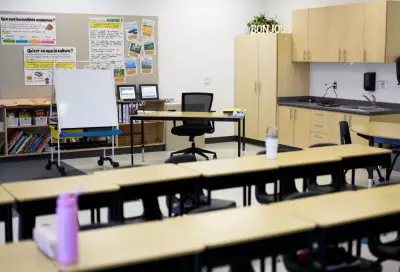
This ignorance about the Second World War is not confined to Parliament. As a college instructor, I've witnessed firsthand how little younger Canadians know about this pivotal period in history. Attempts to use wartime analogies in class often fail because students simply lack the basic knowledge to understand them.
The problem extends beyond just military history. I once referenced Methuselah, the biblical figure said to have lived 969 years, only to discover that none of my students recognized the reference. This revealed not just a gap in religious knowledge but a broader pattern of historical illiteracy.
Documenting the Knowledge Gap
Back in 2015, I conducted video interviews with university students in Toronto that confirmed these observations. With few exceptions, they couldn't identify Franklin D. Roosevelt or Winston Churchill. They had never heard of Josef Mengele or the Final Solution. They couldn't name the Allied powers or explain what happened on D-Day.
Since then, the situation has only deteriorated. Alongside this growing historical ignorance has emerged a troubling trend of historical revisionism, where significant figures from Canada's past are being "cancelled" without proper understanding of their historical context or contributions.
The Cancelling of Historical Figures
The movement to cancel historical figures often stems from this same fundamental lack of understanding about who these individuals were and what they stood for in their historical context. Without proper historical literacy, we risk making simplistic judgments about complex figures from the past, potentially erasing important aspects of our national story.
As Canada says goodbye to its last surviving Second World War veteran, we must confront the reality that we're not just losing living connections to our past—we're failing to pass on the knowledge and understanding that should accompany those connections. The fading of the greatest generation should serve as a wake-up call about the urgent need to improve historical education and literacy across all generations of Canadians.