The English Montreal School Board has allocated more than $2.7 million to challenge Quebec government legislation in court, according to recent disclosures. This substantial expenditure has ignited a fierce debate over the use of public funds and the protection of anglophone rights in the province.
Legal Battles Over Language and Secularism
The EMSB revealed these figures in response to an access-to-information request, detailing the costs of its ongoing court challenges. Specifically, the board has spent $1.65 million fighting Bill 21, the 2019 secularism law that prohibits teachers and certain government workers from wearing religious symbols like the Muslim hijab. An additional $1.12 million has been directed toward contesting Bill 96, the 2022 language legislation that strengthened Quebec's French-language rules and impacted how the EMSB communicates.
Defending Autonomy and Existence
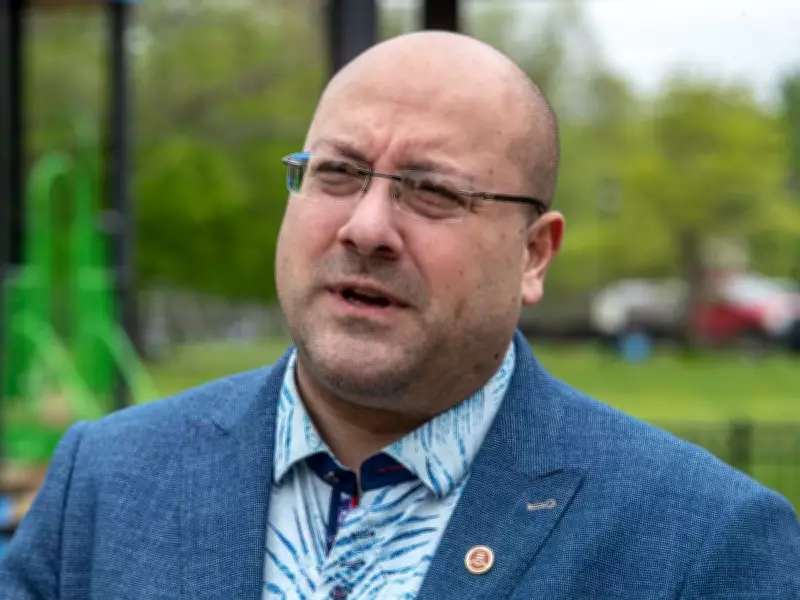
EMSB chair Joe Ortona has staunchly defended these legal expenditures, arguing they are essential for preserving the board's autonomy and existence. "We know it costs money," Ortona stated in a 2024 interview. "Unfortunately, it is an expense that we must incur because the cost of not fighting the government on these bills is far greater. It's about the autonomy of school boards and our very existence as the last English-language institutions in Quebec."

The board's lawsuits invoke Section 23 of the Canadian Charter of Rights and Freedoms, which guarantees the anglophone community's right to manage and control its own schools. The challenge to Bill 21 is set to reach the Supreme Court of Canada this month, while a hearing on the Bill 96 lawsuit is pending.
Government Criticism and Public Debate
Quebec Justice Minister Simon Jolin-Barrette has been openly critical of the EMSB's use of taxpayer money to fight legislation that has been validly enacted and upheld by courts. "There are questions to be asked when Quebecers' public funds are used to fight laws validly adopted in the National Assembly," Jolin-Barrette remarked in 2024.
This tension escalated in February when Ortona appeared before a National Assembly committee studying the CAQ government's proposed Quebec constitution. The proposed legislation would prohibit public bodies from using public funds to challenge laws that protect Quebec's nationhood, constitutional autonomy, or fundamental characteristics. During the committee session, Jolin-Barrette pressed Ortona to disclose the full cost of the legal battles, leading to the updated $2.7 million figure.
Additional Legal Fronts and Financial Strain
The EMSB is engaged in multiple other legal disputes with the Quebec government. In August 2025, it joined eight other English boards in challenging funding restrictions imposed by the Education Ministry for the 2025-26 school year. In December, it sued over the composition of the committee managing school tax revenue on Montreal Island after Quebec removed elected school board representatives.
These legal costs contribute to the board's financial challenges. The EMSB's 2025-26 budget projects a $7.8 million deficit on $459 million in revenue. Ortona attributes this shortfall to the CAQ government's decision to block the board from drawing on accumulated surpluses, a practice that had been permitted for two decades.
Broader Context and Similar Challenges
The EMSB is not alone in its legal battles against CAQ policies. The Quebec English School Boards Association, also headed by Ortona, is separately fighting Bill 40, which would abolish elected boards and replace them with government-controlled service centres. A lower court sided with the EMSB on this challenge, but Quebec has asked the Supreme Court to review the decision. QESBA has launched a public fundraising campaign to cover these legal fees, though it has not provided specific cost figures.
Additionally, Concordia and McGill universities have challenged CAQ policies in court, suing over a tuition overhaul that included a 33-percent increase for out-of-province students. Concordia spent $780,000 on legal fees in this fight, while McGill has declined to disclose its costs.

The EMSB, Quebec's largest English school board with 35,000 students, and the province's nine English boards collectively serve over 100,000 students across youth, adult, and vocational education. These legal battles highlight ongoing tensions between anglophone institutions and Quebec's legislative efforts to promote French language and secularism.