Alberta Launches $143 Million Initiative to Address Classroom Complexity
Alberta has officially rolled out the first phase of its comprehensive plan to tackle classroom size and complexity issues across the province's school system. This significant move comes as newly released data confirms long-standing concerns raised by educators over the past year regarding challenging learning environments.
Substantial Funding for Complex Needs
The provincial government will allocate $143 million to establish 476 specialized "complexity teams" that will be deployed to K-6 schools identified as having the highest complex needs. Each support team will consist of one teacher and two educational assistants working collaboratively to address student challenges.
Education Minister Demetrios Nicolaides emphasized the strategic focus on elementary schools during a recent interview, explaining that early intervention proves more effective and cost-efficient over a student's educational journey. "We know that addressing student needs during those formative years is more effective and also less costly to remediate later on in a student's journey," Nicolaides stated.

Calgary and Edmonton Show Highest Needs
According to the comprehensive data released on Thursday, Calgary and Edmonton schools demonstrate the most pressing needs, with over 1,800 classes in Calgary and more than 1,500 classes in Edmonton classified as high priority for complexity intervention.
"By dispatching and integrating these teams into elementary schools, we can identify challenges at the earliest possible stage," Nicolaides assured, while noting that higher grade levels would be addressed subsequently, confirming they were "on the list" for future phases.
Background and Data Collection
This announcement follows a three-week teachers' strike that concluded in October after the United Conservative Party government passed back-to-work legislation and imposed a contract. The government had previously committed to addressing overcrowded classrooms and complexity issues affecting schools throughout Alberta.
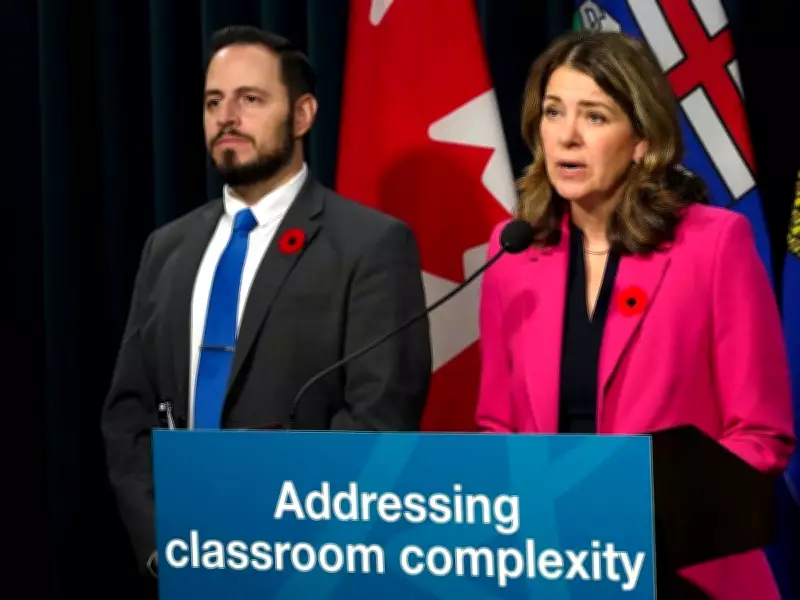
Premier Danielle Smith commented on the widespread nature of classroom complexity, stating, "The numbers tell us that pressure in schools is coming from the combined impacts of these two factors, but rising complexity and behavioral incidents are putting the greatest pressure on classrooms."
The class size and complexity cabinet committee initiated data collection in November, requesting comprehensive classroom information from school boards across the province. Officials reported receiving data from 89,000 classrooms across 1,549 schools, achieving an impressive 96 percent response rate from educational institutions.
Understanding Classroom Complexity
The collected data reveals that fewer than one percent of Alberta classrooms experience no complexity issues, highlighting the pervasive nature of these challenges throughout the education system. Notably, officials emphasized that class size alone does not serve as the most accurate predictor of classroom pressure.
While the provincial class size average stands at 25 students, Nicolaides explained that this seemingly reasonable number becomes significantly more challenging when combined with complexity factors that affect the learning environment. The data excluded classrooms identified as outreach, online, colony, home school, or institutional schools to focus specifically on traditional classroom settings.
This substantial investment represents Alberta's proactive approach to supporting both students and educators by addressing the multifaceted challenges present in today's classrooms, with particular emphasis on early intervention strategies during crucial developmental years.