Quebec's Painful History Mirrors Tumbler Ridge's Grief
In the remote mining community of Tumbler Ridge, British Columbia, a devastating mass shooting has left nine people dead, including the perpetrator, plunging the close-knit town into profound sorrow. Most of the victims were young tweens, their lives cut short in an unimaginable act of violence that has shocked the nation. As the community grapples with this tragedy, the search for answers begins, though it may never provide the closure families seek.
A Familiar Anguish for Quebec
This heartbreaking scenario, though unfolding thousands of kilometers away, resonates deeply with Quebecers, who have endured multiple mass killings in recent decades. While gun violence on such a scale remains relatively rare in Canada compared to the United States, Quebec has unfortunately witnessed a disproportionate number of these horrific events.
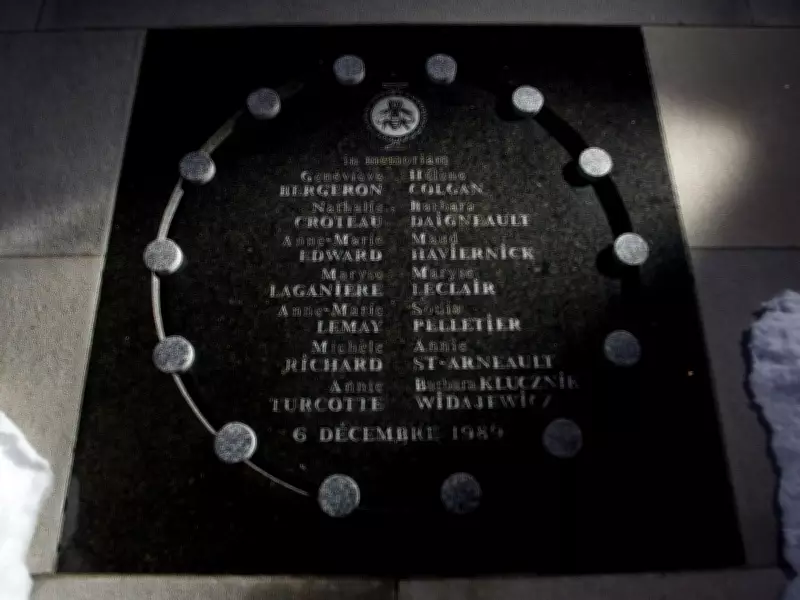
The Montreal Massacre at École Polytechnique in 1989 stands as one of the darkest chapters, where 14 women were murdered by a misogynist gunman. This femicide, which took years to be properly named, forged a template for collective grief and spurred national gun control measures. For many Canadians alive at the time, the memory of that snowy December night remains indelible.

Other Quebec Tragedies That Shaped a Nation
- In January 2017, six men were killed while praying at the Centre culturel Islamique de Québec, forcing a national reckoning with Islamophobia and hatred.
- At Dawson College in 2006, one student, Anastasia De Sousa, lost her life and 20 others were injured in an attack whose motives remain unclear.
- Concordia University saw four professors slain by a troubled colleague in 1992.
These events, along with the 2020 Nova Scotia shooting that surpassed Polytechnique as Canada's deadliest mass killing, have created a painful legacy of violence that Quebec understands all too well.
National Response and Shared Mourning
In the wake of the Tumbler Ridge shooting, political leaders have set aside differences to honor the victims. Quebec Premier François Legault ordered flags at the National Assembly to fly at half-mast, while in Ottawa, the House of Commons observed a moment of silence. Prime Minister Mark Carney, visibly emotional, planned to visit Tumbler Ridge with opposition leaders, demonstrating a rare unified response in today's polarized climate.
Nathalie Provost, a survivor of the Polytechnique shooting and now a federal Liberal member, offered wisdom to those affected, emphasizing the need to "turn toward the living and accompany those who are facing the worst moments of their lives." She noted that such violence "marks a soul for life," whether impacting a small town of 2,400 or an entire nation.
The Human Toll Beyond the Headlines
The tragedy extends beyond the nine fatalities, with at least 25 injured, including 12-year-old Maya Gebala fighting for her life. Families have been shattered, with parents losing children, children losing parents, and a community losing its innocence. As Lance Younge, father of 12-year-old victim Kylie Smith, urged, "These kids were lost before they got to become teenagers. So let's put their pictures on the news and remember them, not this murderer."
While debates may soon emerge about the killer's gender identity, mental health, and access to weapons, the immediate focus remains on mourning and supporting survivors. From Quebec to British Columbia, Canadians are united in grief, reflecting on how these young victims could have been any of our children, and their families any of our neighbors.