Beyond the Social Media Filter: The Complex Reality of Unschooling
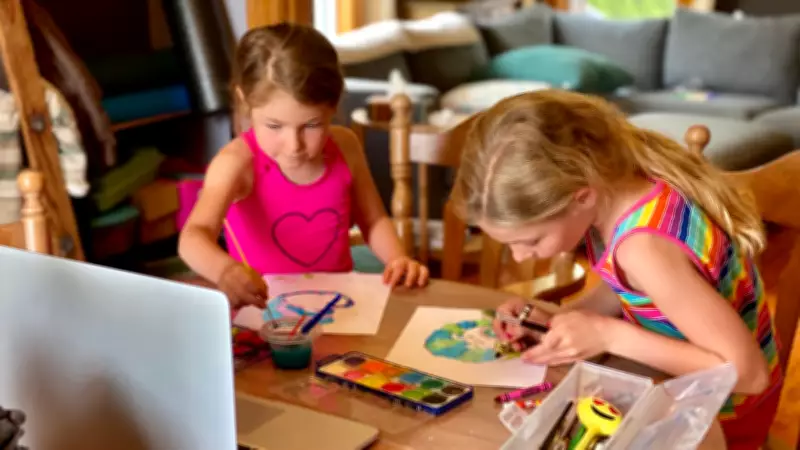
Scroll through popular social media platforms like TikTok or Instagram, and you will likely encounter numerous families enthusiastically documenting their "unschooling" lifestyles. These curated posts often depict children learning through nature walks instead of textbooks, conducting kitchen experiments rather than attending formal science labs, and absorbing knowledge from daily life instead of structured daily lessons. The imagery is frequently idyllic: young kids painting in sunlight, teenagers coding in cozy cafés, and parents narrating how this educational freedom fuels creativity and innovation. "Life is learning," many captions proclaim, serving as the unofficial mantra of the growing unschooling movement.
Philosophy Versus Lived Experience
On paper, the philosophy of unschooling is designed to prioritize authentic learning over standardized testing and traditional grades. However, the lived experiences of unschooling alumni reveal a spectrum of mixed feelings and outcomes. Unschooling, a specific form of homeschooling that entirely removes a formal curriculum, emphasizes child-led, self-directed learning based entirely on a child's own interests and curiosities. This educational approach is gaining renewed and significant attention as more parents increasingly question and critique traditional education systems. Some advocates view it as the purest and most natural form of child-led learning. Conversely, critics and concerned observers worry it may simply be educational neglect disguised as progressive pedagogy.
So, what is it genuinely like to grow up unschooled—and what happens when those children eventually transition into adulthood? The answers are as diverse as the individuals themselves.

Calvin Bagley: A Story of Isolation and Survival
For Calvin Bagley, unschooling was not a conscious choice made by his family for pedagogical reasons. "I grew up in the Utah desert, where my parents pretended to educate us, but in reality, they were just isolating us from the world under the guise of religious protection," he explained. "By the time I was 10 years old, even the pretense of learning had completely disappeared. There were no books, no lessons, no real education—just endless work and pervasive fear."
He described a typical childhood day filled with chores, demanding farm labor, and the constant performance of pretending to study whenever his father came inside. "We hid from the school bus every single morning because we were told school was evil, and I wholeheartedly believed it," Bagley continued. "My parents called it homeschooling, but it was really religious isolation that systematically stripped us of connection, curiosity, and a genuine childhood."
Bagley, now an author of the book "Hiding from the School Bus: Breaking Free from Control, Fear, Isolation, and a Childhood Without Education," stated that the complete lack of formal schooling left him with deep psychological scars—alongside some hard-won resilience. "It's very difficult to say that anything good came out of my no-schooling, but if there's one thing, it's grit," he reflected. "When you have to figure out everything on your own with absolutely no help or encouragement, you either break or you fight desperately to survive."
When he finally gained access to college, the transition was profoundly challenging. "It was incredibly difficult to thrive in such a rigidly structured environment," he admitted. "I had never written an academic paper or taken a formal test before. Every single class felt like a new foreign language I had to learn entirely from scratch." Bagley added, "My peers were strategically building resumes while I was still struggling to build a basic educational foundation. College was the first real classroom I ever sat in, and every class felt like an act of defiance against my past."

Despite these immense hurdles, he credits his unconventional upbringing with instilling a form of practical intelligence. "It didn't prepare me academically in any traditional sense, but it did make me remarkably resourceful. When you grow up having to make things work with nothing, you develop a kind of survival intelligence," Bagley noted. "My no-schooling didn't give me ready-made answers, but it taught me how to find them through sheer determination." When asked if he would choose unschooling again, his response was unequivocal: "Not in the way I experienced it. My version wasn't freedom; it was captivity."
Amanda Schenkenberger: Freedom with a Structured Foundation
For Amanda Schenkenberger, the unschooling experience looked dramatically different and was far more positive. "A typical day meant a little reading, maybe some math, and lots of valuable outside time," she recalled. "I grew up on a working ranch, so there were always necessary chores—feeding animals, scrubbing water barrels, helping out—but there was also plenty of genuine freedom to explore."
Schenkenberger, now a homeschooling mother and educational coach herself, believes the unschooling approach gave her something traditional schooling often fails to provide: deep self-awareness. "Unschooling taught me how I learn best as an individual," she said. "Because I had the freedom to explore at my own pace and follow my natural curiosity, I became a great independent researcher and an effective problem-solver."
Nevertheless, her transition into a formal high school setting was not entirely seamless. "Having been unschooled during my critical middle school years, no one really taught me how to write a structured essay or organize my thoughts clearly on paper. That was a significant skill gap I had to consciously overcome later in my education," she explained. "Even though I went on to write and publish a book, those advanced writing abilities were truly hard-won through personal effort."
Socially and professionally, however, she reported thriving. Her first job at age 16 was working at a local Starbucks. "Growing up on a ranch instilled in me a strong work ethic and a palpable sense of responsibility from a very young age," Schenkenberger stated. "My bosses often complimented my initiative and reliability, traits directly nurtured by my upbringing."
As an adult, she still sees considerable value in the unschooling philosophy—but with important modifications. When asked if she would choose unschooling again, she responded, "Yes, and we are. My husband and I are raising our four boys with a more intentionally structured approach to unschooling. We focus on what I call our 'Core 4': math, language arts, science, and social studies. We give plenty of time for unstructured play, reading, and exploring their individual 'zones of genius,' but we also proactively prioritize writing and communication skills. It's that careful balance—freedom with a solid foundation—that helps our homeschool truly thrive."
Expert Perspectives: Curiosity is Key, But Balance is Crucial
Unschooling finds its historical roots in the educational reform movements of the 1960s and 1970s, popularized by influential educator John Holt. Its guiding belief is that children are naturally and intrinsically driven to learn—if adults do not inadvertently get in their way.
"Unschooling removes formal curriculum altogether, allowing a child's genuine interest and daily life to organically guide the learning process," explained Kirsten Horton, an educator with experience across Montessori, Title I, and independent schools. "While Montessori and traditional homeschooling both share similar elements of allowing the child to follow his or her interests, unschooling is more improvised, intensely student-led, and fundamentally rooted in raw curiosity."
She acknowledged that the model can successfully "spark intrinsic motivation and personal agency" in learners but cautioned that not every child will naturally thrive in such an open-ended environment. "Some children may struggle significantly with the lack of structure, the need for sustained effort, or the self-regulation skills required," Horton warned. "When unschooling is implemented with a strong and mindful balance, it can indeed lead to independent, articulate learners. However, it is critically important for parents to be highly mindful and to keep experiences balanced, so as not to inadvertently leave damaging educational gaps." Her essential takeaway? "Children learn best when curiosity, appropriate structure, and meaningful connection coexist in harmony."
What the Research Shows—And the Significant Gaps That Remain
Curby Alexander, an education researcher and former schoolteacher, defined unschooling as "an approach to education that deliberately does not rely on typical school methods or a standardized curriculum."
"The focus of unschooling is children and their parents living life together in an integrated way, rather than each doing separate things during the day at work and school," he elaborated. "Children and parents focus on having shared experiences; parents and children learn together as they actively pursue their interests and cultivate their natural desire to learn and grow as individuals."
Alexander notes that rigorous academic research on unschooling's long-term effects remains notably limited—but early findings suggest decidedly mixed results. Citing studies by researchers Peter Gray and Gina Riley, he mentioned that "83% of survey respondents attended a post-secondary school.... Half reported distinct advantages relating to their unschooling background: not being worn down by prior schooling, the self-direction they had learned, and their determination to extract as much value as the educational institution had to offer."
He provided a concrete anecdotal example: a family friend who unschooled her children imposed no academic requirements. At age eight, one child could not read and showed no interest in books but loved playing Minecraft. His older brother mentioned online forums where players shared strategies. "According to the father, his son taught himself to read in a matter of weeks to access those forums," Alexander said. Similarly, the older brother learned to read early due to a keen interest in World War II tanks. "Based on these examples, my belief is that unschooled children learn skills when they desire to, not when imposed by an adult," he stated.
However, personally, he expressed skepticism about unschooling's scalability. "As a parent, I am not a fan of this movement," Alexander admitted. "Perhaps unschooling works precisely because it involves such a small number of people... It will always be a good option for some families, but I do not believe it will ever be the best option for everyone."
The Broader Cultural Shift in Education
Cindy Chanin, founder of Rainbow Education Consulting, argued that the rise of unschooling reflects a broader cultural shift—with parents actively seeking more meaning and flexibility in education.
"Unschooling is rooted in the belief that a child's natural curiosity can be a reliable compass—that learning doesn't have to follow a fixed, predetermined map to be deeply meaningful," she said. "Instead of rigidly adhering to a predetermined curriculum, students pursue their interests as they organically emerge, while parents step into the vital role of facilitators and resource curators."
Chanin asserted that when unschooling is "thoughtfully and intentionally supported," it "can nurture a strong sense of intrinsic motivation and self-efficacy." But again, she emphasized that the keyword is "thoughtfully." "The key is how intentionally adults are creating an environment that supports autonomy without letting kids feel completely adrift or unsupported," Chanin explained. "When that delicate balance is successfully struck, unschooling can be incredibly empowering for the learner."
In her professional work with families, Chanin observed that unschooled students often "enter adulthood along beautifully varied and unconventional paths," frequently thriving in creative, entrepreneurial, or innovative fields. "Because they've spent their formative years navigating their own unique learning paths, many are exceptionally comfortable forging unconventional routes and adapting fluidly to new environments," she noted.
Yet she deliberately stops short of idealizing the model. "I wouldn't say I'm squarely 'for' or 'against' unschooling—it really depends on the individual child, the specific family dynamics, and the support system in place," Chanin concluded. "When the educational approach authentically fits the learner, that's precisely when the real magic happens."
Conclusion: Resisting One-Size-Fits-All Answers
Unschooling, much like the diverse children it aims to serve, firmly resists simplistic, one-size-fits-all conclusions. For some individuals and families, it successfully fosters remarkable freedom, creativity, and self-direction. For others, it can leave painful and lasting educational gaps and emotional scars.
What remains clear is that the growing public fascination with unschooling—and the often-glossy, idealized portrayals on social media—reflect a broader societal anxiety about the current state of education itself: concerns over excessive testing, student burnout, and a growing distrust of traditional institutions.
As Calvin Bagley poignantly summarized, the critical difference between healthy educational freedom and harmful neglect often comes down to one fundamental element: genuine care. "When they call for help from the top of a playground slide," he said, "someone comes running. That's the essential difference between control and care."