Alberta's provincial government has publicly stated that its decision to invoke the Constitution's notwithstanding clause to force teachers back to work was primarily driven by financial concerns, including the province's significant deficit and the risk of incurring billions in additional costs through arbitration.
Ministers Point to Massive Financial Risk
In a letter to constituents that circulated online in November, Infrastructure Minister Martin Long explained the rationale. He argued that sending the protracted labour dispute with the Alberta Teachers' Association to arbitration would have been prohibitively expensive. An arbitrator, Long wrote, would likely have "sought a middle ground" between the union's and the government's proposals.
This compromise, according to the minister, could have saddled the province with hundreds of millions, "possibly billions", in extra financial obligations. In a formal statement to Postmedia on Wednesday, December 3, 2025, Long reiterated this position, emphasizing the gravity of the province's fiscal situation.

A Decision Made Amidst Record Deficit
"The decision to support the notwithstanding clause was not made lightly," Long stated. He characterized the teachers' strike, which lasted more than three weeks, as having gone on for "far too long" and claimed there was "no path forward unless we acted."
The minister directly linked the move to the government's budgetary challenges, noting, "the province is projecting an almost $6.5 billion deficit." He contended that protracted arbitration, followed by potential further strikes at local bargaining tables, was not a viable option for the government.
Premier and Education Minister Echo Fiscal Justification
The controversial legislation, passed on October 27, imposed a four-year collective agreement on Alberta teachers. The use of the notwithstanding clause shields this law from legal challenges under the Canadian Charter of Rights and Freedoms.
Premier Danielle Smith had previously set the threshold for such intervention as the strike causing "irreparable harm" to students, a condition she said was met after weeks of job action.
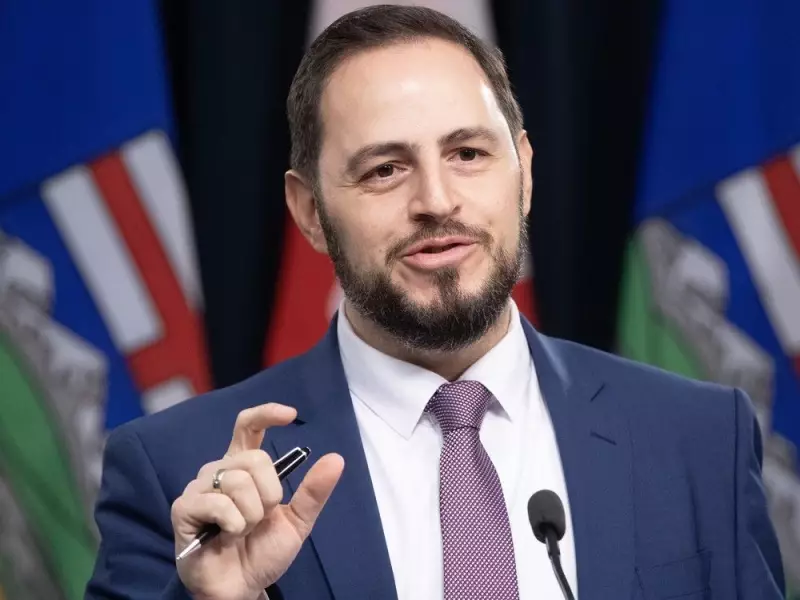
At a separate press conference on Wednesday, Education and Childcare Minister Demetrios Nicolaides aligned himself with Minister Long's explanation. Nicolaides argued that elected officials, not arbitrators, should make final decisions on matters with profound policy and financial implications.
"When we're looking at a circumstance that could impact government finances to the tunes of billions of dollars, and influence and change government policy with respect to classroom management, those are complex considerations," Nicolaides said. He maintained that such far-reaching consequences rightly belong in the domain of the legislative assembly.
The government's public framing of the notwithstanding clause as a fiscal necessity marks a significant point in the ongoing debate over the use of the constitutional provision in labour disputes, highlighting the tension between collective bargaining rights and provincial economic priorities.