Vancouver Community College Launches Affordable Electric Vehicle Conversion Course
In response to rising fuel costs and growing environmental concerns, Vancouver Community College has unveiled a groundbreaking pilot course designed to teach individuals how to transform traditional gasoline-powered cars into fully electric vehicles. The program, titled TRDE 3004: EV Vehicle Conversion, offers comprehensive training for a nominal fee of just one dollar, aiming to make sustainable automotive skills accessible to a wide audience.
Program Structure and Curriculum
The three-week intensive course begins on April 13 and combines online learning with hands-on practical experience. During the first week, participants engage in a 45-hour online component covering essential theoretical knowledge. This is followed by two weeks of in-person training totaling 80 hours, where students apply their skills in a workshop setting. The curriculum includes tool usage, basic electrical theory, 3D scanning, and computer-aided design (CAD) techniques.
Brett Griffiths, Dean of the School of Trades, Technology and Design at VCC, highlighted the timely nature of the program. "While we cannot control external factors like geopolitical events affecting gas prices, the timing aligns perfectly with current economic pressures," Griffiths noted. "Many people are seeking ways to reduce expenses, and this course provides a potential long-term solution for automotive savings."

Origins and Development
The initiative originated from the college's participation in the annual Everything Electric show at the Vancouver Convention Centre. Faculty members frequently received inquiries about creating a conversion course, prompting VCC to seek funding from the B.C. Post-Secondary Education and Future Skills Ministry. This support enabled the development of a microcredential program focused on electric vehicle technology.
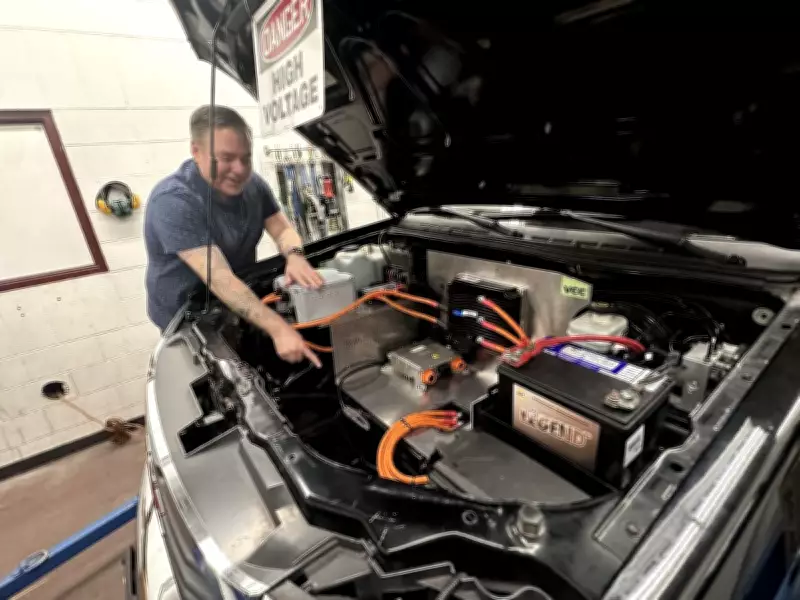
To demonstrate the course's practical applications, VCC showcased a live conversion at last year's event. Students transformed a 2004 GMC Canyon pickup truck into an electric vehicle over three days, using components from Vancouver Island-based company CanEV. The project involved installing a motor, controller, and battery packs, with students handling the wiring and configuration independently.
Practical Outcomes and Considerations
The converted GMC Canyon emerged as a fully electric pickup with a manual transmission, combining modern efficiency with traditional driving engagement. Griffiths emphasized the achievement: "Watching the team complete the conversion live at the show was incredible. They worked tirelessly, and driving the truck out afterward was a testament to their skills."
While the demonstration project cost approximately $30,000 for parts, the course also teaches methods for repurposing components from existing electric vehicles, potentially reducing expenses. The program is open to all interested individuals, though those with mechanical aptitude may find it particularly rewarding.
Broader Implications and Future Goals
This pilot course serves as an evaluation tool for both VCC and government stakeholders, with participant feedback shaping future curriculum developments. By offering the course for a symbolic dollar, the college aims to assess demand and refine content to meet industry and environmental needs.
As automotive technology evolves, programs like TRDE 3004 represent a proactive step toward sustainable transportation education. They empower individuals with practical skills that align with global shifts toward green energy and reduced carbon emissions.