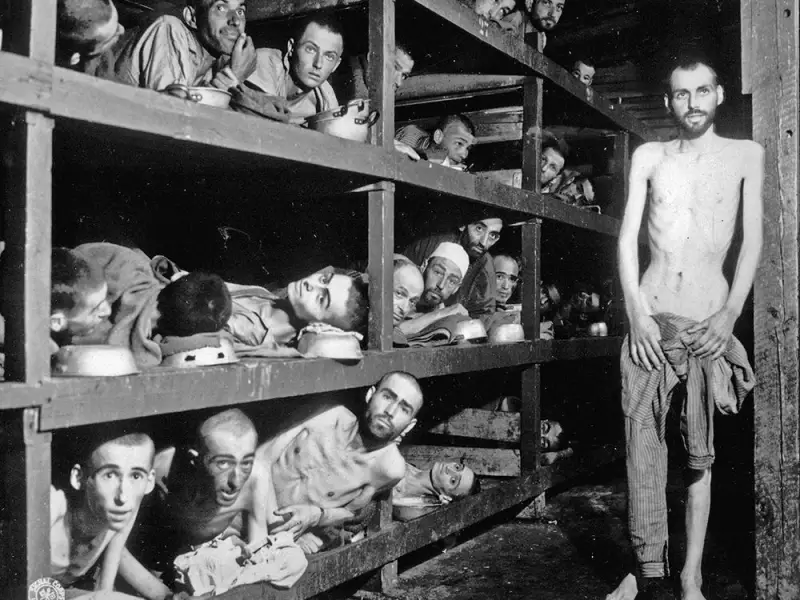
Holocaust Remembrance Day Confronts Distortion Through Colonial Frameworks
Today marks International Holocaust Remembrance Day, a solemn occasion dedicated to honoring the victims and survivors of the Holocaust while commemorating the 1945 liberation of Auschwitz-Birkenau. Eight decades after these horrific events, the challenge of preserving their lessons grows increasingly complex. The primary threat today extends beyond outright denial to more subtle forms of distortion and revisionism that seek to minimize or reframe the systematic murder of six million Jews.
Recent surveys reveal alarming trends among young people in North America, with significant numbers believing the Holocaust has been exaggerated. This reflects not disbelief in the event's occurrence, but rather a gradual erosion of factual understanding through various reinterpretations.
The Colonial Lens: A Problematic Reframing
One particularly consequential form of historical revision emerges in academic and educational settings where the Holocaust is increasingly framed through the lens of imperialism and colonialism. In such interpretations, Jewish victims and others are presented as part of an undifferentiated mass, with their suffering attributed less to the Nazis' deliberate "final solution" than to broader patterns of European power and domination.

This perspective portrays Nazi perpetrators as merely another authoritarian or colonial regime, casting Nazism as another chapter in the continuum of imperial violence. Regrettably, this approach downplays the unique, ideologically driven obsession with Jews that fundamentally defined Nazi policy and practice.
Questionable Historical Continuities
Unfounded assertions of clear historical continuity between European colonialism and the Holocaust have created significant confusion. Some Holocaust scholars suggest an academic consensus has emerged since the 1990s portraying Germany's 1904 genocide of the Herero and Nama people in German South West Africa (today's Namibia) as an ideological precursor or blueprint for the Holocaust.
Others trace Holocaust origins to the 1915 Armenian genocide by the Ottoman Empire, or to colonialist population policies beginning with early 20th-century Balkan Wars or Soviet Russia's totalitarian expansionist policies. However, this manufactured consensus rests on exceedingly shaky historical ground and ultimately disserves the need to advance understanding of either the Holocaust or other genocides.
Obscuring Rather Than Clarifying
Reducing Nazism to an offshoot of colonialism obscures rather than uncovers its origins, replacing careful historical analysis with trendy theorizing that distracts from the ideologically driven annihilation of Jews and other targeted groups. Worse still, scholars who challenge this supposed consensus are routinely accused of bad faith.
Revisionist critics portray those insisting on the Holocaust's historical specificity as purposely diminishing the significance of other genocides. This charge is grossly unfair. Recognizing the uniqueness of the Holocaust serves as a prerequisite for serious historical inquiry. When all atrocities are collapsed into a single undifferentiated category, we frequently lose the ability to understand how and why they occurred—and with it, the very lessons meant to be conveyed.
The Warning of Elie Wiesel
Holocaust survivor and Nobel laureate Elie Wiesel repeatedly warned against precisely such historical revision and the distortion it creates. For Wiesel, the Holocaust represented not merely one genocide among others, nor simply another chapter in humanity's long record of cruelty. Rather, it constituted a singular event rooted in a uniquely European legacy of antisemitism, culminating in the systematic, industrialized attempt to murder Jews.
As we commemorate this solemn day, the preservation of historical accuracy remains paramount. Understanding the Holocaust's specific ideological foundations—rather than subsuming it under broader historical categories—proves essential for honoring victims, educating future generations, and preventing similar atrocities.