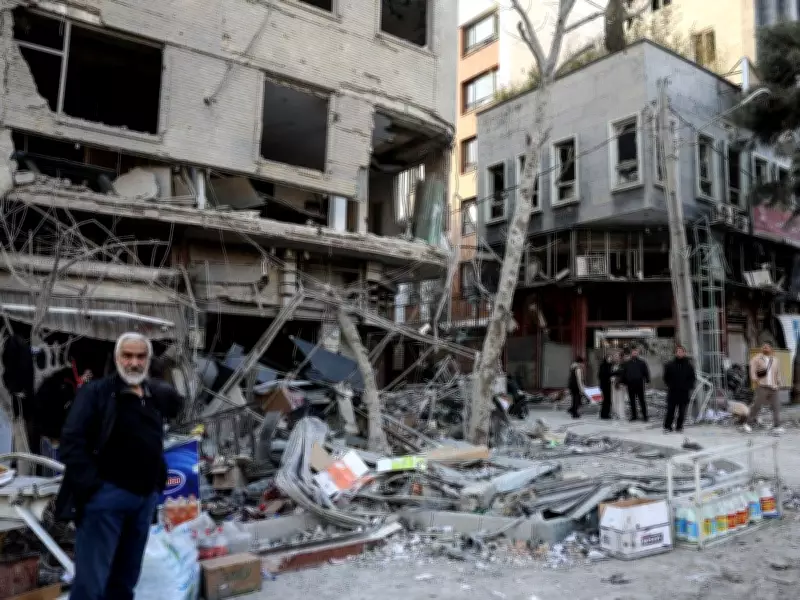
U.S. Losing Global Political Credibility Amid Iran War, Says University of Alberta Expert
The United States' recent military strikes against Iran represent a critical moment where American military power is being deployed even as its political influence on the world stage diminishes, according to a prominent Alberta political science professor. International affairs expert Andy Knight, a University of Alberta professor of international relations and former Fulbright distinguished chair at Yale University, argues that this conflict exposes deeper issues in American global leadership.
Declining American Political Influence
Professor Knight recently returned to Edmonton from meetings with Caribbean national leaders where he consistently heard the same troubling message: the political respect once commanded by the United States is rapidly eroding. "I think this is exactly where we are today," Knight explained. "The U.S. is challenging the United Nations system of world order, the ideas about rules and regulations that we take for granted. And, also, the material strength of the United States is waning at the time that it is trying to push its weight around."
Knight emphasized that the Iran conflict must be understood within the broader context of eroding U.S. hegemony and the fragmentation of multilateral institutions like the UN system. "This crisis is not an isolated episode," he noted. "We have to look at it in the context of the erosion of U.S. hegemony, but also the inability to deal with these kinds of crises in the Middle East over time."

Trump's Military Actions and Their Consequences
The professor pointed to the pattern of military engagement under the current administration. "Across the globe, there'll be seven wars that have been started basically by Donald Trump, the guy who wanted to be a peace president," Knight observed. "But he has actually bombed seven different countries in the short time that he's been in office, the second time around."
Despite the military actions, Knight questioned their effectiveness. "The United States and Israel have not really been successful in getting rid of the regime so far," he said. "The decapitation of the regime, getting rid of the Ayatollah, does not mean that the regime itself is going to go away. They have succession plans. You'll see that they're going to have to deal with an Iran that's sort of injured."
Impact on Alberta's Energy Sector
Turning to domestic implications, Knight outlined both short-term benefits and long-term challenges for Alberta. "For Alberta, short-term, you'll probably see windfalls in terms of higher global oil prices, perhaps even stronger provincial royalties," he acknowledged.
However, the professor warned of significant long-term consequences:
- Energy market unpredictability creating instability for Alberta's oil industry
- Acceleration of global diversification away from oil as nations seek energy security
- Faster investments in renewable energy strategies worldwide
"I think we should see more of that happening as we realize that we can't depend on the oil from the Middle East as much as we have in the past," Knight explained. "Long-term effects would include things like energy market unpredictability, the acceleration of global diversification away from oil, and faster investments in renewable and energy security strategies."
Broader Implications for Global Order
The University of Alberta expert concluded that the Iran conflict represents more than just another Middle Eastern crisis. It symbolizes a fundamental shift in how the United States engages with the world—increasingly through military means as its diplomatic and political influence wanes. This trend, Knight suggests, will have ripple effects far beyond the immediate conflict zone, affecting everything from global energy markets to international institutions designed to maintain peace and stability.
As nations worldwide observe American actions in Iran, Knight's analysis suggests they're seeing not just military power in action, but political credibility in decline—a development that could reshape international relations for years to come while forcing energy-producing regions like Alberta to confront difficult transitions ahead.