Manitoba Research Illuminates Decades-Long Supernova Mystery
A significant scientific breakthrough has emerged from Manitoba, where researchers have made pivotal contributions to unraveling a cosmic enigma that has perplexed astronomers for over thirty years. The focus of this discovery is the Vela Junior supernova, a stellar explosion whose origins and characteristics have long been shrouded in uncertainty.
Decades of Cosmic Speculation
For more than three decades, the scientific community has grappled with the mysteries surrounding the Vela Junior supernova. Located in the southern constellation of Vela, this celestial event has been a subject of intense study and debate. Initial observations and data presented numerous contradictions, making it challenging for astronomers to accurately determine its age, distance, and the nature of the progenitor star that led to the explosion.
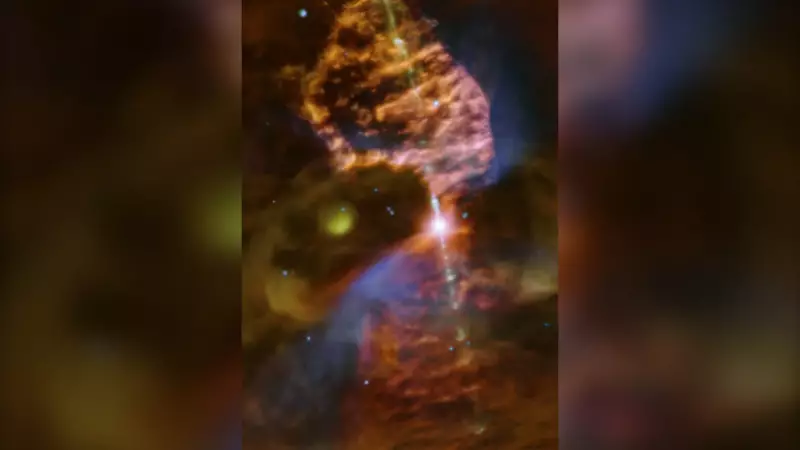
The supernova remnant, a vast cloud of expanding gas and dust, has been imaged extensively, including notable captures by the European Southern Observatory. However, interpreting these images to piece together the supernova's history proved to be a formidable task, with various models offering conflicting explanations.

Manitoba's Pivotal Contribution
Researchers based in Manitoba have now played a crucial role in shedding light on this astronomical puzzle. Through advanced data analysis and innovative observational techniques, the team has provided new evidence that helps clarify the supernova's properties. Their work involves meticulous examination of light spectra, remnant dynamics, and comparative studies with other known supernovae.
This research not only refines our understanding of Vela Junior but also enhances broader knowledge of stellar life cycles and explosive cosmic events. The findings suggest revisions to previous estimates regarding the supernova's distance from Earth and the timeline of its explosion, offering a more coherent narrative of its evolution.
Implications for Astrophysics
The resolution of this long-standing mystery has significant implications for the field of astrophysics. Supernovae are critical to cosmic ecology, as they distribute heavy elements essential for planet formation and life. By accurately characterizing events like Vela Junior, scientists can improve models of galactic chemical evolution and stellar behavior.
Moreover, this breakthrough underscores the importance of sustained astronomical research and international collaboration. The Manitoba team's efforts, combined with data from global observatories, demonstrate how persistent inquiry can overcome even the most stubborn scientific challenges.
As the research community continues to analyze these findings, the insights gained from Vela Junior are expected to inform future studies of similar supernova remnants, potentially unlocking further secrets of the universe's dynamic processes.