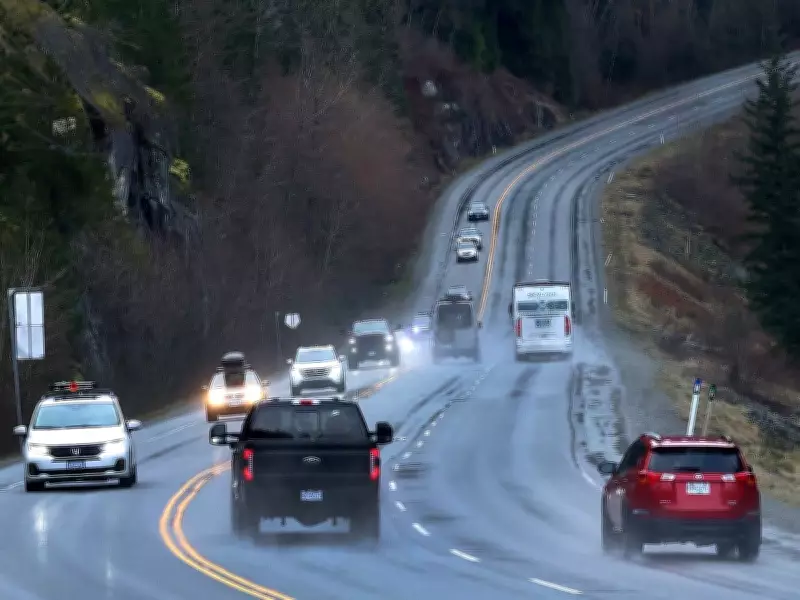
Urgent Calls for Median Barriers on BC's Sea to Sky Highway After Recent Crash
A recent head-on collision that shut down the Sea to Sky Highway for seven hours has reignited urgent demands for enhanced safety measures along this critical British Columbia corridor. The crash, which occurred near Daisy Lake Road north of Squamish, involved a vehicle crossing the center line and colliding with oncoming traffic, highlighting the persistent dangers on this busy route.
Family Tragedy Sparks Renewed Advocacy
Ronnie Tessler's son and grandson were in the vehicle struck in last Sunday's incident. Her grandson has since been released from the hospital, but her son underwent an extensive eleven-hour surgery for multiple fractures. "Fortunately for both, there were no head or internal injuries, but the repercussions from the surgery and the accident will be felt for a long time," Tessler stated. She emphasized that while the highway improvements before the 2010 Winter Olympics were significant, they did not go far enough, given the ongoing frequency of devastating crashes.
Historical Context and Safety Gaps
The Sea to Sky Highway, also known as Highway 99, serves as the primary connection between Vancouver and Whistler, winding through narrow terrain past oceans, rocky outcrops, and communities. Despite upgrades for the 2010 Games, vast stretches lack barriers dividing opposing traffic. In 2017, a 1.4-kilometre section near Lions Bay received medians at a cost of $800,000, which the province claimed would improve safety by preventing head-on collisions. However, this remains an isolated measure.

Rising Accident Statistics
ICBC data reveals a troubling trend: accidents on the Vancouver to Whistler stretch increased from 156 in 2021 to 167 in 2024. Approximately half of these collisions each year resulted in injuries or fatalities, underscoring the urgent need for comprehensive safety interventions.
Community Advocacy and Proposed Solutions
Matthew Paugh, a Squamish resident and highway-safety advocate, argues that installing medians along the entire route would be a fast and low-cost solution to reduce head-on collisions caused by factors like speed or adverse weather. "It's boggled my mind for the 19 years I've lived out here that it doesn't have that barrier just to keep head-on collisions from happening," said Paugh, who manages a local transportation company and administers the Sea to Sky Road Conditions Facebook site.
In 2023, Paugh launched a petition, now with 4,700 signatures, calling for additional safety measures, including improved speed enforcement and better communication about road closures. This initiative was prompted by a serious collision near Britannia Beach that year, which not only affected victims but also stranded motorists for hours.
Broader Implications and Future Steps
The growing chorus for median dividers reflects broader concerns about road safety in British Columbia. As traffic volumes increase and accidents persist, advocates stress that proactive measures are essential to prevent future tragedies. The call for action is driven by a combination of personal stories, statistical evidence, and community mobilization, aiming to transform the Sea to Sky Highway into a safer corridor for all travelers.