Trump Threatens to Block Gordie Howe Bridge Opening in New Canada-U.S. Dispute
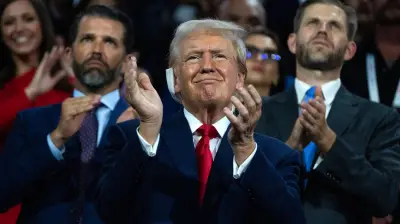
Former U.S. President Donald Trump has ignited a fresh international controversy by threatening to block the opening of the new Gordie Howe International Bridge connecting Detroit, Michigan and Windsor, Ontario. In a social media post on Monday, Trump declared he would initiate immediate negotiations with Canada, demanding full compensation for the United States and ownership of at least half of the bridge asset before allowing it to open to traffic.
Bridge Financing and Construction Details
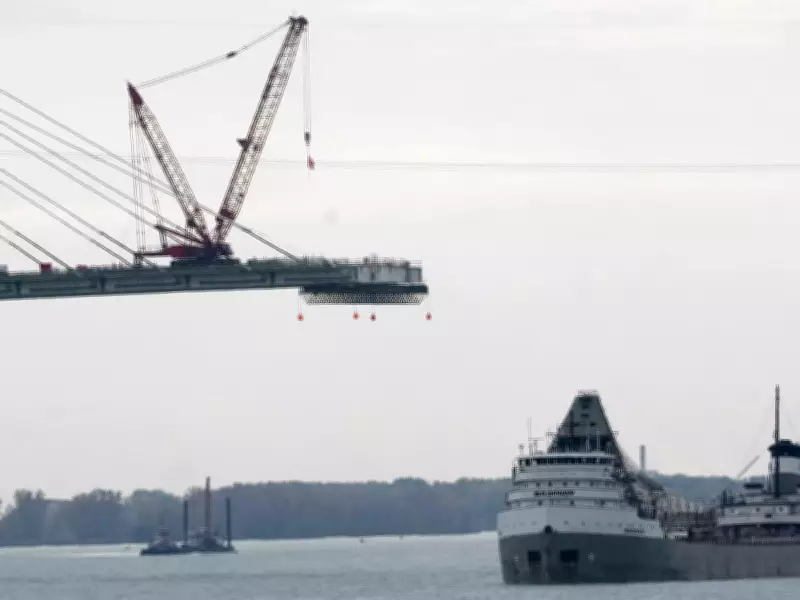
The six-lane Gordie Howe International Bridge represents a monumental infrastructure project with significant implications for cross-border trade and transportation. Notably, the bridge has been fully financed by the Canadian government at an estimated cost of US$6.4 billion, with those costs to be repaid over time through toll collections. The bridge is named after the legendary Canadian hockey player who led the Detroit Red Wings, symbolizing the deep cultural and economic ties between the two nations.
According to the U.S. Department of Transportation, this bridge is poised to become the largest Canadian port on the U.S.-Canada border upon completion. The project has been constructed by union workers from both countries and is expected to operate under a joint ownership agreement between Michigan and Canada once formal testing and approval processes are finalized.

Political Reactions and Historical Context
Michigan Governor Gretchen Whitmer's office responded swiftly to Trump's threats, with press secretary Stacey LaRouche emphasizing that "the bridge was paid for by Canada, built by union workers from both countries and will be operated under a joint ownership agreement between Michigan and Canada." LaRouche characterized the project as "a tremendous example of bipartisan and international cooperation" and asserted that "it's going to open one way or another."
This is not the first time the bridge project has become entangled in Oval Office politics. During Trump's first presidential term, the family that owns the nearby Ambassador Bridge lobbied extensively to rescind a waiver granted by President Barack Obama in 2012. That waiver exempted the new bridge from requirements to use only U.S. steel, recognizing that Canada was financing the entire project.
Broader Implications for Canada-U.S. Relations
Trump's latest comments represent his most recent broadside against Canada, one of America's largest trading partners and the single biggest purchaser of U.S. exports globally. The former president has recently:
- Threatened to impose 100% tariffs on Canadian goods if the country proceeded with a trade deal with China
- Expressed annoyance at Prime Minister Mark Carney's critique of U.S. foreign and economic policies at Davos
- Threatened to impose 50% tariffs on aircraft from Canada and decertify new planes manufactured there
Candace Laing, chief executive of the Canadian Chamber of Commerce, referenced the Trump administration's 2017 joint statement that endorsed the bridge as a priority project, calling it "a vital economic link between our two countries." The governments of Canada, the bridge authority, and the Ontario premier's office have not yet responded to requests for comment regarding Trump's latest threats.
The timing of these comments coincides with recent trade developments between Canada and China. A January agreement between Prime Minister Carney and Chinese President Xi Jinping lowered tariffs, allowing increased Canadian food sales to China in exchange for granting China a quota of electric vehicles that can be sold in Canada. Trump has characterized this arrangement as a threat, suggesting it could give China undue influence over Canada.
As this international infrastructure dispute unfolds, the future of the Gordie Howe International Bridge remains uncertain despite its imminent completion. The situation highlights the complex interplay between infrastructure development, international diplomacy, and domestic politics that continues to shape Canada-U.S. relations.