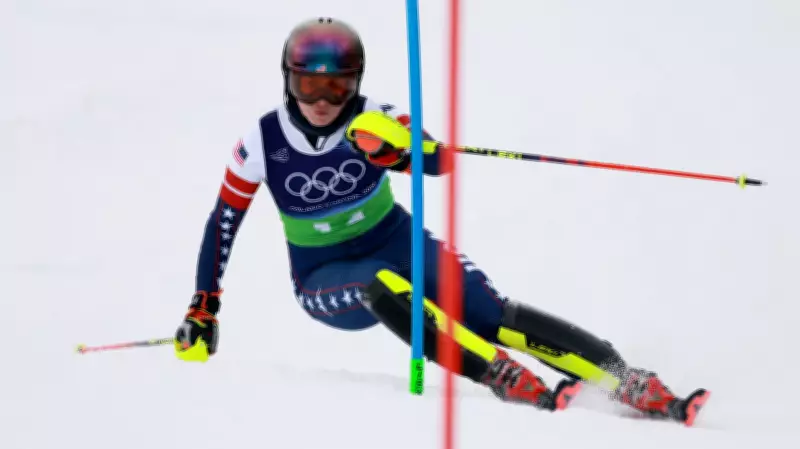
Shiffrin's Olympic Frustration Continues in Team Combined Event
American skiing superstar Mikaela Shiffrin experienced another Olympic disappointment on Tuesday, failing to secure a medal alongside teammate Breezy Johnson in the women's team combined Alpine event at the Milan Cortina Winter Games. This result extends what has become a challenging Olympic chapter for the decorated skier, who has faced heightened expectations and intense scrutiny following her previous Games performances.
Podium Results and Team Dynamics
The gold medal went to Austria's pairing of Ariane Raedler and Katharina Huber, while Germany's Kira Weidle-Winkelmann and Emma Aicher captured silver. The bronze medal was claimed by American skiers Jacqueline Wiles and Paula Moltzan, leaving Shiffrin and Johnson off the podium entirely.
Observers noted that Shiffrin, competing in her fourth Olympic Games at age 30, appeared to ski with what one NBC commentator described as "measured" effort and visible "tension" during her slalom run. The typically fluid and dominant skier seemed unable to find her characteristic rhythm during the crucial team event.

Heightened Expectations and Previous Success
The pressure was particularly intense for the American duo, as Johnson had just won gold in the individual downhill event on Sunday, pacing the pair into first place during the team downhill portion earlier in the day. Adding to expectations, Shiffrin and Johnson had previously won the team combined event at last year's world championships, creating anticipation for a potential repeat performance at the Olympic level.
Despite Johnson's encouraging words to Shiffrin after their run, congratulating her on "great work," the result offered little consolation for the accomplished skier. The dramatic circumstances were further amplified by Shiffrin having to ski last in the rotation due to Johnson's first-place finish in the morning session.
Olympic History and Psychological Impact
Shiffrin's current Olympic struggles echo her challenging experience at the 2022 Beijing Games, where she failed to finish three events and did not medal in any of the six competitions she entered. At that time, she expressed how the setbacks made her "second-guess the last 15 years, everything I thought I knew about my own skiing and slalom and racing mentally."
This psychological dimension adds complexity to Shiffrin's Olympic journey, particularly given her unparalleled credentials in the sport. With a record 108 World Cup Alpine victories and previous Olympic gold medals in slalom (2014) and giant slalom (2018), Shiffrin's recent Olympic performances have become a focal point for both supporters and critics alike.
The Milan Cortina Games represent Shiffrin's fourth Olympic appearance, and while her World Cup dominance remains unquestioned, translating that success to the Olympic stage has proven increasingly challenging. As the competition continues, all eyes will remain on whether the American skiing icon can overcome these recent disappointments and add to her Olympic legacy.