Toronto Councillors Unaware of Driverless Vehicle Rules Until After Pilot Began
Toronto city councillors were not provided with the detailed rules governing an automated vehicle pilot project until after the driverless machines had already begun operating on city streets, according to documents obtained by the Toronto Sun. The revelation has sparked significant concerns about transparency and municipal oversight in the rapidly evolving field of autonomous transportation.
Provincial Oversight and Municipal Exclusion
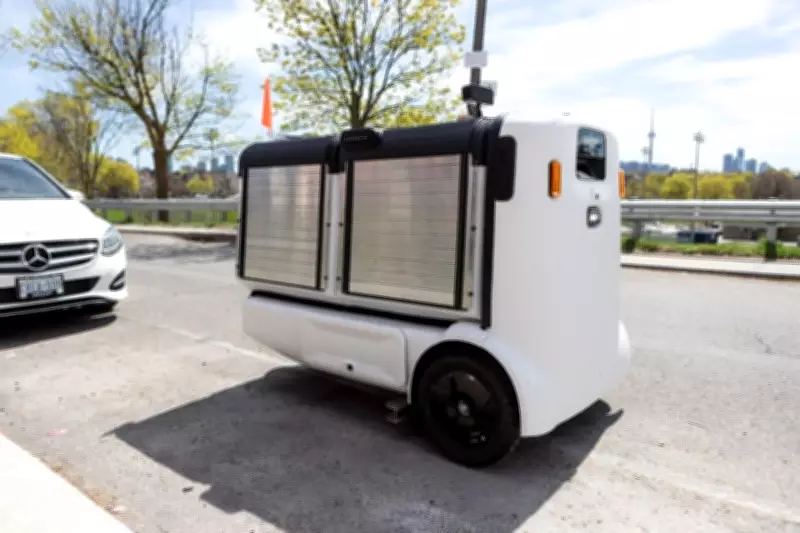
Magna International, a major auto manufacturer, conducted a four-month pilot project in central Toronto last year, testing its automated vehicles under provincial jurisdiction. However, emails between City Hall and the Ontario Ministry of Transportation, released through a freedom-of-information request, show that city councillors were kept unaware of the specific conditions of approval until well after the pilot had commenced.
On May 8, CityNews reported that councillors including Dianne Saxe and Gord Perks expressed frustration that they had not been informed of the terms of Magna's automated vehicle pilot. The following day, Ashley Curtis, deputy general manager of Toronto's transportation services division, requested in an email that the ministry allow councillors to view the approval letter.

Delayed Disclosure and Confidentiality Concerns
It was not until May 27 that Felix Fung, an assistant deputy minister with the ministry, responded to the request. While stating that the ministry had "no concerns" about councillors seeing the approval letter or another correspondence sent that month, Fung explicitly requested that both documents "be treated as confidential."
This delayed disclosure occurred after the pilot had already begun on May 26, according to City Hall, which confirmed the project ran through September 24. The ministry's approval letter, bearing Fung's signature, outlined general conditions but lacked specific language regarding privacy protections for the camera-equipped vehicles, stating only that data must adhere to relevant privacy laws.
Safety Protocols and Ongoing Concerns
The conditions of approval included a speed restriction of 32 km/h and a requirement that the automated vehicles be followed by a human supervisor in a "chase vehicle." Additional restrictions prohibited the transportation of "dangerous goods" and mandated regular safety reports and testing updates to the ministry.
Despite these measures, safety concerns persisted. In a May 26 email, Jerome Brideau, a team lead with the ministry, informed Jennifer Niece of Toronto's transportation services that Magna had agreed to additional restrictions including limiting left turns, avoiding operation in snow conditions, and displaying QR codes on vehicles providing project information and privacy notices.
However, the ministry refused to implement more stringent measures requested by the city, declining to block off a busy stretch of Bloor Street or ban afternoon rush-hour travel on specified routes, citing challenges for delivery services and data collection.
Legal Ambiguities and First Responder Preparedness
Internal communications reveal that Toronto Police expressed their own safety concerns regarding the pilot project. Niece noted in an email that Magna's first responder action plan contained substantial language indicating details would be "determined in consultation with the city or local police," and expressed uncertainty about who would be charged if an automated vehicle was at fault in a collision.
Brideau responded that the Ministry of Transportation could not predict likely outcomes or suitable charges, suggesting that "owner-based offences are likely to apply to driverless testing, but driver charges are not likely to be laid where there is no driver."
Anticipated Controversy and Official Responses
City officials had anticipated controversy surrounding the autonomous vehicles. In a March 2025 email to ministry representatives, Niece predicted "a lot of attention" due to safety concerns and "the slow movement of these AVs relative to the scrutiny the city has been under regarding congestion" and traffic delays.

When questioned about the timeline of events and adequacy of communication with city councillors, the Ministry of Transportation provided a brief statement through director of media relations Dakota Brasier, asserting that the ministry "works closely with municipalities to ensure local feedback is considered throughout the process, as was the case with City of Toronto officials prior to granting approval to Magna International."
Magna International, in a statement from spokesman Dave Niemiec, described the Toronto pilot as "a valuable test bed for autonomous delivery technologies" that yielded "insights into safe low-speed navigation, real-time supervision and urban delivery logistics," expressing appreciation for government collaboration throughout the project.