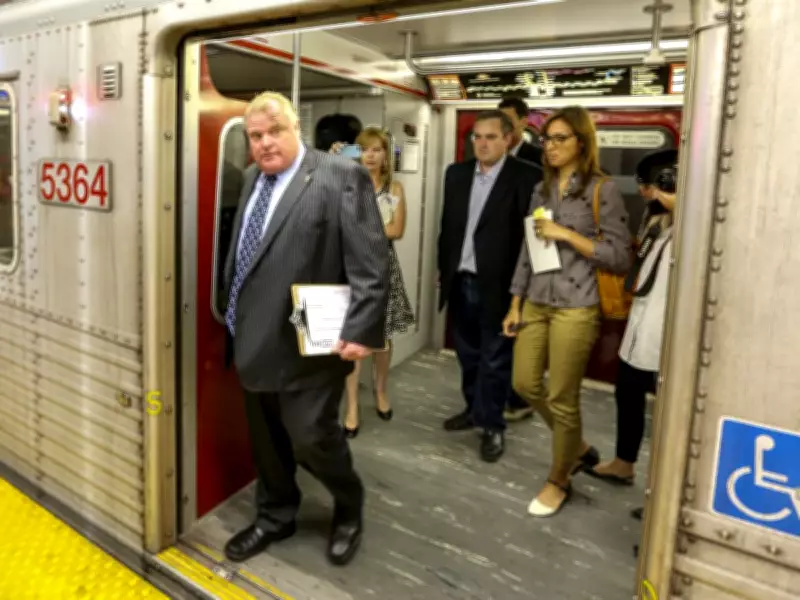
Brad Bradford: Rob Ford Was Right — Toronto Needs Underground Transit
The city of Toronto must build the right rapid transit infrastructure if it is serious about reducing congestion and increasing ridership. This call to action comes from Brad Bradford, who emphasizes that the time for decisive planning is now.
Historical Ambition Versus Modern Challenges
More than a century ago, Toronto demonstrated remarkable foresight when constructing the Prince Edward Viaduct. A lower deck was included to accommodate a future subway line, even though construction would not begin for decades. Unfortunately, that level of ambition is scarce in today's transit discussions.
With the Eglinton Crosstown LRT nearing completion after 15 years of construction and significant cost overruns, Toronto stands at a critical crossroads. The city is mired in endless debates about vehicle types and blame-shifting, rather than focusing on building future-proof transit that can move people efficiently at scale and speed.

Rob Ford's Enduring Legacy
Former mayor Rob Ford was correct in his assertion that Toronto's transit should be underground. As the city plans for the next generation of transit expansion, it is essential to learn from past mistakes and prioritize fully separated corridors that will meet the needs of future residents.
When Ford championed subway expansion over a decade ago, he tapped into a frustration familiar to many commuters: streetcars that are often slower than walking, exacerbate gridlock, and cannot keep pace with the city's growth. Ford understood that Toronto's future requires reliable, high-capacity rapid transit that reserves limited vehicle lanes for cars.
The Case for Subways
Subways offer reliable travel times and attract high ridership, which is why cities with successful systems like London, Montreal, and Tokyo see more people choosing transit and experiencing greater urban productivity. In contrast, recent transit expansions in Toronto have left much to be desired.
The newly opened Finch West LRT is slower than the buses it replaced and has struggled with performance, recording 350 delays in December alone. The Eglinton Crosstown risks becoming a cautionary tale, as its eastern and western segments will contend with cross-streets and red lights that have already slowed down the Finch line.
Current Projects and Future Directions
Credit is due to the provincial government for projects like the Ontario Line, Scarborough Subway, and Eglinton West LRT extension, which will all be fully separated from traffic. However, this approach must be extended to the next generation of projects before it is too late.
The Waterfront East and Eglinton East LRTs, currently in the design phase, cannot simply be grand plans for glorified streetcars that get stuck in traffic. They need to be ambitious, with clear and realistic goals. Whether this involves running underground or on elevated guideways, the city must explore options that will not worsen traffic congestion for both riders and drivers.
Learning from Past Mistakes
The troubles with the Crosstown should serve as a lesson: a status quo approach to building rapid transit wastes both time and money. As Toronto moves forward with Waterfront East and Eglinton East, it must learn from both successes and failures.
This requires commitments from all levels of government to deliver projects on time and on budget, including fast-tracking reviews and approvals. The city must plan transit for the long run, rather than taking the path of least resistance today. Designing these projects correctly from the start is crucial to avoid wasting resources on post-opening solutions.
In summary, Brad Bradford's argument reinforces Rob Ford's vision, urging Toronto to embrace underground transit as the key to a more efficient and sustainable urban future.