Ottawa Considers Winter Parking Ban to Address Bus Safety Concerns on Narrow Grove Avenue
Following persistent safety complaints from residents in Old Ottawa South, the City of Ottawa is now actively examining the possibility of implementing a winter parking ban on Grove Avenue. This consideration comes as a direct response to ongoing issues with OC Transpo buses navigating the significantly narrowed roadway, particularly during the challenging winter months when snow accumulation further restricts available space.
Safety Concerns Prompt Municipal Action
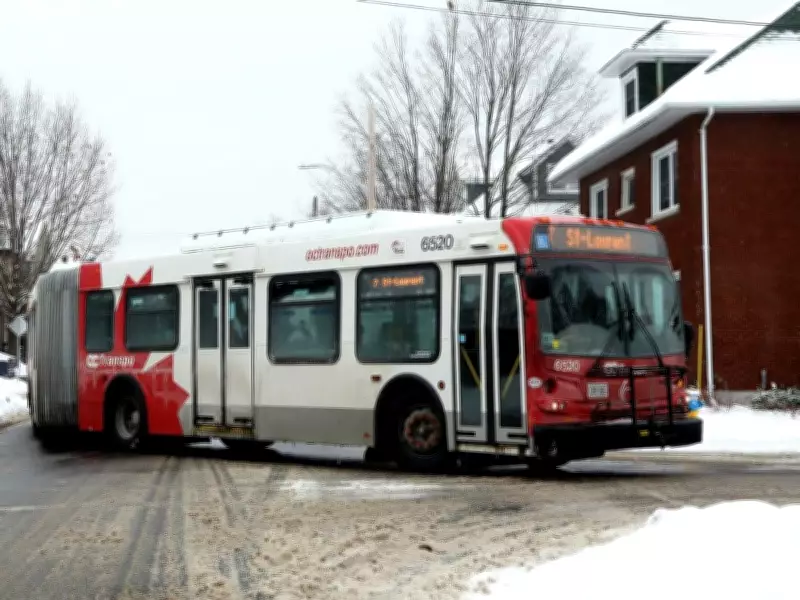
Capital Ward Councillor Shawn Menard has formally requested that city staff investigate whether a winter parking prohibition could serve as a viable solution for the current season. The primary concern stems from multiple reports of transit buses mounting sidewalks to pass through the constricted street, creating potentially hazardous conditions for pedestrians and residents alike. While specific timing remains undetermined, Menard has indicated that a temporary trial ban could potentially be implemented later this winter to assess its effectiveness.
The situation has been exacerbated by recent infrastructure changes that reduced Grove Avenue's width by approximately 2.5 metres. The redesigned street now features a four-metre vehicle lane alongside a 2.5-metre parking area, despite neighborhood improvements that included wider sidewalks and enhanced traffic-calming measures. However, this winter's substantial snowfall has created additional complications, with growing snowbanks leaving minimal room for both vehicular traffic and on-street parking simultaneously.

Enhanced Snow Removal Measures Already Implemented
In an effort to maintain sufficient roadway width for buses to pass parked vehicles without resorting to sidewalk usage, the city has already undertaken enhanced snow removal operations on Grove Avenue. Councillor Menard noted that the street has received three dedicated snow clearing sessions this winter, compared to just one for the remainder of the ward. Despite these efforts, residents continue to report instances where buses either stop completely or drive onto sidewalks when navigating the tight space between Seneca and Bank streets.
The proposed parking ban would temporarily eliminate seven to eight on-street parking spots along the affected block, representing a significant change for area residents who rely on this parking for daily needs. City officials are currently examining what signage requirements would be necessary should the ban move forward, while also considering the broader implications for neighborhood accessibility.
Community Response Remains Divided
Local residents have expressed mixed reactions to the potential parking restrictions. John Seguin, who lives on the block where the ban would be enforced, voiced concerns that eliminating winter parking would create substantial accessibility problems. "To ban winter parking means that, basically, you're telling people, 'Don't come see me at my house because there's nowhere to park,'" Seguin explained. He further emphasized how such restrictions could impact residents receiving essential services, including personal support workers who require convenient parking access.
Other community members have highlighted practical considerations, such as the need for parking space when contractors perform home repairs or renovations. The debate reflects the complex balance between ensuring public transit safety and maintaining neighborhood accessibility during Ottawa's challenging winter conditions.
As the city continues its evaluation, the Grove Avenue situation underscores the broader challenges municipalities face when infrastructure modifications intersect with seasonal weather patterns and essential public services. The potential parking ban represents just one possible solution in an ongoing effort to address safety concerns while minimizing disruption to residents' daily lives.