Montreal Port Expansion: Management Advocates for Urgency Amidst Declining Cargo Volumes
Executives at the Port of Montreal are making a compelling case for the swift advancement of a major expansion project, even as recent data reveals a downturn in cargo volumes. The push centers on the proposed Contrecoeur terminal development, a significant infrastructure initiative that port leadership argues is critical for the region's long-term economic competitiveness.
The Contrecoeur Project: A Vision for Future Growth
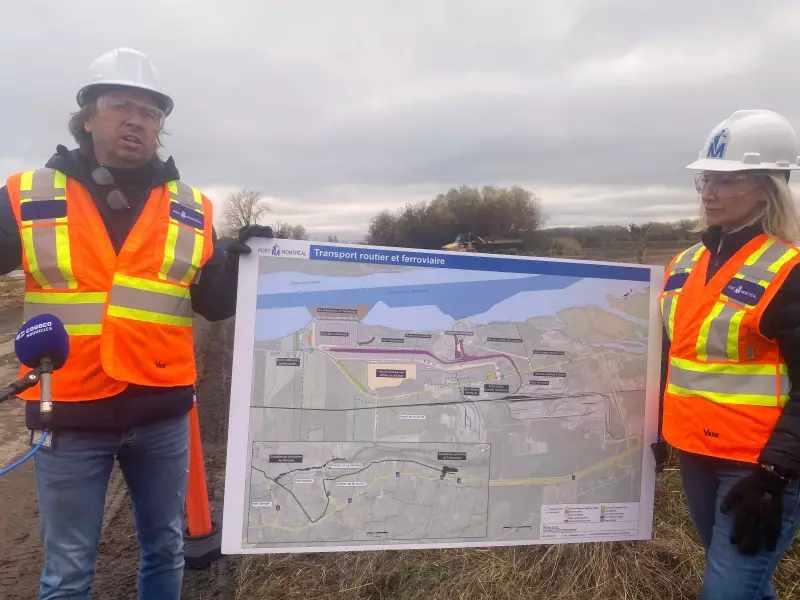
Vice President Paul Bird and Port President Julie Gascon have been at the forefront of presenting the ambitious plans for the Contrecoeur expansion. First unveiled in detail in October 2025, the project represents a strategic investment designed to enhance the port's capacity and efficiency. The leadership emphasizes that this expansion is not merely a response to current conditions but a forward-looking necessity to secure Montreal's position as a key North American logistics hub.
The central argument from management hinges on long-term economic forecasting and strategic positioning. They contend that while recent quarterly reports may show a contraction in volumes, the fundamental growth trends in global trade and the specific demands of the St. Lawrence corridor necessitate proactive infrastructure development. Delaying the project, they warn, could cede competitive advantage to other ports along the eastern seaboard.

Navigating Challenges: Volume Declines and Environmental Scrutiny
The plea for urgency comes against a backdrop of measurable challenges. Industry analysts have noted a recent decline in cargo volumes moving through the Port of Montreal, a trend attributed to broader economic fluctuations and shifting trade patterns. This reality adds a layer of complexity to the expansion debate, with critics questioning the timing and scale of the investment.
Furthermore, the Contrecoeur project must navigate a rigorous environmental assessment process. Proponents are tasked with balancing economic ambitions with ecological responsibility, addressing concerns about impacts on the local ecosystem and adhering to stringent sustainability standards. The management's urgent appeal is partly framed as a need to move through these regulatory phases efficiently to avoid costly delays.
The Economic Imperative and Regional Impact
Beyond the port itself, advocates highlight the broader economic implications. The expansion is projected to:
- Generate significant construction and long-term operational employment.
- Stimulate related industries in transportation, logistics, and manufacturing across Quebec.
- Increase the port's ability to handle larger vessels and more diverse cargo, future-proofing the facility.
The management's stance is that short-term volume metrics should not derail a project with decades-long implications. They frame the current downturn as a cyclical event within a much longer, upward trajectory of trade growth requiring enhanced infrastructure.
As the debate continues, the Port of Montreal's leadership remains steadfast. Their message is clear: the time to invest in the Contrecoeur expansion is now, to ensure the port and the region it serves are prepared to capitalize on future economic opportunities, regardless of present-day fluctuations in cargo numbers.