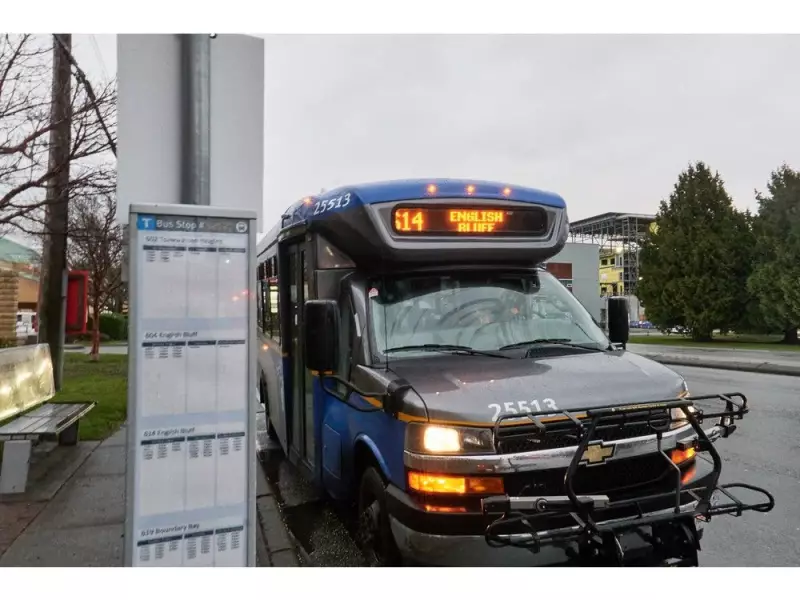
A recent analysis of TransLink's operating costs has exposed a dramatic disparity in the efficiency of Metro Vancouver's bus network, with some low-ridership suburban routes costing the public transit authority more than $25 per passenger in 2024.
The Stark Contrast in Passenger Costs
The financial divide is illustrated by two very different scenes. On one hand, TransLink's busiest route, the 99 B-Line along Broadway, saw four buses packed with dozens of passengers depart from Commercial Drive SkyTrain station in just 20 minutes. Conversely, the 614 shuttle bus in South Delta recently arrived at the South Delta Recreation Centre stop completely empty, save for the driver.
According to a Postmedia analysis based on TransLink's 2024 service performance report and hourly operating costs, this visual contrast translates directly to the bottom line. It cost TransLink an average of just $1.70 per passenger to operate the high-frequency 99 B-Line last year. In stark contrast, operating the 614 shuttle cost approximately $26 per passenger, ranking it as the third-most expensive route in the region on a per-passenger basis.

Suburban Shuttles Top the High-Cost List
The analysis, which calculated costs by dividing the average hourly service cost by the average number of passengers per hour, found that the most expensive routes are predominantly community shuttles serving outlying suburbs.
The route with the highest average per-passenger cost was the 619 community shuttle in Tsawwassen, which runs between the South Delta Recreation Centre and Boundary Bay, at $28 per passenger. Close behind was the 719/722 community shuttle serving Maple Ridge and Pitt Meadows, at almost $27 per passenger.
Other routes with high per-passenger costs, ranging from $16 to $28, served areas including Ladner, Tsawwassen, Maple Ridge, and Lions Bay. These figures are far above the regional average of $6 per passenger.
"One of the commonalities between all of these is that they are smaller municipalities that are further out," noted Denis Agar, executive director of the transit advocacy group Movement.
The Efficiency of High-Volume Corridors
On the other end of the spectrum, Metro Vancouver's busiest and most frequent routes demonstrated remarkable cost efficiency. Alongside the 99 B-Line, other high-volume routes like the 49 and the R4 rapid bus each cost about $2 per passenger to operate.
These routes benefit from high ridership density and frequent service, which spreads the fixed costs of drivers, vehicles, and fuel across a large number of fares. The 99 B-Line alone averaged 91 passengers per hour in 2024, compared to a mere four passengers per hour on the costly 614 route.
The Debate Over Equity and Service
Despite the high per-passenger price tag, advocates argue that cutting these low-ridership services would have significant negative impacts on the communities they serve. Denis Agar cautions against pulling resources from these routes simply based on cost metrics.
"Those buses, even if they go to a really small municipality, are making life a lot easier for the people who live there, whether they be seniors or domestic workers or others," Agar explained. The service provides a critical lifeline for residents in areas with limited public transit options, who may rely on it for essential trips like medical appointments, grocery shopping, or commuting to work.
The data highlights the ongoing challenge for TransLink: balancing fiscal responsibility and operational efficiency with its mandate to provide equitable, region-wide public transit service. The cost analysis, finalized from figures published in early January 2026, underscores the financial reality of serving low-density suburban areas while maintaining a sustainable, effective network for the entire Metro Vancouver region.