

Aviation Safety Investigation Calls for Stricter Passenger Rules During Helicopter Training
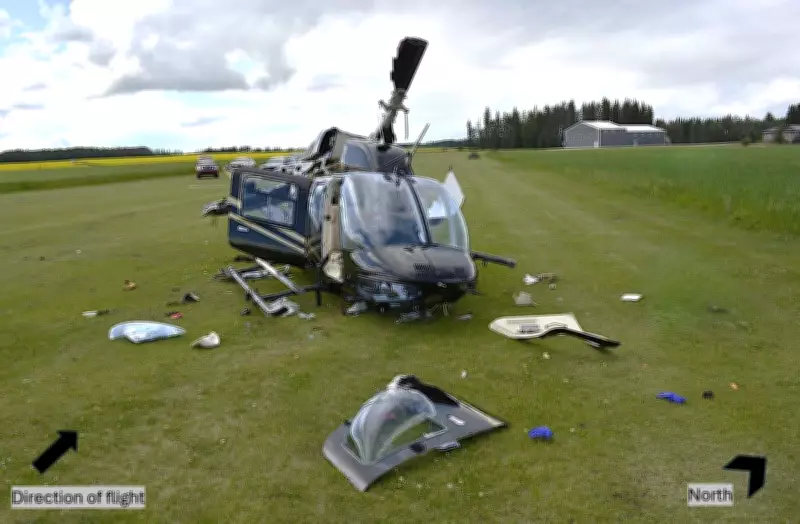
A recent Transportation Safety Board (TSB) report has issued a critical recommendation following its investigation into a helicopter crash that occurred west of Red Deer, Alberta, in July 2025. The investigation centered on a Bell Textron 206L-4 LongRanger helicopter that experienced what the TSB describes as a "hard landing" during a private training flight.
Key Findings and Safety Recommendations
The comprehensive report, which includes detailed photographic evidence of the crash site, concludes that carrying passengers during certain types of high-risk training maneuvers creates unnecessary danger. According to the TSB findings, the presence of non-essential personnel during advanced training operations significantly increases the potential for serious injury or fatality in the event of an incident.
The investigation revealed that the training flight involved maneuvers that carry inherent risks, and while the exact circumstances leading to the hard landing remain under review, the presence of passengers during such operations has been identified as a preventable risk factor. The TSB emphasizes that training environments, particularly those involving complex flight maneuvers, should be restricted to essential crew members only.

Broader Implications for Aviation Safety
This recommendation comes at a time when private helicopter operations and training programs are expanding across Canada. The TSB report suggests that current regulations may not adequately address the specific risks associated with passenger presence during specialized training scenarios. The safety board is urging aviation authorities and training organizations to implement stricter protocols that would clearly define when passengers are permitted during training operations.
The investigation highlights several important considerations for aviation safety:
- Training flights involving advanced maneuvers should be conducted without non-essential personnel
- Clear guidelines are needed to distinguish between routine flights and high-risk training operations
- Enhanced risk assessment protocols should be implemented before any training flight
- Better communication between pilots and training organizations about passenger policies
Industry Response and Future Safety Measures
While the TSB report focuses specifically on the Alberta incident, its recommendations have broader implications for helicopter operations nationwide. Aviation experts suggest that implementing these safety measures could prevent similar accidents in the future and improve overall training safety standards.
The report represents a significant step toward enhancing aviation safety protocols in Canada, particularly for private operators conducting specialized training. As the investigation continues to inform regulatory discussions, the TSB's emphasis on separating passenger carriage from high-risk training operations may lead to important changes in how helicopter training is conducted across the country.






