Essex County Implements Seasonal Weight Restrictions to Safeguard Road Infrastructure
As late winter transitions into spring, Essex County officials have activated seasonal load limits on numerous roadways throughout the region. These restrictions, commonly referred to as half-load season, are designed to mitigate the substantial damage caused by heavy vehicles during periods of fluctuating temperatures and thawing conditions.
Understanding the Spring Thaw Challenge
The annual freeze-thaw cycles characteristic of this time of year create particularly hazardous conditions for road surfaces. When temperatures oscillate between freezing and thawing, moisture infiltrates pavement and gravel bases, weakening structural integrity. This natural phenomenon frequently results in the formation of potholes, ruts, and heaving pavement that compromise both road quality and driver safety.
"Freeze-thaw cycles at this time of year can wreak havoc on our roadways," emphasized county representatives. "The roads must dry out before we can implement proper maintenance measures such as grading or adding additional gravel, which will be addressed as soon as weather conditions permit."

Specific Restrictions and Enforcement Details
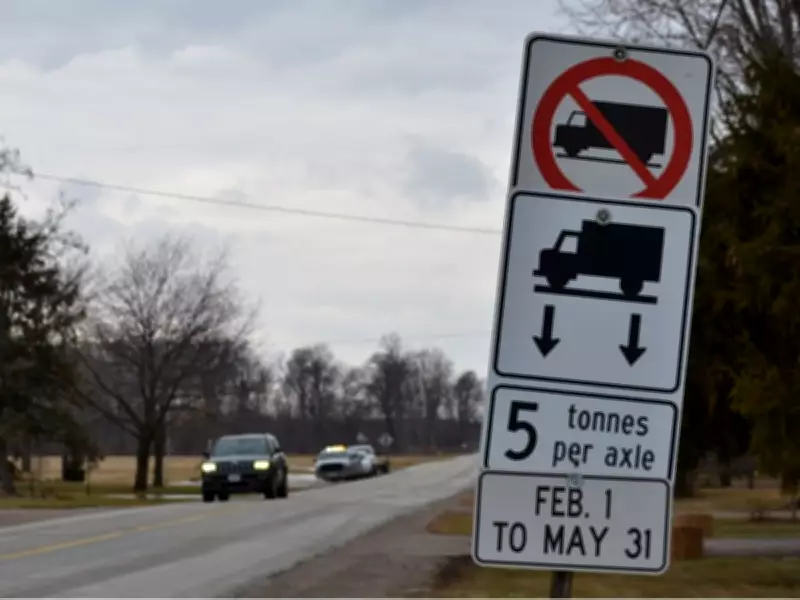
The seasonal load limitations officially commenced last Wednesday and will remain active while corresponding signage is displayed. According to Essex County's official communications:
- Drivers must adhere to posted five-tonne per axle load restrictions
- Restrictions apply specifically to designated county and township roads
- The half-load season concludes on April 30, 2026
- The county has published an online map identifying both seasonal and year-round restricted routes
Ontario Provincial Police have underscored the importance of compliance through official media releases. "The hauling of heavy loads on area township and county roads during the spring thaw causes substantial damage to the roadways," police authorities stated. "This damage subsequently leads to increased costs for local taxpayers and creates additional risks for all motorists."
Broader Implications for Road Safety and Community Costs
The enforcement of these seasonal restrictions addresses multiple interconnected concerns:
- Road Surface Preservation: Preventing excessive wear during vulnerable seasonal periods extends pavement lifespan and reduces maintenance frequency
- Public Safety Enhancement: Minimizing road deterioration decreases hazards such as washboarding, potholes, and pavement failure that contribute to accidents
- Economic Considerations: Reduced road damage translates to lower repair costs for municipalities and potentially moderated insurance premiums for residents
- Driver Awareness: Kingsville officials have specifically advised motorists to exercise additional caution on gravel roads, which are particularly susceptible to weather-related deterioration
Police authorities have further elaborated on the safety implications, noting that "the damage to the road increases the risks to motorists due to wash boarding, potholes, and pavement deterioration which in turn impacts insurance rates and increases the possibility of injury or death due to unforeseen or unusual driving conditions."
Practical Guidance for Motorists
County officials recommend that drivers remain vigilant for changing road conditions and adjust their travel behavior accordingly:
- Regularly check the county's published map of restricted routes
- Be prepared to significantly reduce speed when encountering affected roadways
- Consider alternative routes when possible to avoid restricted roads entirely
- Exercise particular caution on gravel surfaces that may develop unexpected hazards
The implementation of these seasonal measures represents a proactive approach to infrastructure management, balancing transportation needs with long-term road preservation and community safety objectives throughout Essex County's vulnerable spring transition period.