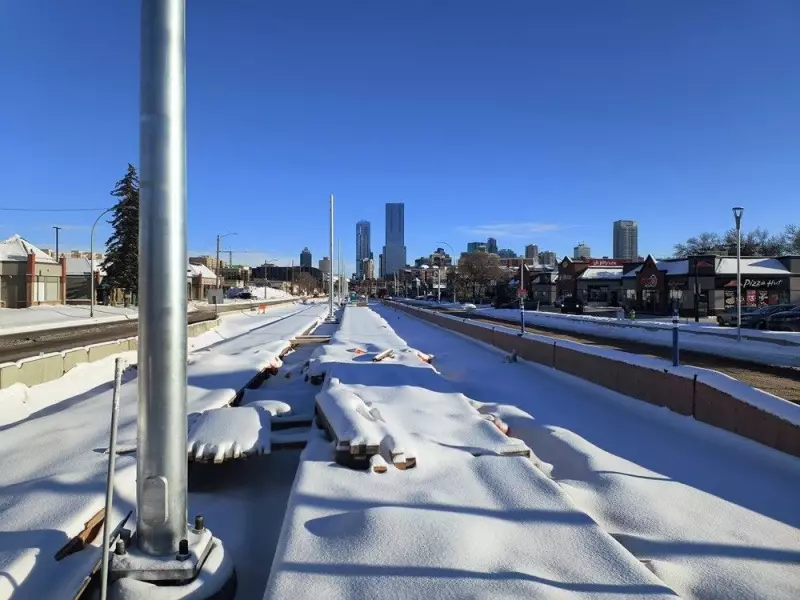
Edmonton's ambitious light rail transit expansion, a decade in the making, is facing a critical juncture that threatens to dismantle the specialized workforce painstakingly built for the task. Contractors on the city's massive $2.6-billion Valley Line project warn that halting future expansions could trigger an exodus of skilled tradespeople to other municipalities, squandering hard-earned expertise and investment.
A Decade of Development at Risk
Despite the most productive construction season to date on the Valley Line, work has paused for winter as ground temperatures drop. This seasonal hiatus has sparked broader concerns about the long-term future. Jonathan Cox, construction manager for Marigold Infrastructure Partners, voiced a common anxiety among the workforce: the fear of running out of projects. "It's a shame that it seems the city's going to run out of momentum for rail projects after this one," Cox said. "It's always on our minds that we would like to have a job after this."
The current phase, extending the line to West Edmonton Mall, follows the initial leg from Downtown to Mill Woods. While largely funded by provincial and federal governments, the financial pipeline for subsequent stages appears dry. Preliminary engineering for an expansion from Clairview to Gorman remains shelved, awaiting renewed government commitment.

The High Cost of Losing Local Expertise
Cox emphasized that Edmonton has cultivated a unique pool of talent specifically adept at navigating the complexities of building LRT systems in a northern climate—a skill set not easily replaced. "There's a lot of people who work here who have knowledge and skills," he stated. A prolonged stoppage would mean this locally developed expertise, funded by Edmonton ratepayers, would migrate to build transit networks elsewhere.
"Everyone will disperse to Calgary or Vancouver or wherever," Cox warned. "Then you end up paying a lot of money to get them back." This cycle would inevitably increase costs and delay future projects when and if funding is secured.
Lessons Learned in a Tough Climate
The construction of Edmonton's LRT has been a learning process. The city's network has grown sporadically since the first line opened in 1978, with some communities, like Castle Downs, waiting for a connection since the 1980s. The current wave of expansion began aggressively around 2008.
Practical knowledge gained on projects like the Valley Line southeast is invaluable. "It's a tough place to build railways," Cox noted, explaining that crews learned through experience not to build track and slab through the harsh winter. "What the city found was the treatment of the ground underneath the track wasn't reliable, so we don't do that anymore—we only place gravel in summer season and then we cast concrete on top." This hard-won, climate-specific knowledge resides with the current workforce.
While a different contractor was awarded the latest phase to West Edmonton Mall, many of the same engineers and tradespeople remain on the job, carrying forward this institutional knowledge. Mayor Andrew Knack has expressed support for continuing LRT expansion but underscores the city's dependence on senior levels of government to fund major construction.
The situation presents a stark choice for Edmonton: continue investing in a connected future and retain its homegrown infrastructure talent, or risk losing a generation of specialized skills to other Canadian cities, making the next rail project more difficult and expensive to start.