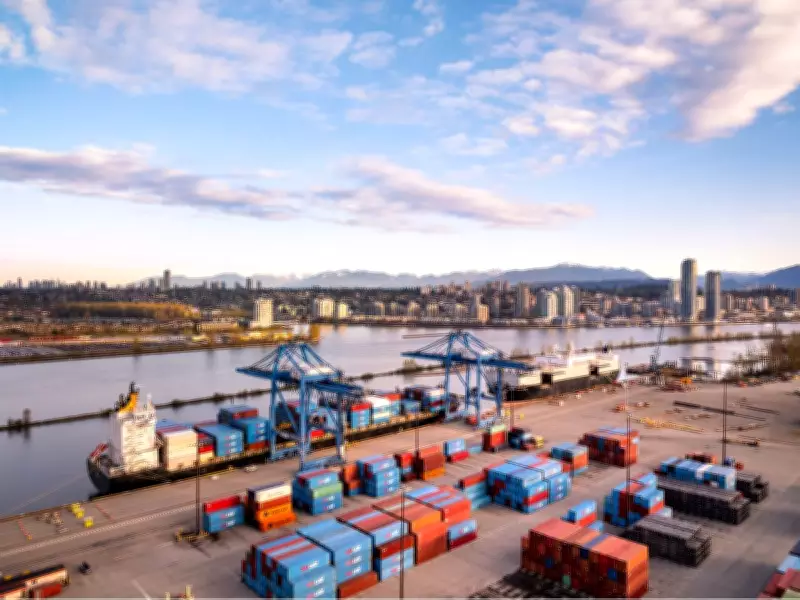
DP World's Fraser Surrey Terminal Powers Canada's Infrastructure Boom
DP World has emerged as a critical player in Canada's infrastructure development, with its Fraser Surrey terminal serving as a vital hub for major construction projects nationwide. Over the past two years, the terminal has successfully moved approximately 15,000 tonnes of steel using sophisticated heavy-lift cranes and coordinated vessel-to-barge transfers, keeping Canada's most significant bridge, tunnel, and energy initiatives on schedule.
Strategic Location and Capabilities
Situated on the Fraser River in the Vancouver metropolitan area, DP World's Fraser Surrey terminal stands as the largest multipurpose marine terminal on North America's West Coast. The facility boasts six deep-sea berths, extensive yard capacity, covered warehouse storage, and integrated road and rail connections. This comprehensive infrastructure has transformed the terminal into a key gateway for project cargo that supports Canada's long-term infrastructure growth and economic development.
Doug Smith, CEO of DP World in Canada, emphasized the terminal's importance: "Canada's infrastructure projects demand precision, scale, and reliability – and that's exactly what our breakbulk operations deliver. From bridges and tunnels to energy pipelines, our Fraser Surrey team has the experience and assets to manage complex project cargo while keeping critical national developments moving forward."

Government Recognition and Economic Impact
The Honourable Ravi Kahlon, Minister of Jobs and Economic Growth, acknowledged DP World's contributions: "DP World's work at Fraser Surrey is helping keep major bridge, tunnel and energy projects on schedule, strengthening the infrastructure people and businesses rely on. This aligns with our Look West strategy by expanding trade capacity, supporting good jobs and ensuring B.C. companies and communities benefit from the growing flow of goods and investment through our province."
Major Project Support
Over a two-year period, Fraser Surrey handled the import, storage, and transfer of approximately 15,000 tonnes of project steel for the new stal̕əw̓asəm Bridge, also known as the Riverview Bridge. This structure replaced the aging Pattullo Bridge and now serves as a vital transportation link between New Westminster and Surrey in Metro Vancouver. The bridge's hən̓q̓əmin̓əm̓ name is attributed to the Kwantlen First Nation and the Musqueam Indian Band, reflecting the project's cultural significance alongside its engineering achievements.
The terminal's operations required precise coordination across marine, terminal, and onward transport operations, with cargo transferred directly from vessel to barge for final delivery. This meticulous planning ensured the project remained on schedule despite its complexity.
Tunneling Expertise and Heavy-Lift Operations
Fraser Surrey also supported complex tunneling projects across the region, including the Annacis Water Supply Tunnel linking New Westminster and Surrey. The terminal managed the arrival and offload of a custom-built Herrenknecht Earth Pressure Balance (EPB) tunnel boring machine from Germany – weighing the equivalent of 190 mid-size cars – along with other heavy-lift equipment for underground construction.
These sophisticated operations relied on Fraser Surrey's heavy-lift cranes, expansive laydown space, and close coordination with multiple logistics partners to sequence lifts and deliveries safely and efficiently. The terminal's multimodal breakbulk capabilities have proven essential for handling oversized and specialized equipment that conventional shipping methods cannot accommodate.
Future Implications
As Canada continues to invest in infrastructure modernization and expansion, DP World's Fraser Surrey terminal is positioned to play an increasingly important role in the nation's economic development. The terminal's ability to handle complex project cargo with precision and reliability makes it an indispensable asset for construction projects that require specialized logistics solutions.

The success of these operations demonstrates how strategic infrastructure investments can create ripple effects throughout the economy, supporting job creation, enhancing trade capacity, and strengthening the foundational systems that communities and businesses depend upon for growth and prosperity.