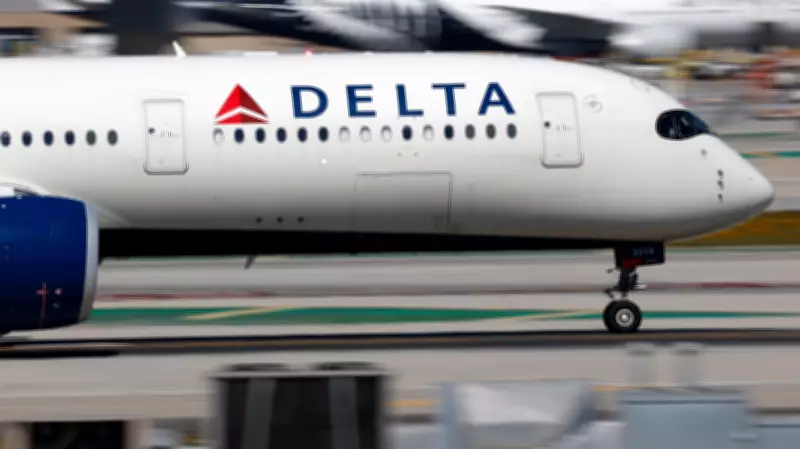
Global airlines issued urgent warnings on Tuesday, highlighting the severe impact of soaring jet fuel prices triggered by the ongoing U.S.-Israeli war against Iran. The industry faces hundreds of millions in additional costs, prompting fare increases and cuts to certain routes as carriers scramble to manage the financial strain.
Major Cost Increases and Immediate Actions
Delta Air Lines Chief Executive Ed Bastian revealed that the dramatic surge in jet fuel prices has escalated the airline's expenses by up to $400 million in March alone. Speaking at a J.P. Morgan industrials conference, Bastian emphasized that the industry is rapidly moving to pass on these higher costs through fare hikes. Similarly, American Airlines anticipates a $400 million rise in first-quarter expenses due to fuel costs.
Among the first to respond, Scandinavia's largest airline, SAS AB, announced it is cutting a limited number of flights in response to what it described as a "sharp and sudden increase" in fuel prices. In an email statement, the airline noted, "The entire European aviation system is now feeling the pressure from a sudden fuel shock."

Fuel Prices as a Critical Challenge
The war, now in its third week, has plunged global aviation into turmoil, with flights cancelled, rescheduled, or rerouted as most Middle East airspace remains closed due to fears of missile and drone attacks. Jet fuel prices have emerged as a major challenge, driving up operating costs significantly. Since late February, when U.S. and Israeli strikes on Iran began, European prices have doubled, while Asian prices have surged by almost 80%.
Fuel represents the industry's second-largest expense after labor, typically accounting for 20% to 25% of operating costs. Notably, U.S. airlines largely discontinued fuel hedging over the past two decades, and SAS confirmed last year that it had not hedged any of its fuel consumption for the following 12 months, leaving them vulnerable to price spikes.
Regional Impacts and Supply Concerns
Vietnamese authorities have cautioned the country's aviation industry to prepare for potential flight reductions starting in April. This warning comes after China and Thailand halted jet fuel exports due to the war, heightening risks of shortages and further complicating global supply chains.
Shockwaves Through the Aviation Industry
The United Arab Emirates briefly closed its airspace on Tuesday in response to incoming missile and drone threats from Iran, marking the second consecutive day of disruptions after a drone caused a fire near Dubai airport on Monday. These incidents underscore the widespread operational challenges facing airlines.
At Frankfurt airport, one of Europe's largest hubs, about 86,000 passengers were affected by cancellations during the first two weeks of the conflict. CEO Stefan Schulte reported on Tuesday that only one-third of weekly connections between the airport and the Middle East are currently operating, illustrating the severe impact on travel networks.
Navigating the Crisis and Financial Strategies
The mounting cost warnings demonstrate how shockwaves from the conflict are extending far beyond the Middle East, positioning this as the airline industry's most significant crisis since the COVID-19 pandemic. Delta's Bastian stated that the carrier is well-positioned to recover fuel costs and can adjust capacity if elevated prices persist. However, he cautioned that airlines must tread carefully with fare hikes amid fragile consumer confidence.
In response to the crisis, Air France-KLM announced plans last week to increase long-haul ticket prices to offset surging fuel costs. Some carriers have introduced fuel surcharges, but these measures risk eroding profits if not managed effectively.
Despite the challenges, American Airlines provided a mixed outlook on Tuesday, noting that first-quarter revenue is now expected to rise more than 10%, surpassing its previous forecast of 7% to 10% due to stronger-than-expected demand. However, its adjusted loss per share is projected to be at the lower end of the earlier guidance range of 10 cents to 50 cents, reflecting the financial pressures from fuel expenses.

The global aviation sector continues to grapple with uncertainty as it adapts to volatile fuel markets and geopolitical tensions, with airlines balancing cost recovery efforts against the need to maintain passenger trust and operational stability.