

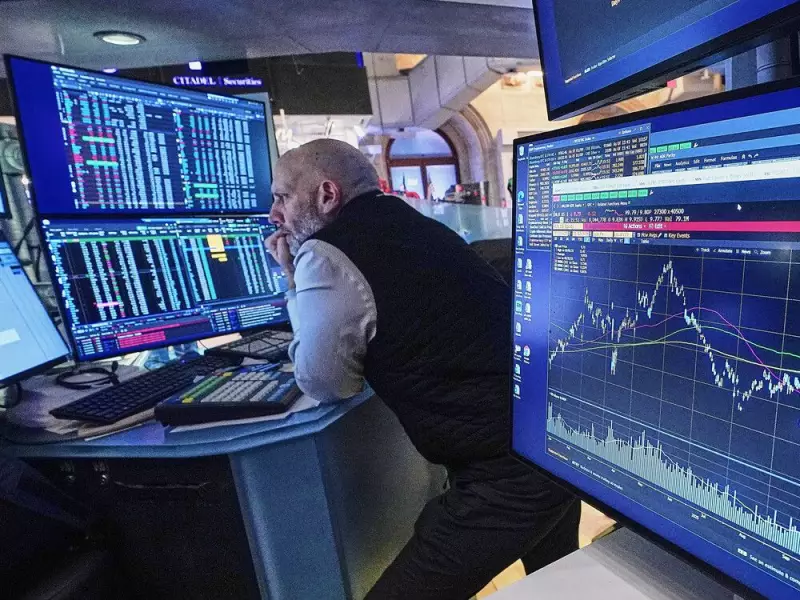
Financial Markets Reel Amid Renewed Geopolitical Tensions Over Greenland
Global financial markets experienced significant turbulence this week as U.S. President Donald Trump's renewed push to acquire Greenland injected fresh volatility into trading sessions. The resulting uncertainty has created a ripple effect across multiple asset classes, with investors reacting swiftly to the geopolitical developments.
Major Indexes Suffer Substantial Losses
The S&P 500 plummeted 2.1 percent in Tuesday's trading session, completely erasing its gains for the year 2026. This marked the index's most substantial single-day decline since October, reflecting widespread investor concern. The technology sector faced particular pressure, with a gauge of tech megacaps dropping 3.1 percent during the session.
Market volatility surged to its highest level since November as measured by the VIX index, commonly referred to as Wall Street's fear gauge. Small-cap stocks also declined, though they managed to outperform the broader U.S. equity benchmark for the twelfth consecutive session.

Multiple Asset Classes Experience Pressure
The market disruption extended well beyond equities. Long-term U.S. Treasury yields reached a four-month high, climbing six basis points to 4.29 percent for 10-year notes. This movement occurred alongside a deepening slump in Japanese bonds, where investors expressed skepticism about Prime Minister Sanae Takaichi's campaign promise to reduce food taxes.
The U.S. dollar weakened against most major currencies, sliding 0.3 percent as international investors reconsidered their exposure to American assets. Meanwhile, traditional safe-haven assets saw increased demand, with gold prices soaring past US$4,700 per ounce to reach a new record high. Oil prices also advanced, topping US$60 per barrel amid the uncertainty.
Geopolitical Context and Market Reactions
The market turbulence coincided with President Trump's preparations to attend the World Economic Forum in Davos, where he has engaged in multiple disputes with European leaders. The administration has threatened tariffs against eight European countries that have opposed Trump's Greenland ambitions, while simultaneously pressuring France to join what he calls the "Board of Peace."
Financial analysts noted that Tuesday's session represented the worst performance across major exchange-traded funds tracking U.S. stocks, Treasuries, corporate bonds, and Bitcoin since April's tariff-induced selloff. Bitcoin experienced a significant plunge as part of this broader market retreat.
Expert Perspectives on Market Dynamics
Krishna Guha of Evercore characterized the situation as "'sell America' again within a much broader global risk." He observed that "global investors at the margin are looking to reduce or hedge their exposure to a volatile and unreliable U.S." The duration and magnitude of these market dynamics remain uncertain according to financial experts.
Paul Stanley of Granite Bay Wealth Management commented that "tariff fears are back in focus and are now intertwined in geopolitical matters." He suggested that while this development adds complexity to the tariff issue, "cooler heads will likely prevail" and that these threats may represent negotiating tactics rather than definitive policy actions.
Broader Implications and Future Considerations
The market reaction underscores how geopolitical tensions can rapidly translate into financial volatility. Treasury Secretary Scott Bessent attempted to calm markets by comparing the current situation to what he termed the "hysteria" that followed Trump's April tariff announcements.
European leaders have responded cautiously to the developments. French President Emmanuel Macron emphasized that Europe needs to develop greater sovereignty to avoid what he described as "vassalization and blood politics." Meanwhile, British Chancellor of the Exchequer Rachel Reeves indicated that the United Kingdom seeks to reduce tensions despite Trump's tariff threats.
The U.S. Supreme Court did not rule on challenges to Trump's tariff policies on Tuesday, meaning resolution of these legal questions will likely require at least another month. This legal uncertainty adds another layer to the complex market environment facing investors.

As markets continue to digest these developments, investors are closely monitoring corporate earnings for guidance. While Netflix Inc. reported solid quarterly results, it issued a cautious forward-looking statement. United Airlines Holdings Inc. exceeded earnings expectations, providing some positive news amid the broader market uncertainty.





