

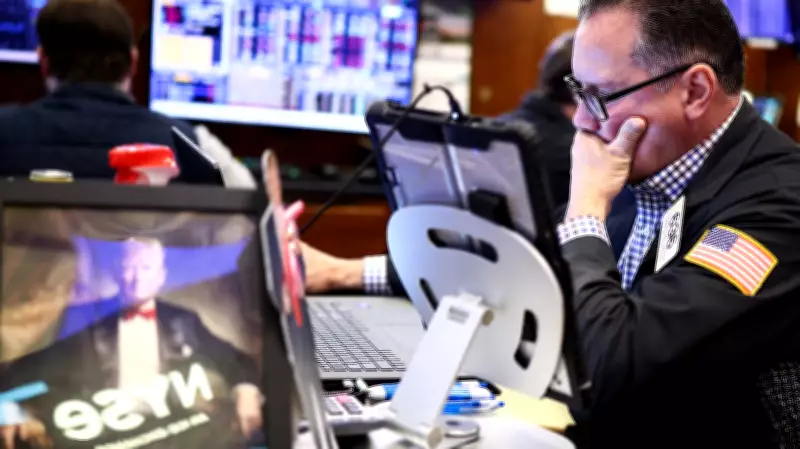
Global financial markets experienced significant turbulence on Thursday, with stocks declining sharply and oil prices soaring in response to President Donald Trump's latest statements on the ongoing conflict with Iran. In a national address on Wednesday, Trump vowed that the United States would continue to attack Iran "extremely hard over the next two to three weeks," without providing a clear timeline for resolution, which rattled investor confidence and reversed earlier gains.
Market Reactions and Index Declines
The S&P 500 fell by 1.1%, with approximately three out of every four stocks in the benchmark index losing ground. The Dow Jones Industrial Average dropped 545 points, or 1.2%, as of 9:52 a.m. Eastern Time, while the Nasdaq composite declined by 1.6%. This broad slide extended beyond U.S. borders, with major indexes in Europe and Asia also posting losses, reflecting widespread concern over escalating tensions in the Middle East.
Oil Price Surge and Its Impact
Crude oil prices have been a primary driver of the volatile swings in global stocks. The price of Brent crude, the international standard, jumped 7.8% to $109.10 per barrel, and benchmark U.S. crude surged 11.7% to $111.92 a barrel. These increases followed a period where prices had been sliding back toward $100 per barrel prior to Trump's address. The Strait of Hormuz, a critical chokepoint where about one-fifth of the world's traded oil passes during peacetime, has seen severely curtailed shipping traffic, exacerbating supply concerns and contributing to the price spike.

Sector Performance and Market Dynamics
Travel-related companies were among the hardest hit on Thursday, with United Airlines falling 6.1% and Carnival shedding 5%. In contrast, energy companies gained ground, benefiting from the rise in oil prices; Exxon Mobil rose 2.3%, and Chevron gained 3.4%. Treasury yields remained relatively stable in the bond market, with the yield on the 10-year Treasury edging up slightly to 4.33% from 4.32%.
Historical Context and Market Corrections
Markets have been broadly sliding since the war began, with indexes often experiencing sharp fluctuations in response to statements from Trump about the conflict's direction. Just on Monday, the S&P 500 briefly neared a 10% drop from its record high, a threshold known as a "correction" among professional investors. However, it regained some ground on Tuesday and Wednesday amid hopes for a swift resolution to the war. Despite Thursday's declines, major indexes are still on track to close the week with overall gains, highlighting the ongoing volatility and uncertainty in global financial markets.
Thursday marked the last trading day of the week on Wall Street, with the stock market closed on Good Friday, potentially adding to the day's heightened activity and investor reactions.






