

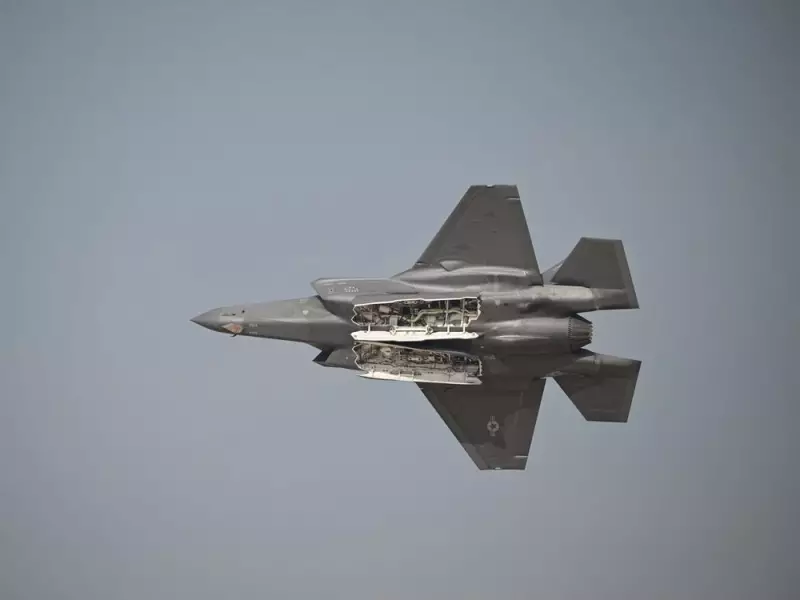
Global defence and aerospace stocks experienced a significant rally this week, fueled by U.S. President Donald Trump's proposal for a massive increase in American military spending. The surge marks a continuation of the sector's strong performance at the start of 2026, a year analysts predict will be heavily influenced by geopolitical tensions.
Market Reaction to Budget Proposal
President Trump has suggested he will request a roughly 50 per cent increase in the U.S. military budget, aiming to raise annual defence spending by US$500 billion to a total of US$1.5 trillion. This proposal, which would require Congressional approval, ignited buying activity across the global defence industry.
In the United States, major contractors led the charge. Northrop Grumman Corp. and Lockheed Martin Corp. each surged at least 9.3 per cent during Thursday's trading session, recovering from a drop the previous day. That earlier decline was triggered by separate Trump demands to limit executive compensation and shareholder returns at defence firms.

The rally was not confined to American markets. A Goldman Sachs Group Inc. basket of European defence stocks rose as much as 3.8 per cent on Thursday, extending its weekly gain to approximately 15 per cent. In Asia, shares of weaponry makers also climbed, including South Korea’s Hanwha Aerospace Co., Taiwan’s Aerospace Industrial Development Corp., and Japan’s Howa Machinery Ltd.
Geopolitics Drives Investor Strategy
The market movement underscores a growing consensus among investors that international conflict and military posturing will define the financial landscape this year. "Geopolitics is the inescapable story of 2026 thus far," stated Neil Wilson, a U.K. investor strategist at Saxo Markets.
Trump's budget comments followed a surprise raid on Venezuela, with the White House indicating a prolonged U.S. military involvement in the region. The President has also used aggressive rhetoric toward Colombia and Mexico and has not ruled out using military force to acquire Greenland from Denmark. These actions signal a potentially more aggressive application of American armed forces.
Tony Bancroft, portfolio manager for the Gabelli Commercial Aerospace and Defense ETF, commented on the staggering budget figure. "The US$1.5 trillion figure is 'a big number, but at the same time the world’s changing,'" he said. He added that geopolitical instability inherently drives defence spending, noting "the world is just becoming a dangerous place."
European Gains and Capital Constraints
In Europe, BAE Systems PLC was among the biggest gainers, with its shares jumping as much as 7.4 per cent. The U.K. firm generates nearly half of its revenue in the U.S. market. German defence heavyweight Rheinmetall AG gained 4.1 per cent, reaching its highest share price level since October.
This latest uptick builds on years of outperformance for the defence sector, which has been in focus for investors since Russia’s invasion of Ukraine reshaped the global security order. In 2025, European defence stocks nearly doubled in value, while strength in commercial aerospace contributed to the sector's best performance in the United States since 2013.
However, the sector also faces new headwinds. On Wednesday, President Trump signed an executive order demanding major U.S. defence contractors halt stock buybacks and dividend payments. Analysts suggest this could redirect capital. Kristine Liwag of Morgan Stanley noted in a research report that while "a limit on capital return is an incremental negative," the impact is manageable. She added that limiting dividends and buybacks could free up billions of dollars for other investments like increasing production capacity or mergers and acquisitions.
The simultaneous push for vastly higher spending and restrictions on shareholder returns creates a complex picture for defence investors, balancing massive potential revenue increases against new constraints on capital distribution.






