

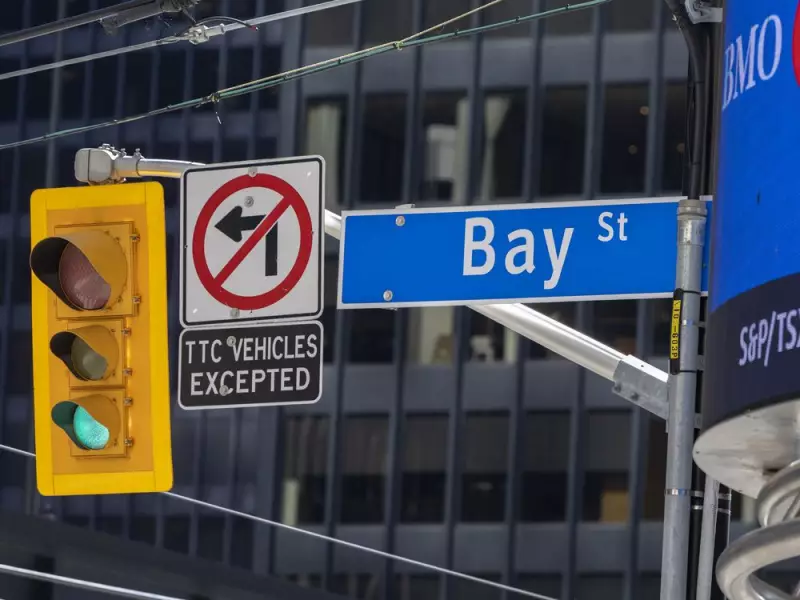
Defying expectations of economic headwinds, Canada's financial hub, Bay Street, has posted its most robust fundraising year in a decade and a half. Preliminary data for 2025 reveals the capital markets sector mobilized approximately $597 billion across 1,133 deals, marking the highest total in the past 15 years and an 8% increase from the $553 billion raised in 2024.
A Resilient Market Amid Tariffs and Geopolitical Shock
This record performance unfolded against a backdrop of significant challenges, including tariffs imposed by United States President Donald Trump and ongoing geopolitical tensions. Many economists anticipated a slowdown, but key industry insiders point to underlying strengths in the Canadian economy. Peter Miller, head of Equity Capital Markets at Bank of Montreal, noted that the Canada-U.S.-Mexico Agreement (CUSMA) provided critical shielding for many exporters.
"Despite all the headlines, most Canadian companies were still able to export to the U.S. with zero or minor tariffs due to exemptions," Miller explained. He added that industries most affected by tariffs, such as steel and autos, represent a relatively small portion of the total public market capitalization in Canada, limiting the broader impact.

Secondary Offerings and Sector Diversity Fuel Growth
A standout feature of the year was the exceptional activity in the secondary market. Here, investors trade previously issued securities among themselves, rather than buying directly from the issuing company. This segment's strength surprised even seasoned professionals like Miller.
Notable examples include:
- Restaurant Brands International Inc. raising $1.7 billion in a November secondary offering.
- GFL Environmental Inc. completing two major secondary offerings, raising $1.29 billion in March and $1.06 billion in November.
Rosalind Hunter, co-chair of Osler, Hoskin and Harcourt LLP's Capital Markets Group, described the driving forces behind 2025's dealmaking as multifaceted. "From the obvious interest in AI and mining to companies leveraging major mergers and acquisitions, it was a bit of everything," she said, contrasting it with years dominated by a single thematic driver.
Record-Breaking Debt and Equity Issuance
The year's performance was particularly impressive given the initial "chill" sent through markets by Trump's early-April tariff announcements, recalled Rob Brown, co-head of Canadian Debt Capital Markets at RBC Capital Markets. "Few people at that time would have predicted that we would rebound as quickly as we did," he admitted.
Yet, the rebound was decisive, breaking specific records:
Corporate debt issuance soared to a 15-year high of $301.5 billion.
Equity issuance experienced a sharp recovery, reaching $35.2 billion, reversing a slowdown trend observed from 2022 through 2024.
Hunter attributes this surge to pent-up demand, stating, "We attribute this to issuers and investors getting tired of sitting on the sidelines for the past few years waiting for things to change."
Broader Economic Implications and Government Outlook
A vibrant capital market is a cornerstone of economic growth, signaling that businesses and governments are confident enough to seek long-term funding for expansion, job creation, and productivity enhancements. The 2025 results are seen as a positive indicator for the broader Canadian economy.
Furthermore, this robust private sector activity represents a favorable development for the federal government in Ottawa. Officials are actively seeking private investment to accelerate the construction of critical infrastructure, particularly in energy and mining, aiming to stimulate economic growth while diversifying reliance on the United States market.






