

The hottest stock market trend of 2025 shows no signs of cooling off in the early days of 2026, as companies specializing in memory and storage continue to lead the market. This remarkable run, fueled by the relentless spending on artificial intelligence infrastructure, has Wall Street analysts and portfolio managers debating one critical question: how long can this momentum last?
The AI-Driven Rally Continues
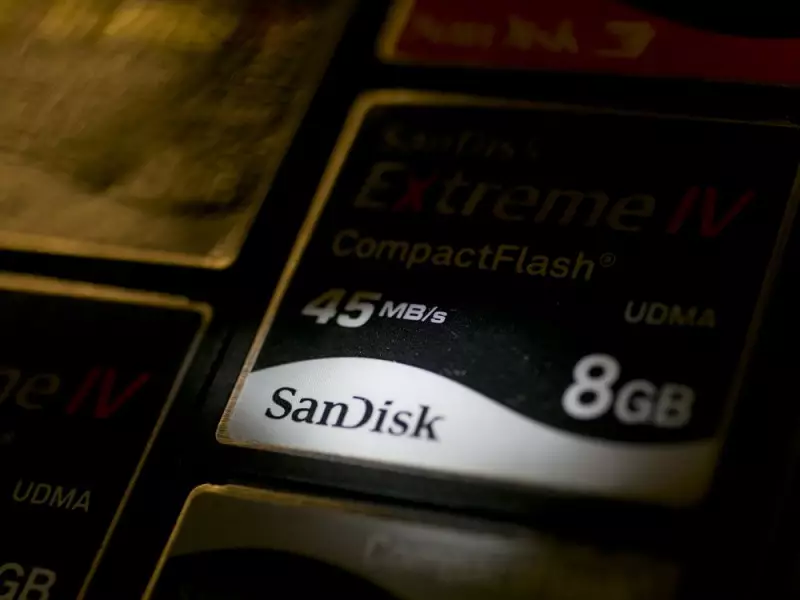
Memory and storage firms dominated the S&P 500 index as the top performers throughout 2025. This surge represents a significant trickle-down effect, where the massive capital expenditures for building AI data centers have revitalized traditionally slower-moving segments of the technology sector. The group, featuring industry leaders like Sandisk Corp., Western Digital Corp., Seagate Technology Holdings, and Micron Technology Inc., has carried its leading position straight into the new year.
The rally gained fresh momentum after Nvidia Corp. CEO Jensen Huang emphasized the growing need for more memory and storage within the expanding AI ecosystem. This comment acted as a catalyst, sending shares sharply higher. Sandisk skyrocketed 16% on the first trading day of 2026 and then soared an additional 28% the following Tuesday. While the stock moderated with a 1.1% gain on Wednesday, it remains up a staggering 49% for the young year. Western Digital, Seagate, and Micron also posted double-digit percentage gains to start 2026, though all three experienced pullbacks in mid-week trading.

Spectacular Gains Meet Growing Skepticism
The scale of the advances is nothing short of extraordinary. In 2025, Sandisk shares led the entire S&P 500 with a meteoric 559% gain. It was followed by Western Digital, Micron, and Seagate, which rounded out the index's four top performers for the year. This performance has naturally attracted intense investor interest, including from retail participants eager not to miss out.
However, this very enthusiasm is raising red flags for seasoned market professionals. Jessica Noviskis, Outsourced CIO Portfolio Strategist for Marquette Associates, which manages approximately US$29 billion, notes the difficulty in modeling growth for companies undergoing a rapid technological transformation. "There are probably retail investors who are desperate to not miss this rally, so they’re grasping at straws," she observed.
The primary drivers are clear: the AI infrastructure spending boom and rising prices for critical components like memory chips due to soaring demand. Yet, the sustainability of these gains is now under a microscope. Investors are increasingly questioning whether the market has gotten ahead of itself, especially amid concerns that AI-related capital spending may eventually slow without clear signs of strong returns on the massive investments.
Valuation and Technical Warnings
Peter Andersen, Chief Investment Officer of Andersen Capital Management (overseeing US$4.5 billion in assets), expressed a cautious view. "The recent strength makes sense optically given the AI data-center buildout narrative, but I’m increasingly concerned the market is extrapolating demand too far forward and underestimating the historical cyclicality and the risk of over-capacity and pricing pressure," he stated.
Technical indicators also suggest the rally may be overextended in the short term. The 14-day relative strength indexes (RSI) for both Sandisk and Micron have climbed above the 70 level, a threshold many technical analysts consider to signal an overbought condition that often precedes a pullback.
On a valuation basis, the group has historically traded at lower multiples than other technology firms. Even after the massive run-up, they appear relatively inexpensive on the surface. Micron trades at just 10 times estimated earnings, while Sandisk is around 20. Both Seagate and Western Digital sit below 25, which is the approximate forward P/E of the Nasdaq 100 index. For comparison, the Bloomberg Magnificent Seven index trades at roughly 29 times expected earnings. This valuation gap is a key point of debate: is it a lasting feature of the sector or a temporary anomaly soon to be corrected by the market?

As trading continues, the memory and storage sector remains at the epicenter of a major market narrative. For Canadian investors watching this trend, the story encapsulates both the transformative power of the AI investment wave and the timeless market challenges of gauging momentum, valuation, and cyclical risk.





