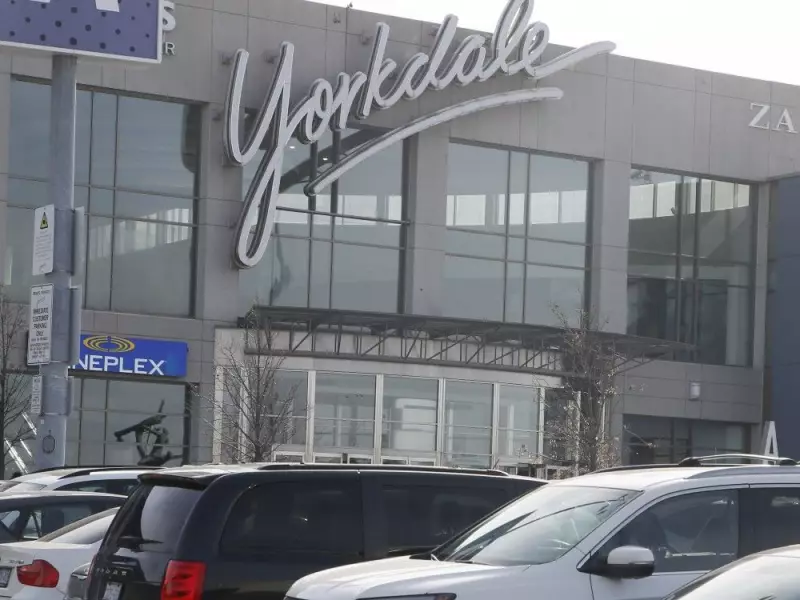
Yorkdale Shopping Centre Launches Legal Challenge Against Fairweather's Department Store Proposal
Toronto's prestigious Yorkdale Shopping Centre has initiated a legal battle to prevent women's clothing retailer Fairweather Ltd. from establishing a department store within its luxury premises. Court documents reveal that the mall's owners, Oxford Properties, are vehemently opposing Fairweather's plans to sublease the massive 300,000-square-foot space previously occupied by the now-defunct Hudson's Bay.
Luxury Mall Fears Reputation Damage from 'Downmarket' Retailer
In filings submitted to the Ontario Superior Court on January 9, lawyers representing Oxford Properties have argued that Fairweather's presence would significantly cheapen Yorkdale's upscale reputation. The legal team described Fairweather stores as appearing "temporary and downmarket," claiming the retailer invests minimally in its locations and lacks the operational excellence expected at Canada's premier shopping destination.
"Operators at Yorkdale are first-class retail operators with strong brand and reputation, a seamless experience, relevant and well curated inventory, operational excellence and consistency, an engaging and well-designed store environment and a commitment to the leased premises," Oxford Properties' lawyers wrote in their submission. "Fairweather demonstrates none of these characteristics."

Fairweather's Ambitious Revival Plan Under Scrutiny
Fairweather Ltd., owned by business mogul Isaac Benitah since 2001, plans to revive its Quebec-based department store concept Les Ailes de la Mode under the new name Ailes. The company's court filings outline an ambitious vision for the three-floor space, promising a traditional department store offering merchandise across multiple categories including men's, women's, and children's apparel, footwear, accessories, housewares, and home decor.
Contrary to Oxford Properties' characterization, Fairweather representatives assert that Ailes will sell products at a higher price point and has secured commitments from numerous established brands. The proposed store would feature merchandise from Reebok, Chaps, Steve Madden, DKNY, Tahari, Billabong, French Connection, Laura Ashley, Geoffrey Beene, and Perry Ellis.
Financial Stakes and Historical Context
The legal dispute carries significant financial implications for both parties. Oxford Properties has warned that allowing Ailes to establish itself as an anchor tenant could result in losses totaling hundreds of millions of dollars over the coming decades. The company has invested more than $1 billion over the past 15 years to develop Yorkdale into what it describes as "the pre-eminent shopping centre" in Canada.
Nadia Corrado, Vice President of Oxford Properties, emphasized in a November affidavit that introducing Fairweather or its untested Ailes brand "would upend those efforts." The mall's owners have additionally questioned Fairweather's creditworthiness and business planning, describing the company as "unsuitable" for the luxury retail environment.
Broader Retail Landscape and Corporate Connections
Fairweather Ltd. operates as part of a larger retail empire controlled by the Benitah family, which also manages International Clothiers, Wyrth, Bombay and Bowring. Notably, the family acquired the rights to Zellers in October and plans to open new locations of the discount department store chain in coming years.
The Les Ailes de la Mode department store concept previously operated until its closure in 2017, though Fairweather continues to run four smaller clothing outlets in the Montreal area. The proposed Yorkdale location would mark a significant return to large-format retail for the brand.
Awaiting Judicial Resolution
Both parties now await a court ruling that will determine whether Fairweather can proceed with its Ailes department store at Yorkdale Shopping Centre. The outcome will not only affect the immediate future of the vacant Hudson's Bay space but could establish important precedents for luxury retail standards and tenant selection processes in Canadian shopping centers.
The case highlights the ongoing evolution of retail spaces in Canada, particularly how luxury malls navigate changing consumer preferences and retail landscapes while maintaining their brand positioning and financial viability.