Transit-Oriented Townhome Development Transforms Northwest Brampton
In the Mount Pleasant corridor of northwest Brampton, an area historically characterized by single-family subdivisions and automobile-centric planning, a significant shift toward more sustainable urban living is taking shape. Mattamy Homes, one of Canada's leading residential developers, is introducing the Union project—a collection of townhomes specifically designed to provide attainable, transit-oriented homeownership in a region undergoing substantial transformation.
Strategic Location Near Mount Pleasant GO Station
What distinguishes Union from other developments in the area, according to Aman Gill, director of sales and marketing for Mattamy Homes Canada's GTA division, is its exceptional proximity to the Mount Pleasant GO Station. This strategic positioning offers residents direct rail access to downtown Toronto's Union Station, creating a seamless connection between suburban living and urban employment centers.
"There are other communities being built in the area, but none are as close to the GO station as Union," Gill emphasizes. "You can enter and exit the community directly from where the station is. That proximity represents a significant advantage for daily commuters."

Targeting Millennial Buyers and Newcomers
The development is attracting two primary demographic groups. Approximately half of Union purchasers are millennial first-time homebuyers who work in downtown Toronto but wish to remain close to family connections in Brampton. The remaining half consists of newcomers to Canada, drawn by the opportunity to establish roots in a supportive community with excellent transit connections.
Gill notes that the Mount Pleasant area continues to evolve, with an expanding array of everyday amenities including grocery stores, fitness centers, libraries, schools, and civic spaces. Within Union itself, a pair of small parks and carefully designed pedestrian connections reinforce a walkable lifestyle that remains relatively uncommon in low-rise developments throughout the Greater Toronto Area.
Design Philosophy: Between Condos and Single-Family Homes
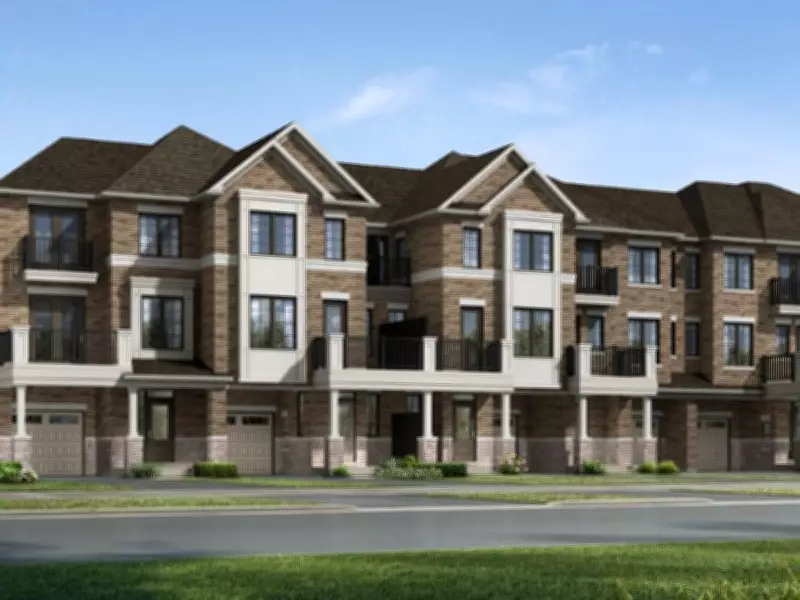
From an architectural perspective, Union occupies a deliberate middle ground between condominium living and conventional single-family homes. The community features three distinct housing types: Village Homes, three-storey townhomes, and dual-front townhomes. Layouts generally range from approximately 1,500 to over 2,300 square feet, with many three-storey designs incorporating private backyards—a notable distinction from the stacked townhomes or condominium-style offerings typically found near major transit hubs.
All Union townhomes are configured as three-bedroom plans, reflecting Mattamy's strategic move away from two-bedroom designs to better accommodate growing families or multigenerational living arrangements. Select floorplans also offer home-office packages, acknowledging the continued prevalence of hybrid work arrangements in today's employment landscape.
Addressing Practical Considerations
Parking, often a contentious issue in higher-density communities, has received careful consideration in Union's design. The Village Homes feature both a garage and a dedicated parking space, accommodating two vehicles per household. This thoughtful approach recognizes that even within a walkable community, many residents commute to destinations beyond downtown Toronto.
"Even in a walkable community, many buyers are commuting somewhere other than downtown Toronto," Gill explains. "For dual-income households, that flexibility with vehicle storage truly matters in their daily lives."
Contributing to Brampton's Urban Evolution
The walkability inherent in Union's design contributes to a broader transformation of Brampton's urban fabric. Gill views the project as part of a significant shift away from the perception of Brampton as exclusively car-dependent.
"This community demonstrates that owning a car can be optional rather than mandatory," he observes. "It supports local businesses that rely on foot traffic and helps attract enhanced services to the area over time, creating a more vibrant, interconnected neighborhood."

While Gill acknowledges that Union may not represent a "forever home" for every purchaser, he emphasizes its importance as an accessible entry point into homeownership. "This is a crucial first step," he states. "It enables people to enter homeownership, to invest in a genuine home within an authentic community. Being surrounded by others at similar life stages fosters a powerful sense of belonging and connection."
Prices for the towns begin at $689,000, positioning Union as an attainable option within the competitive Greater Toronto Area housing market. The development represents not merely a collection of residences, but a carefully considered approach to community building that prioritizes accessibility, connectivity, and sustainable urban living.