

U.S. Hosts Global Summit to Address Critical Minerals Supply Chain Vulnerabilities
The Trump administration convened representatives from 55 nations at a pivotal critical minerals summit this week, unveiling a comprehensive strategy aimed at reducing global dependence on China for essential resources. The initiative centers on establishing price floors and mobilizing substantial U.S. private equity investments to ensure stable access to key minerals for American manufacturers and allied economies.
International Agreements and Policy Frameworks
According to statements released by the U.S. Trade Representative’s office, the European Union, Japan, and Mexico have each agreed to collaborate with the United States on implementing new policies. These include the establishment of price floors designed to address critical vulnerabilities within mineral supply chains. Furthermore, these key trading partners have pledged to work toward a binding multilateral agreement on trade in critical minerals, signaling a unified front in reshaping global resource markets.
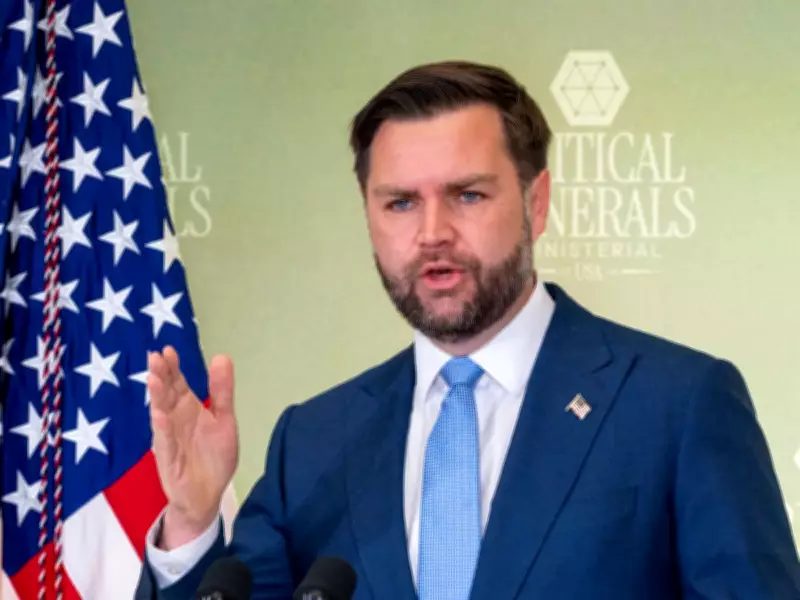
Vice President JD Vance, in his opening remarks at the summit, emphasized the current instability in the international critical minerals market. "Consistent investment is nearly impossible, and it will stay that way so long as prices are erratic and unpredictable," Vance stated. He called upon foreign officials to help create stable investment conditions and introduced the concept of a "preferential trade centre for critical minerals protected from external disruptions." This proposal underscores the administration's clear objective of securing coordinated international agreement on implementing price floors.

Strategic Financial Commitments and Stockpile Initiatives
The administration highlighted several significant financial mechanisms to support this strategic pivot:
- A US$100 billion lending authority specifically allocated for critical minerals development and security.
- President Donald Trump's recent announcement of Project Vault, a nearly US$12 billion critical minerals stockpile initiative.
- This stockpile is to be financed through a combination of US$1.67 billion in private capital and a record US$10 billion loan from the Export-Import Bank.
The chief executive of the Export-Import Bank described this financing model as a "uniquely American" mechanism that leverages government leadership to attract private funding. Trump stated the stockpile is intended to "ensure that American businesses and workers are never harmed by any shortages."
Context and Broader Trade Implications
For several months, the United States and its trading partners have been engaged in efforts to develop cooperative frameworks to wean global supply chains away from Chinese dominance. The public commitments made at this summit, along with the open discussion of price floors, indicate tangible progress toward this goal. The concept of price floors has been a topic of discussion within the industry for some time, viewed as a necessary shield for non-Chinese companies against market flooding tactics that can depress profits for Western firms.
The U.S.-Mexico arrangement will involve identifying specific critical minerals of interest and exploring price floors for metals imports. This bilateral agreement precedes a scheduled joint review this year of the Canada-U.S.-Mexico free-trade agreement, which may undergo significant revisions during Trump's second term. Additionally, the U.S. and EU have committed to concluding a memorandum of understanding within the next 30 days aimed at bolstering critical minerals supply-chain security.
This summit and its outcomes represent a concerted effort to reduce reliance on Chinese supplies of critical minerals, a central issue in the protracted trade war between the world's two largest economies. The move toward coordinated international policy and investment marks a significant step in reconfiguring global resource dependencies and securing strategic economic interests.






