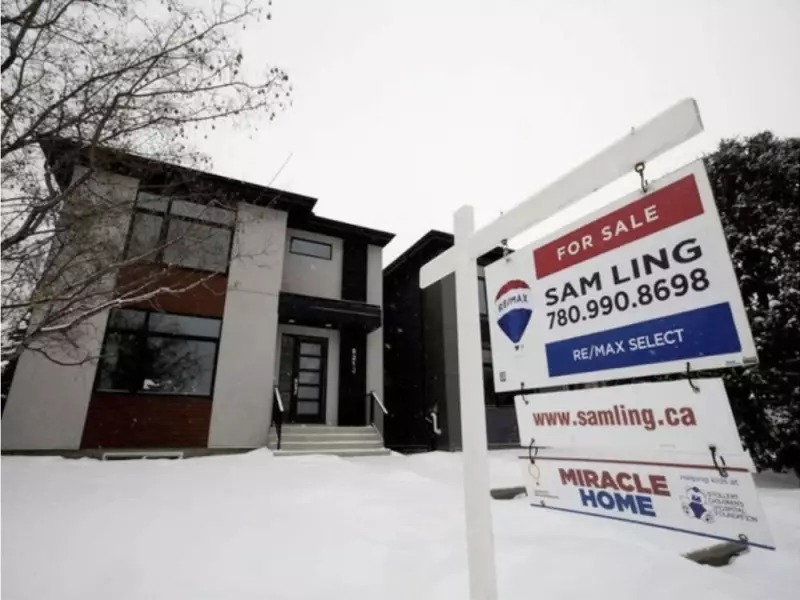
Declining real estate prices across Canada are setting the stage for a potential mortgage crunch for a segment of borrowers in 2026 and 2027. According to mortgage expert Robert McLister, the rapid price escalation of 2021 and 2022 is poised to deliver a delayed financial reckoning, as falling home values directly limit the options available for renewing or refinancing a home loan.
The Critical Role of Loan-to-Value (LTV)
Property values are a fundamental driver of both a homeowner's equity and the array of mortgage products they can access. McLister explains that as home prices drop, the loan-to-value ratio—the mortgage balance compared to the home's current worth—can rise unexpectedly, boxing borrowers into a corner.
To illustrate, consider an average Canadian who purchased an average-priced home with a five percent down payment and mortgage default insurance around five years ago. Today, their mortgage balance might still represent roughly 84 percent of their home's value, an 84% LTV.

The situation can be more severe for those who bought after 2021. With higher interest rates and less time to pay down the principal, their LTV may be even higher. Conversely, buyers who made a 20 percent down payment well before or after the early-2022 peak are generally in a stronger position, as principal payments have outpaced value declines.
However, a notable exception exists for those who purchased within months of the February 2022 market peak. Even with a 20 percent down payment, some borrowers in specific markets may find themselves with negative equity, owing more on their mortgage than their home is currently worth.
Why a High LTV Limits Your Choices
McLister stresses that a loan-to-value ratio above 80 percent has two significant consequences for homeowners seeking financial flexibility.
Firstly, traditional refinancing is typically off the table, as lenders usually require at least 20 percent equity. Homeowners might explore alternatives like an unsecured line of credit or borrowing against other assets. Another risky and costly option is a private second mortgage, which can go up to 85 percent LTV but comes with double-digit interest rates. McLister notes that condo owners in soft markets may not even qualify for this.
The core issue is that a high LTV shrinks the menu of affordable lending options, precisely when borrowers might need relief the most.
How to Assess Your Own Equity Position
McLister offers a quick tip for homeowners to gauge their situation: check the average price change for similar homes in your area since your purchase date, using data from your local real estate board. Apply that percentage change to your property's purchase price and compare the new estimated value to your current mortgage balance. Online auto-valuation tools or consultations with a realtor or mortgage broker can also provide clarity.
The overarching message is clear: as property values adjust, Canadians approaching mortgage renewal in 2026 and 2027 must proactively understand their equity position. Falling prices may leave some with fewer and more expensive options than they anticipated, making early assessment and planning crucial for financial stability.