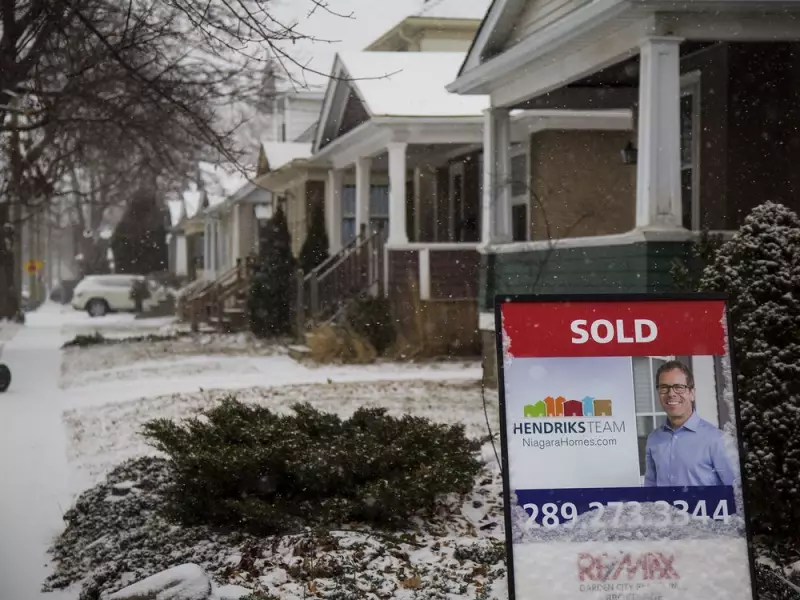
Canada's housing market is showing signs of a potential spring revival in 2026, according to a new forecast from real estate firm Royal LePage. The analysis suggests that improving affordability may draw more prospective buyers back into the market, creating a notable opportunity for those purchasing their first home.
Market Conditions Set Stage for Increased Activity
Historically, the spring season is a period of heightened activity in Canadian real estate, fueled by pent-up demand from the winter and the practicality of moving during the summer months. Royal LePage anticipates this pattern will hold true in 2026, though the surge may be more measured than in some past years.
Phil Soper, Chief Executive of Royal LePage, stated that several key factors are aligning to support a busier market. "Interest rates are no longer a barrier to home ownership, inventory levels are healthy, and economic indicators continue to point to moderate growth in both GDP and employment," Soper explained in a news release.

He acknowledged that broader economic uncertainty could still temper enthusiasm. However, many families have reportedly shifted their strategy from waiting for an ideal moment to focusing on securing a home that meets their needs.
A "Goldilocks" Window for First-Time Buyers
The report highlights a significant advantage for buyers entering the market this spring compared to a year ago: a combination of lower borrowing costs, stable or slightly lower property prices, and more choice. Soper described current inventory levels as "Goldilocks healthy," a rare sweet spot in a market often plagued by chronic shortages.
"Together, these conditions are creating a genuine window of opportunity, particularly for first-time buyers in Canada’s most expensive markets," Soper emphasized. This potential opening is crucial for markets like Toronto and Vancouver, where high prices have long been a major hurdle for new entrants.
The interest rate environment provides a backdrop of stability. Following four rate cuts by the Bank of Canada in 2025, the key rate settled at 2.25 per cent. Economists suggest it may remain at this level for the foreseeable future, potentially throughout 2026. "For homebuyers and those approaching a mortgage renewal, stability matters," Soper noted. "It provides greater certainty around financing costs and allows households to make housing decisions based on need and affordability."
Regional Price Trends Show a Shifting Landscape
The national average home price experienced a modest decline of 1.5 per cent year-over-year in the fourth quarter of 2025, settling at $807,200. This overall figure masks distinct regional variations.
Markets in Montreal and Quebec City demonstrated relative strength, bucking the national downward trend. In contrast, Canada's two most expensive metropolitan areas continued to see price adjustments. Toronto's average price fell 5.7 per cent compared to the fourth quarter of 2024, while Vancouver's dropped 4.1 per cent.
"For years, price growth in Toronto and Vancouver far outpaced the rest of the country," Soper observed. "But our two most expensive metro markets have experienced gradual price declines for four years now, while other major cities saw steady, modest appreciation and are closing the gap."
This rebalancing, coupled with lower borrowing costs, is a core component of the improved affordability equation for 2026. While a CPA Canada economist cautioned that slower population growth and evolving buyer behaviour could limit the extent of a rebound, Royal LePage's outlook points to a spring market poised for renewed, if cautious, activity.