The Great Correction: Not Even Wayne Gretzky's Hometown Escapes the Crash
Canada's real estate meltdown has spread far beyond the bustling urban cores of Toronto and Vancouver, reaching into the quiet streets of small cities and towns like Brantford, Ontario. Here, the dream of homeownership has turned into a harsh reality for many, as prices have sharply declined, leaving homeowners in financial distress and developers grappling with unsustainable costs.
A City Divided by Highway and History
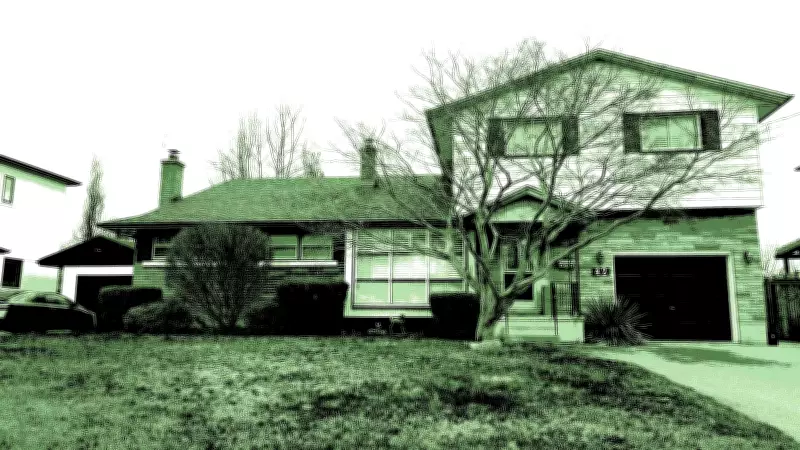
Highway 403 splits Brantford into two distinct halves. Drivers exiting to the right can quickly find themselves on Walter Gretzky Blvd., leading to a sports complex adorned with a 12-foot bronze statue of hockey legend Wayne Gretzky. A few blocks further, Varadi Ave. stands out not just as the street where Gretzky grew up at house No. 42, but for its mix of spacious homes and proximity to parks and shopping centers.
However, in recent years, it wasn't Gretzky's legacy that drew outsiders to Brantford; it was the allure of "For Sale" signs and the promise of affordable, roomy properties. This surge was fueled by pandemic-induced urban flight, the rise of remote work, and skyrocketing housing prices in Toronto and its suburbs.

The Boom and Bust Cycle
The result was a frenzied buying spree that drove average sale prices for traditional ranch-style bungalows in Brantford to nearly $900,000 at the market peak in 2022, up from around $300,000 in 2016. By February of this year, the average home price had dropped to $625,135, a 30 percent decline from 2022, according to the Canadian Real Estate Association. This downturn has created an unexpected housing crisis, echoing across the nation and affecting everyone from bankers and realtors to renters and developers.
Cheryl Van Sickle, a long-time Brantford area realtor, has witnessed the emotional toll firsthand. "I have sat at kitchen tables with families who bought at the peak, and the women are crying and telling me they can no longer afford to pay their mortgages," she said. "For some people, what is happening now is going to be like the 1980s, when they had to hand back their keys and walk away."
Economic Implications and Expert Insights
The housing market's struggles have broader economic consequences, with nearly half of the average Canadian household's net worth—approximately $1.1 million—tied up in real estate, as per Statistics Canada data. Victor Couture, an economist at the University of Toronto's Rotman School of Management, notes that house prices are "auto-correlated," meaning a drop one year often leads to another the next. He predicts further declines in 2026, citing that pandemic-driven price increases in suburbs and exurbs like Brantford were never logically justified.
"It is very hard to justify why, suddenly, housing in Brantford, for example, would become a rare and speculative asset," Couture explained. "The pandemic price increases in the suburbs and exurbs never made any sense." He emphasizes that housing should be seen as a place to live, not a lottery ticket for wealth accumulation.
Developer Struggles and Government Response
In Vancouver and beyond, developers are feeling the pinch. Beau Jarvis, CEO of Wesgroup Properties LP, reported that next to nothing is getting built, with many builders going out of business due to high costs and low demand. He highlighted that red tape, including government fees and taxes, now accounts for 40 percent of construction costs, making new projects unaffordable.
Hope may come from recent government initiatives. An $8.8-billion partnership between the federal and Ontario governments aims to build more affordable homes by slashing development charges and offering rebates to homebuyers. This could spur additional housing starts and set a precedent for similar deals in other provinces like British Columbia.

Local Perspectives and Future Outlook
Back in Brantford, Rose Sicoli, the city's deputy mayor of external relations and a realtor, views the price decline as a stabilization rather than a crash. "We're simply correcting and stabilizing from what was a completely unsustainable spike in prices that we saw a few years ago," she said. With the city's population projected to grow significantly by 2051, the focus remains on providing affordable housing for new residents.
Van Sickle, who has embraced the development of former apple orchards into new homes, reflects on the need for change. "I embrace the change. We need more homes being built. People need somewhere affordable to live," she stated, highlighting the ongoing challenge of balancing growth with affordability in Canada's evolving real estate landscape.