Architectural Gem in Lions Bay Returns to Modernist Splendor
A stunning modernist home nestled within the coastal forests of Lions Bay has been returned to its original architectural glory through a thoughtful restoration project. The residence, originally designed by acclaimed British Columbia architect Peter Cardew in 1980, represents a significant piece of West Coast architectural heritage that had faded over decades.
Unexpected Discovery Leads to Preservation
Byron Tokarchuk and Anja Henche, the current owners, weren't actively searching for a property when they encountered this architectural treasure in 2018. "We made the mistake of coming here," Tokarchuk jokes about their first visit to the cliffside structure. The 2,800-square-foot home, Cardew's first residential project, hadn't been on the market for decades when it appeared in a Lions Bay real estate listing.
Henche, an interior designer, recalls feeling emotional during her initial tour. "It's not very often you find this kind of house on the North Shore. Usually they're pretty cookie-cutter," she explains. Tokarchuk, principal of West Vancouver's TOK Design Studio, adds, "It just felt like an exceptionally good place."

Architectural Significance and Inspiration
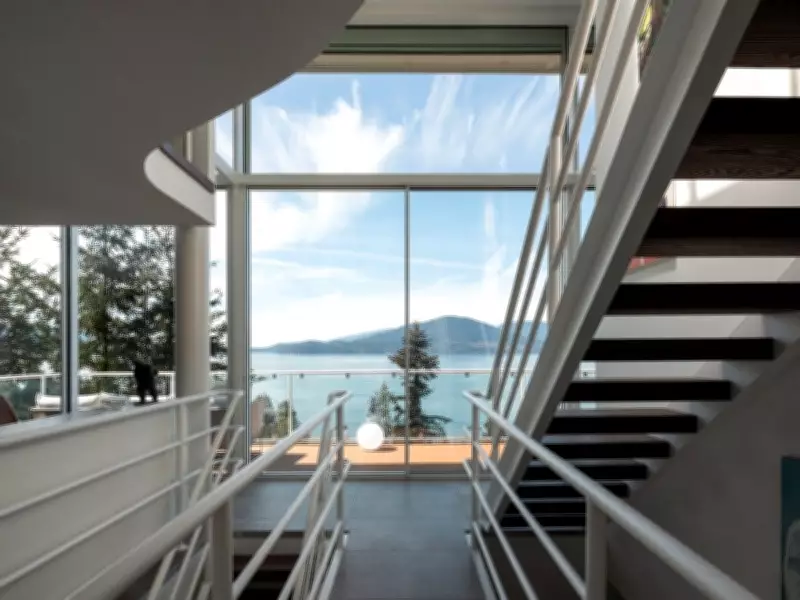
The home's design was inspired by Richard Meier's Douglas House in Harbor Springs, Michigan, known for its geometric profile and dramatic setting. Cardew's interpretation features the boxy, cliffside structure perched on slim columns that characterize West Coast 1980s nautical-inspired modern architecture. Inside, white columns and railings nod to the home's iconic status, while floor-to-ceiling windows were designed to flood the spaces with natural light.
Comprehensive Restoration Challenges
Despite the home's solid steel framework, the restoration team faced significant challenges. The building envelope was failing with rotting wood, disintegrating caulking, and windows that flexed in coastal winds. Interior spaces felt cramped and dated, layered with white carpet that Tokarchuk recalls as "everything was of a different time."
Perhaps most frustrating was the underutilization of the property's spectacular setting. Views of Howe Sound weren't fully visible from inside, and the main-floor deck was essentially unusable—a particular disappointment for a home with unimpeded ocean frontage.
Strategic Renovation Approach
Initially considering expansion, the owners received a contractor's quote that brought them back to reality. "We decided we'd really like to spend money and time on the quality and the way things are put together, instead of spreading ourselves too thin," Tokarchuk explains.
Their most transformative investment involved completely rebuilding the view wall. They replaced scattered smaller windows with a curtain-wall glazing system and massive sliding doors by Sky-Frame and Raico that now run nearly the full length of the main floor, allowing half the facade to open completely. "In the summertime, in the morning, you're throwing the entire wall open," Tokarchuk describes. "We hear the birds. The swallows are flying through."
Interior Transformation
Inside, Tokarchuk and Henche prioritized opening up spaces and improving sightlines. The previously closed-off galley kitchen now opens directly to the view, centered around a long island and table customized to fit the narrow footprint. The space features Miele appliances and German Bulthaup cabinetry for both functionality and luxury.
Veined quartzite carries over the backsplash and counters, with Henche noting, "The greys and rusts are a reflection of what's out there—the water, the rocks, the forest." Strategic pops of red liven up an otherwise restrained palette that complements the natural surroundings.
Architectural Details Preserved and Enhanced
The home's unique circulation remains intact, with a covered bridge leading from a carport to the front entry on the top floor, where another bridge inside leads to the view. Unobtrusive at street level, the home steps down a steep cliff overlooking the water, maintaining Cardew's original dramatic approach.

A mezzanine space on the second floor has been transformed into a home office with what Tokarchuk calls "one of the best views in the house," demonstrating how the restoration has enhanced rather than compromised the home's original architectural intentions.
The completed project represents more than just a home renovation—it's a preservation of British Columbia's architectural heritage and a demonstration of how modernist design principles can be adapted for contemporary living while respecting their original vision.