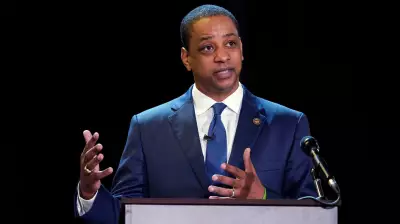
Public Safety Minister Acknowledges $50 Minimum Fine for Foreign Agent Registry Is Too Low
Public Safety Minister Gary Anandasangaree has publicly stated that the proposed $50 minimum penalty for violations of Canada's forthcoming foreign agent registry is inadequate and requires adjustment. This announcement follows extensive consultations and feedback from various political stakeholders who expressed concerns about the penalty's effectiveness.
Government's Initial Proposal and Immediate Backlash
In January, the federal government unveiled its proposed framework for the foreign agent registry, which included fines ranging from $50 to $1 million for individuals or businesses failing to register their activities on behalf of foreign states. The registry aims to increase transparency around foreign influence in Canadian politics and government affairs.
The notably low $50 minimum fine quickly drew criticism from both registry proponents and opposition parties. Critics pointed out that other government oversight bodies, such as the Ethics Commissioner, impose a base penalty of $100, making the proposed amount seem disproportionately lenient.

Minister's Commitment to Revise the Penalty Structure
Minister Anandasangaree confirmed his intention to revise the minimum fine after testifying before the Procedure and House Affairs committee on foreign interference matters. He acknowledged receiving clear feedback from Conservative and Liberal colleagues alike, who argued that $50 was insufficient to deter violations effectively.
"Some of the opinions I've heard, and I've heard from Conservative colleagues, I've heard from Liberal colleagues, is that $50 is maybe too low and to review that," Anandasangaree stated. "We're looking at comparable registries just to come up with a number that may be a bit higher than the 50."
While the minister committed to increasing the minimum fine, he did not specify a new amount or provide a definitive timeline for the registry's implementation. He only indicated that it would be operational by "early spring."
Scope and Significance of the Foreign Agent Registry
The registry is designed to address growing concerns about foreign interference in Canadian democratic processes. According to government estimates reported by the National Post in January, approximately 2,500 entities in Canada are believed to be working covertly on behalf of foreign states to influence local politics and governments.
This includes:
- 1,550 businesses
- 872 individuals
These entities will be required to publicly declare their foreign influence activities once the registry becomes active. The government views this measure as a critical tool in enhancing transparency and safeguarding national interests.
Recent Developments and Broader Context
In a related move this week, the Liberal government proposed former British Columbia electoral watchdog Anton Boegman as Canada's first commissioner to lead the Foreign Influence Transparency Agency. Boegman's appointment is pending approval through votes in the House of Commons and the Senate.
During the committee meeting, Anandasangaree emphasized that while the registry will be valuable in combating foreign interference, it is not a "panacea" for all election-related security challenges. "This, in itself, will not solve all of our issues with respect to elections, but it certainly will assist us," he remarked.
The minister also faced questioning from Conservative and Bloc Québécois MPs regarding security risks associated with Canada's recent diplomatic engagements with China, including discussions about attracting Chinese electric vehicle manufacturers to the country.
The ongoing adjustments to the foreign agent registry's penalty structure reflect the government's responsiveness to stakeholder feedback and its commitment to strengthening measures against foreign influence operations in Canada.