Ottawa's Heritage Policy Needs Fundamental Rethinking, Not More Power
Ottawa city councillors should not be granted additional authority to address deteriorating heritage-designated buildings, as some are advocating. Instead, the city must fundamentally reconsider its entire heritage preservation approach, which currently imposes thousands of dollars in repair and restoration expenses on property owners. This financial burden often results in buildings being abandoned and left to decay.
The Prohibitive Cost of Heritage Preservation
A significant reason why heritage-designated structures frequently fall into disrepair is the exorbitant cost of rehabilitation. Owners lacking sufficient funds are forced to let these properties deteriorate, creating urban eyesores and wasting historical assets.
Here is what the city should implement: If a building possesses enough historical value to merit a heritage designation, Ottawa should either purchase and preserve it directly or provide substantial financial contributions toward its rehabilitation—far beyond the minimal grants currently offered. City staff and the built heritage committee must stop arbitrarily applying heritage designations and then abandoning property owners to face severe financial consequences alone.

Heritage Importance Versus Private Burden
Preserving heritage is undoubtedly important, as it reflects our history, culture, and collective progress as a city and nation. However, when the government designates buildings as heritage for the public good, private owners should not bear the financial burden. This responsibility lies with the government, which must allocate adequate resources to support its preservation goals.
Most property owners resist heritage designations because they can lead to financial ruin. Once a building is designated, the owner loses control to the city, which dictates all modifications and usage but assumes no responsibility for associated costs. Furthermore, heritage status acts as a deterrent to potential buyers, who fear not only future restoration expenses but also complex planning obstacles when attempting to convert such properties into housing or other uses.
Real-World Consequences: Churches and Developers
In 2024, the pastor of an old Baptist church on King Edward Avenue opposed a heritage designation, warning it would cause significant financial losses. Pastor Guy Pierre-Canel explained that the church hoped to sell the property for $2-3 million, but a real estate agent indicated it would become virtually worthless if designated. He pleaded with the city to reconsider, stating, "We are here to say to the city in clear terms that this designation has a $2 million impact for us, which is unbearable." Despite this, the heritage committee proceeded with the designation.
The following year, the Archdiocese of Ottawa-Cornwall opposed heritage designations for two Catholic churches in Orleans and Hintonburg, citing renovation costs and other concerns.
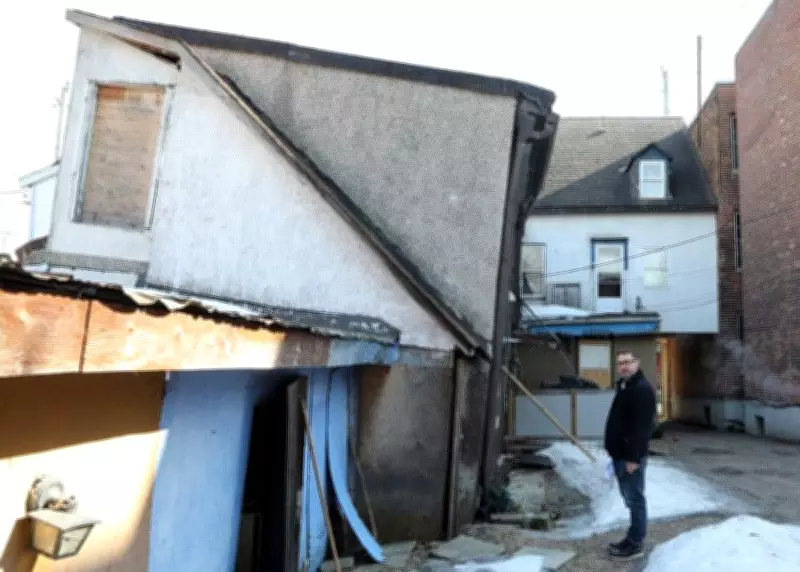
Individual developers face similar challenges. Brian Dagenais purchased three dilapidated heritage houses in Lowertown in 2019, aiming to redevelop 13 rental units into 24 units—a move that could help address Ottawa's housing crisis, especially in a neighborhood needing decent housing. Instead of support, the city subjected him to arduous planning processes. Six years later, the property remains a crumbling eyesore. Dagenais estimates that meeting city requirements would cost "hundreds of thousands of dollars" he cannot afford, leaving the houses as "million-dollar monuments" where private citizens bear all costs, risks, and liabilities without generating value.
The solution is clear: Ottawa must align its heritage preservation ambitions with financial responsibility, either by purchasing designated buildings or significantly funding their restoration to prevent further decay and unfair burdens on property owners.