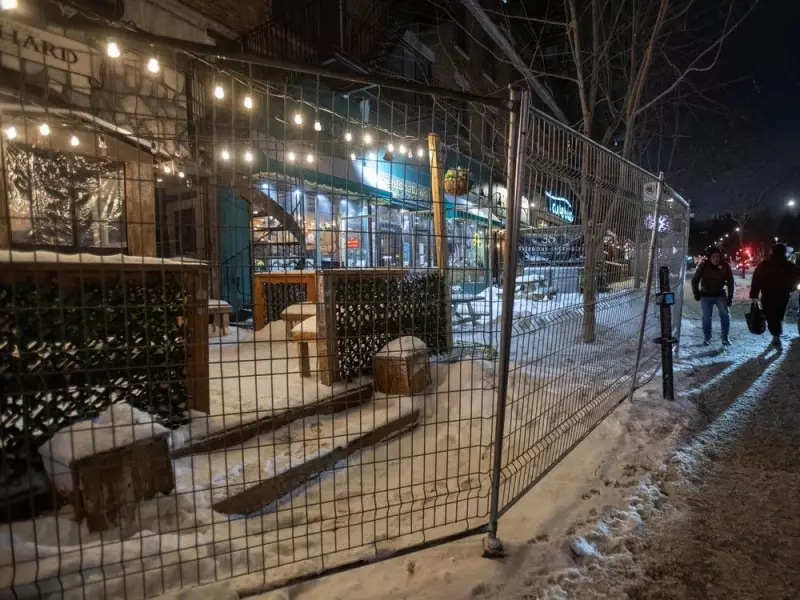
Montreal Apartment Building Evacuated After Heating Failures Raise Safety Concerns
Fifteen residential units and several ground-floor businesses were evacuated from a mixed-use building in Montreal's Notre-Dame-de-Grâce borough on Thursday, January 22, 2026, following a preventive evacuation order issued by city officials. The decision came after multiple days without adequate heating during a period of extreme cold weather, raising significant safety concerns about the structural integrity of the nearly century-old building.
Immediate Evacuation Leaves Residents Frustrated
Residents of the three-storey building, constructed in 1928, expressed frustration at receiving only one night's notice before being forced to leave their homes. "We remain locked out of our apartments with no clear timeline for return," one tenant told reporters. The evacuation order affected both residential tenants and commercial establishments including Ye Olde Orchard, Taverne Monkland, and Rockaberry Café, though business owners indicated the closures were expected to be temporary.
Heating Failures During Extreme Cold
According to residents, heating problems began around January 12-13 during a severe cold snap that brought dangerously low temperatures to the Montreal area. The situation escalated when Énergir shut off gas service to the building following reports of a sulphur-like smell, leaving residents without heat for approximately five days during some of the coldest weather of the season.

While the building's management company, Elfaco Management, provided space heaters to some residents, multiple tenants described the response as inadequate for the extreme conditions. Heating was reportedly restored on January 20, but tenants received evacuation notices the following evening.
Structural Concerns Identified in Engineering Report
The evacuation followed the circulation of a concerning engineering report dated November 3, 2025, prepared by consultancy group Ortam Groupe. The report, commissioned by Elfaco Management, classified the building's issues under an 'immediate' timeframe with 'high-critical' severity and recommended complete evacuation of all occupants.
The detailed assessment outlined necessary structural repairs including:
- Replacement of water-damaged structural elements
- Repair of concrete slabs throughout the building
- Reinforcement of compromised structural components
The report concluded that major structural rehabilitation must occur before any re-occupation could be considered safe, citing significant risks to tenant safety.
Confusion Over Safety Assessment
Adding to resident confusion, a follow-up email from Ortam Groupe indicated that the safety concerns primarily affected residential portions of the building, suggesting commercial spaces might not face the same risks. "We're told our apartments aren't safe, but the restaurants downstairs are," one resident expressed, highlighting the contradictory information tenants have received.
The borough of Côte-des-Neiges–Notre-Dame-de-Grâce confirmed that displaced residents are receiving support through the Montréal Municipal Housing Office, though officials provided no specific timeline for when tenants might return to their homes.
Landlord Response and Ongoing Assessment
Acting Mayor Sonny Moroz stated that the borough ordered the preventive evacuation within 48 hours of receiving tenant complaints about inadequate heat, emphasizing that public safety remained the primary concern. All tenants have been confirmed safe, and a counter-assessment of the building's condition is currently underway.
Elfaco Management, which acquired the property in summer 2025, began responding to resident inquiries on Thursday evening after the evacuation order. In correspondence reviewed by media, the landlord indicated the evacuation came as a surprise and that the company is working with engineers and city officials to assess the building's condition.

Residents reported various temporary housing arrangements, with some staying with friends or family while others were offered lodging at EVO, a student residence. Pet owners faced additional challenges, as temporary accommodations did not permit animals, forcing some to place pets with the SPCA for up to 30 days.
As the investigation continues, tenants expressed concern about potential rent discounts or compensation for their displacement, though no such arrangements have been confirmed. The situation highlights ongoing challenges with aging building infrastructure in Canadian cities and the complex balance between property management responsibilities and tenant safety during extreme weather events.