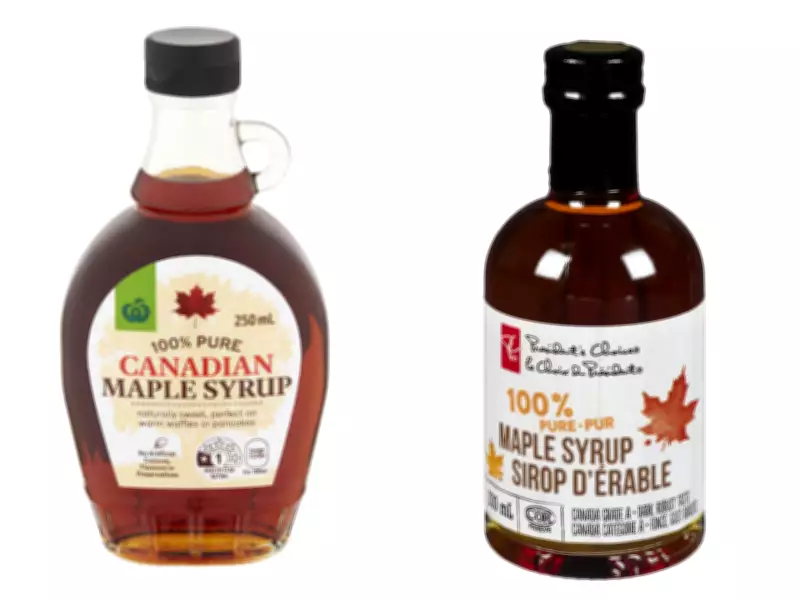
Canadian Maple Syrup Cheaper in Australia Than at Home, Sparking Outrage
A recent Reddit post has ignited frustration among Canadians after revealing that Canadian maple syrup is being sold at a lower price in Australian grocery stores than in its country of origin. The comparison between Loblaws in Canada and Woolworths in Australia has gone viral, highlighting a surprising price disparity for this iconic Canadian product.
The Price Comparison That Sparked Outrage
In the subreddit r/loblawsisoutofcontrol, a user posted a direct comparison showing Woolworths selling a 250 ml jar of 100% Canadian Maple Syrup for $6.00 Australian (approximately CAD$5.85), while Loblaws offered a downsized 200 ml jar of President's Choice 100% Pure Maple Syrup for $6.50. This means Australians are getting more syrup for less money than Canadians pay for a smaller quantity.
The post quickly drew angry responses from commenters who expressed frustration about paying premium prices for a product that should theoretically be cheaper domestically. Many pointed out that the Australian bottle contains 50 ml more syrup, and that the Australian dollar is weaker than the Canadian dollar, making the price difference even more striking.

Broader Price Check Confirms the Trend
A comprehensive price analysis reveals that Loblaws is not an isolated case. The Woolworths maple syrup, priced at AUD$2.40 per 100 ml (roughly CAD$2.34), consistently undercuts the cheapest available options across leading Canadian grocery chains:
- Food Basics sells Irrésistible Amber Maple Syrup at $2.40 per 100 ml
- FreshCo offers 100% Pure Panache Maple Syrup at $2.66 per 100 ml
- No Frills prices President's Choice 100% Pure Maple Syrup at $2.75 per 100 ml
- Sobeys retails Acadian Maple Pure Maple Syrup at $2.80 per 100 ml
This pattern suggests systemic factors rather than isolated pricing decisions by individual retailers.
Expert Analysis: Why Australians Pay Less
National Post spoke with Sylvain Charlebois, director of the Agri-Food Analytics Lab at Dalhousie University and co-host of The Food Professor Podcast, who provided insight into the pricing mystery. "The pricing really depends on the retailer," Charlebois explained. "Some may decide to sell maple syrup as a loss leader, or sometimes the marketing board selling the maple syrup will settle on a deal that varies between countries."
Charlebois highlighted transportation efficiency as a key factor: "Australia can ship very efficiently on the water — water is the most efficient way to transport products. For example, if you want to sell maple syrup in Alberta or even Manitoba, you could actually be seeing higher prices because you have to put it on a truck, and trucking tends to be more expensive than shipping on water."
Quality Concerns and Consumer Skepticism
Some Reddit users expressed skepticism about whether the Woolworths syrup is truly 100% pure, pointing to recent controversies in the maple syrup industry. Many referenced the class-action lawsuit against Quebec-based Érablière Steve Bourdeau, following revelations from Radio-Canada's investigative program Enquête that tested five cans of maple syrup sold in grocery stores and found all samples contained at least 50 percent cane sugar.
However, Charlebois offered reassurance about overseas maple syrup quality: "Typically, when you have maple syrup overseas, you're supposed to have some guarantees linked to the shipment, because the sale would go through the Strategic Reserve. And the Strategic Reserve in Quebec is heavily guarded and tested, so the maple syrup you would find in Australia is highly likely to be 100% maple syrup."
Consumer Strategies and Cost-Cutting
Amid the pricing controversy, many commenters focused on practical ways to reduce costs. The most common suggestion was purchasing larger containers to lower the unit price, as bulk buying typically offers better value per milliliter. Others recommended shopping around between different retailers or considering alternative syrup sources during periods of particularly high prices.

The discussion has broader implications for Canadian consumers who are increasingly concerned about grocery affordability. While maple syrup represents a specific case, it highlights larger questions about domestic pricing structures, international trade dynamics, and consumer access to homegrown products at reasonable prices.