Former Calgary Councillor Links Housing Costs to Homelessness Crisis
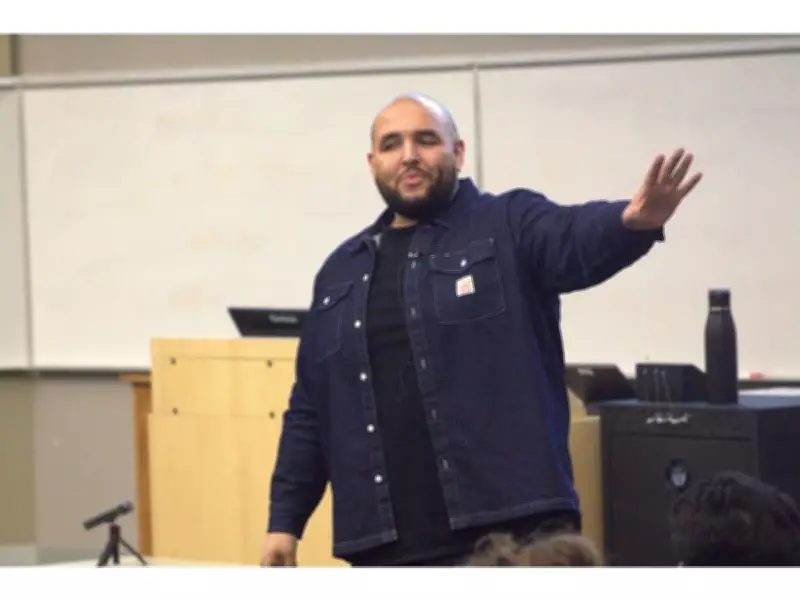
In a compelling lecture at the University of Alberta, former Calgary city councillor Courtney Walcott presented a stark analysis of urban housing challenges, arguing that housing costs are the dominant factor driving homelessness in Canadian cities. Drawing from his personal experiences and political career, Walcott challenged conventional economic indicators as primary causes of housing insecurity.
Personal Experience Informs Policy Perspective
Walcott, who grew up in affordable housing himself, shared a poignant personal story that illustrates how housing policies can create difficult choices for low-income families. "When I turned 18, I had to hand over my income statements to my housing provider," he recounted. "Because all of a sudden, when I first got a job, now you have to share with the government how much money you make to ensure your household is underneath the threshold. My first job put my family over the threshold. Now we no longer qualified for the unit."
This experience forced him to make a difficult decision: "So, guess what I had to do? I had to move out — otherwise my parents would lose their home." This early encounter with housing policy limitations shaped his understanding of how affordability barriers operate in practice.

Data Challenges Conventional Wisdom
Walcott pointed to 2021 data from Calgary that revealed a surprising trend. Despite the COVID-19 pandemic dominating public discourse about social challenges, housing prices emerged as the key factor driving increased applications for affordable housing. "We actually had a market crash, and it didn't do anything," Walcott noted about housing affordability. "Even though people were losing their house, housing prices still went up. And then they kept going up."
His analysis suggests that traditional economic indicators fail to capture the housing crisis's true dimensions. "The number one indicator of homelessness and poverty in a city is not your unemployment rate, it's not your economy, not your job availability or household income — it's housing cost," Walcott emphasized. "Housing cost is the one thing that dictates homelessness in a city at a higher clip than any other indicator."
Infill Development and Generational Divides
The former councillor addressed common concerns about infill housing development, noting that resistance to new housing forms follows historical patterns. "As it turns out, many of the complaints about infill are nothing new," he observed. Concerns about changing neighborhood character, higher density impacts, and parking limitations have emerged with every new residential zoning innovation since the 1980s.
Walcott identified a cultural and generational dimension to housing debates. Many long-term homeowners from the baby boomer generation view their homes as retirement investments, expecting to sell at higher values to fund their retirement years. This perspective can create friction with younger generations seeking more affordable entry points into the housing market.
Calgary's Experience with Zoning Changes
The former councillor pointed to positive outcomes from Calgary's zoning reforms. When the city permitted row houses in previously restricted areas, housing prices began trending downward almost immediately. "The reason?" Walcott explained, "People who were otherwise limited to renting suddenly had options to enter the housing market."
He also addressed parking concerns that often accompany infill discussions, noting that Calgary has approximately 0.8 cars for every person, suggesting that parking challenges reflect broader transportation patterns rather than specific housing developments.
Broader Implications for Urban Policy
Walcott's analysis suggests that municipalities need to prioritize housing affordability as a central component of poverty reduction strategies. His perspective, informed by both personal experience and political service, challenges policymakers to look beyond traditional economic metrics when addressing homelessness and housing insecurity.

The lecture highlighted the complex interplay between housing policy, generational expectations, and urban development patterns that shape affordability challenges in Canadian cities like Calgary and Edmonton.