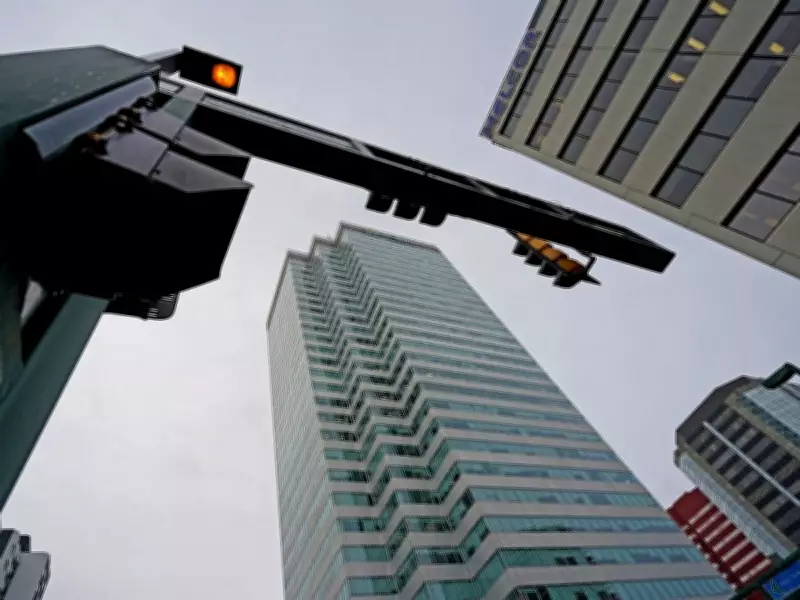
Edmonton Office Market Shows Signs of Stabilization in First Quarter
The Edmonton office real estate market appears to be reaching a turning point after years of elevated vacancy rates, according to a new report from commercial real estate firm CBRE. While the overall vacancy rate edged up slightly to 19.1 percent in the first quarter of 2026, significant transactions in the downtown core and steady suburban growth suggest the market may be finding its footing rather than continuing its decline.
Downtown Momentum and Major Transactions
Beneath the surface of flat overall numbers, there are clear signs of momentum building in Edmonton's office sector. The downtown core witnessed several substantial deals, including ATCO's major relocation to the former Canadian Western Bank building. Additionally, provincial office workers have been returning to the core, with many now working out of Commerce Place and buildings near the legislature.
Dave Young, executive vice president of capital markets at CBRE, expressed optimism about the market's direction. "I take that as a win," Young said regarding the stabilized vacancy rate. "It looks like the office market has turned the corner after years of high vacancy rates."

Tiered Performance and Conversion Opportunities
The CBRE report reveals a significant divergence in performance between different classes of office space. Top-tier Class A buildings continue to outperform the market, while lower-quality Class B and C spaces are struggling to attract tenants. This trend mirrors what's happening in other Canadian markets as tenants increasingly seek move-in-ready or improved spaces that reduce upfront costs and minimize downtime during relocations.
Young noted that many of these lower-quality office spaces, some of which are becoming nearly obsolete, could potentially convert well into housing projects if they have proper floor plates. He expressed disappointment that the City of Edmonton hasn't reconsidered incentive programs to attract developers who could transform old offices into residential units. "If we had better quality facilities for residential downtown, we might see more residential growth in the core," Young commented.
Industrial Real Estate Faces Tightening Market Conditions
While the office market shows signs of stabilization, Edmonton's industrial real estate sector is experiencing increasingly tight conditions. The first quarter saw more than 300,000 square feet of positive absorption, meaning significantly more space was leased than vacated. With very little new inventory coming to market, availability has decreased substantially, pushing the vacancy rate below 3 percent.
"I don't think I've seen the availability this tight," Young remarked about the industrial market. The CBRE report indicates these numbers are approaching 10-year lows for Edmonton's industrial real estate sector.
Construction Costs Outpacing Rental Growth
A key factor driving the industrial market's tightening conditions is the current economic environment where construction costs are outpacing rental rate growth. This dynamic has led many business groups to choose leasing existing space over building new facilities, further reducing available inventory.
Young predicts this trend will continue for the foreseeable future. "I really think the next 24 months, it's going to be a landlord's market because there's no new supply being built," he explained. This market shift is expected to result in rising rental rates and improved returns for land owners compared to what they've experienced over the past five years.
The CBRE report concludes that while Edmonton's office market appears to be stabilizing with renewed optimism in the downtown core, the industrial sector faces increasingly competitive conditions with shrinking vacancies and limited new supply on the horizon.