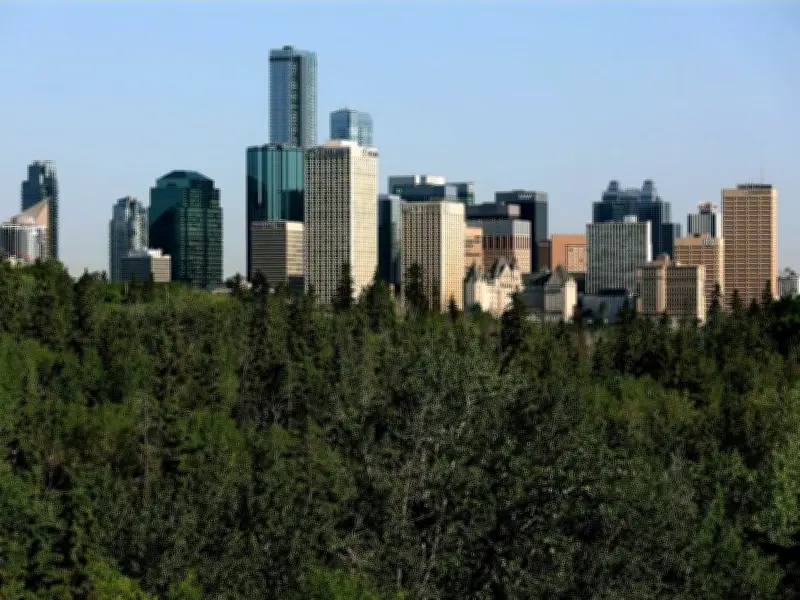
Canada's fastest-growing luxury real estate market is not Toronto or Vancouver. It's Edmonton. The wealthy are still spending, but they are choosing locations that offer more space and a garage.
Denis Rowley sells luxury homes in Edmonton, but he was a mortgage broker and an appraiser first, and he still reads the market like one: he looks at who can afford to borrow, and what happens when they cannot.
Ninety per cent of his clients, he says, are carrying a mortgage, and the homes they buy average around $1.2 million. Edmonton has long been Calgary’s quieter, cheaper sibling.

“Edmonton normally lags behind Calgary,” said Rowley, a long-time realtor at RE/MAX Real Estate Center. “Right now we are leading the market.”
He is describing, from the ground, what RE/MAX Canada laid out in data on Wednesday. Its latest report on luxury real estate across the country found high-end sales surging in smaller markets through the first four months of the year while the traditional hubs went quiet.
In Edmonton, luxury sales from January to April were up 47.7 percent, compared to the same period last year, the largest jump among the 12 major cities that RE/MAX tracks. Sales jumped by 27 percent in Saskatoon and 13.5 percent in Calgary.
Toronto and Vancouver went the other way. They still move more luxury dollars than anywhere else, but they moved much fewer in the early months of the year.
Toronto’s luxury sales — properties worth over $4 million — fell by close to 17 percent during the period, compared to a year earlier, and Vancouver’s fell nearly 20 percent, according to RE/MAX.
In the largest, priciest markets, the report says, uncertainty has pushed affluent buyers into a wait-and-see crouch. It does not help that both cities impose costs the Prairies do not: land transfer taxes, vacancy taxes and Vancouver’s speculation tax.
“Luxury is no longer defined solely by Canada’s largest urban centres,” said Don Kottick, president of RE/MAX Canada, who calls it a rebalance, not a retreat.
The wealthy are still spending. They are just doing it somewhere with a garage.
Where the money is coming from
When a city’s luxury tier starts near a million dollars, as it does in Edmonton, instead of the $4 million it takes to register in Vancouver, the question is who is writing the cheques.
For scale: the typical Edmonton home sold for about $492,000 in May, the average detached house for $605,000, according to the Realtors Association of Edmonton. A $1.2-million sale is more than double the average market price.
Part of what’s driving the growth is migration. Alberta has led the country in net interprovincial migration, and someone who sold a semi-detached home in Toronto arrives with equity that buys a lot more house, a lot more lawn and a heated garage they will use eight months a year.
The tax math helps: no land transfer tax; no provincial sales tax, while a comparable Toronto closing can run five figures before the lights are on.