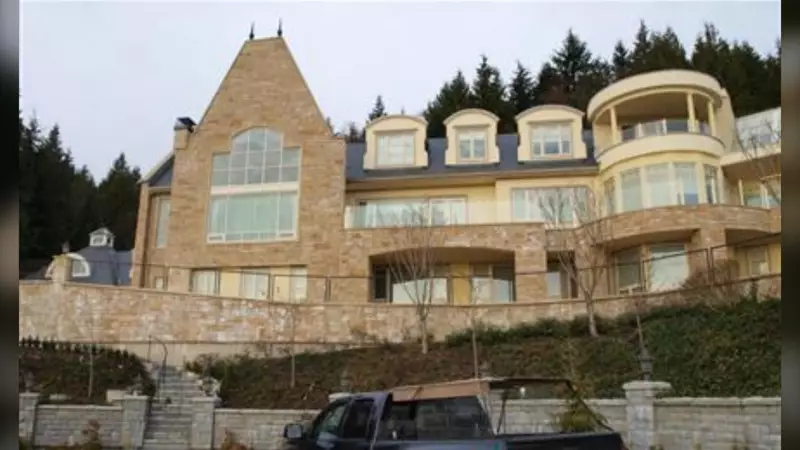
A prominent developer has lost a significant legal challenge to reduce the property tax valuation of a palatial West Vancouver estate. The British Columbia Property Assessment Appeal Board has dismissed the appeal, which sought to lower the home's assessed value from $22 million to $14 million, a difference of $8 million.
The Lavish Estate at the Heart of the Dispute
The subject of the appeal is the sprawling mansion located at 1669 Marlowe Place in West Vancouver. The property is a testament to luxury, boasting 14 bedrooms and 17 bathrooms within its nearly 20,000 square feet of living space. Among its most notable amenities is a full indoor swimming pool, a feature that underscores the home's high-end market positioning.
The Developer's Argument and the Board's Decision
The developer, whose identity is linked to the property through corporate records, argued before the appeal board that the $22,073,000 assessment set by BC Assessment for the 2025 tax year was inaccurate and too high. They contended that a valuation of approximately $14 million was more reflective of the property's true market value.

However, after reviewing the evidence, which included submissions from both the property owner and BC Assessment, the panel ruled in favor of the provincial assessment authority. The decision, dated December 31, 2025, means the original assessed value stands. This outcome has direct implications for the annual property taxes payable on the estate, which are calculated based on the assessed value.
Implications for Luxury Real Estate and Municipal Revenue
This ruling highlights the rigorous process involved in challenging property assessments in British Columbia, especially for high-value assets. For municipalities like West Vancouver, stable and accurate assessments are crucial for budgeting and providing local services. Significant reductions, if granted, can impact municipal revenue streams.
The case also sheds light on the valuation complexities of ultra-luxury homes, where unique features and limited comparable sales can lead to disputes between owners and assessors. The board's decision to uphold the $22 million figure suggests the evidence presented by BC Assessment robustly supported their valuation methodology for this distinctive property.
With the appeal denied, the developer is responsible for property taxes based on the $22 million assessment. The ruling serves as a reminder to all property owners, particularly those with high-value holdings, of the legal threshold required to successfully challenge an official assessment in court.