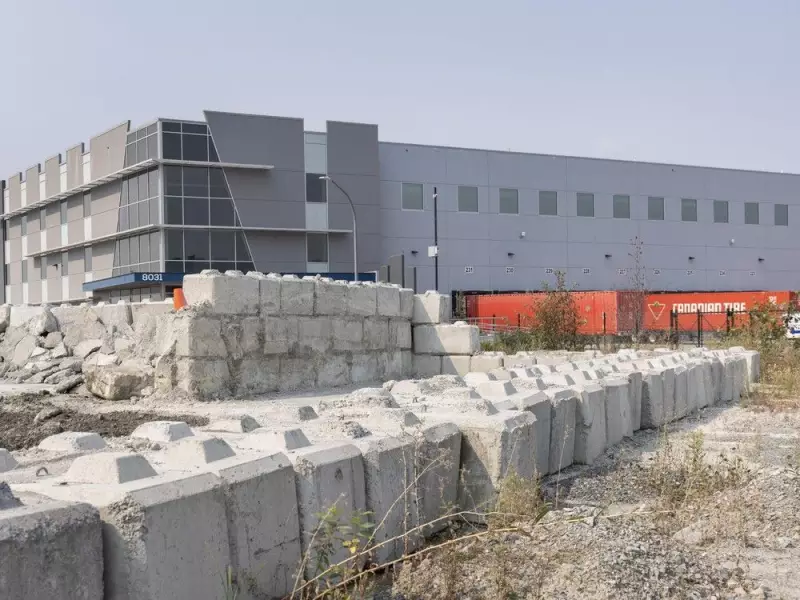
A major property development in Richmond, British Columbia, has been thrown into limbo after a lender and a prospective tenant withdrew from the project, citing legal uncertainties stemming from a landmark court decision on Aboriginal title.
Financing Falls Through Following Court Decision
Montrose Property Holdings reports that a long-term financial backer has pulled financing for a new industrial building. The company states this decision is a direct result of the B.C. Supreme Court ruling in August that granted Aboriginal title to the Cowichan Tribes over more than three square kilometres of land in Richmond.
The lender, with whom Montrose had successfully worked on previous projects, was in "advanced discussions" to provide funding. A key prospective tenant was also involved in the talks. However, negotiations collapsed due to what the company describes as "uncertainties and risk allocation issues" created by the court's decision.

Montrose had already invested approximately $7.5 million in advancing the project and expected to borrow an additional $35 million to complete construction.
Broader Business Impacts Emerge
The fallout from the Cowichan ruling extends beyond this single development. Montrose also disclosed that discussions with utility companies Fortis and Enbridge have ceased. These talks, which had been ongoing for six years, involved a project to capture landfill gas rather than flare it off.
These business effects are among the first specific, publicly aired examples of the economic repercussions following the court's decision. The details are outlined in a 31-page application to reopen the court case, supported by a 1,200-page affidavit, which has been shared with the involved parties and Postmedia.
Understanding the Cowichan Ruling and Its Implications
In her August ruling, B.C. Supreme Court Justice Barbara Young found that the ownership of certain city and federal port lands was "defective and invalid." She ordered the province to negotiate a settlement with the Cowichan Tribes. The ruling is currently under appeal by Canada, British Columbia, the City of Richmond, and the Musqueam and Tsawwassen First Nations.
While the Cowichan did not seek to displace private landowners or invalidate their titles in this case, the court did not explicitly rule that private lands were off limits. Justice Young stated that Aboriginal title and fee-simple private title can coexist.
However, she also noted that while the Cowichan are not currently pursuing exclusive use of privately owned lands, they might choose to do so in the future through further negotiation or legal action. Montrose argues in its application that this creates significant uncertainty for B.C.'s long-standing system of private land ownership.
The situation highlights the complex interplay between Indigenous rights, property law, and economic development in Canada, as governments, First Nations, and the private sector navigate the path forward.