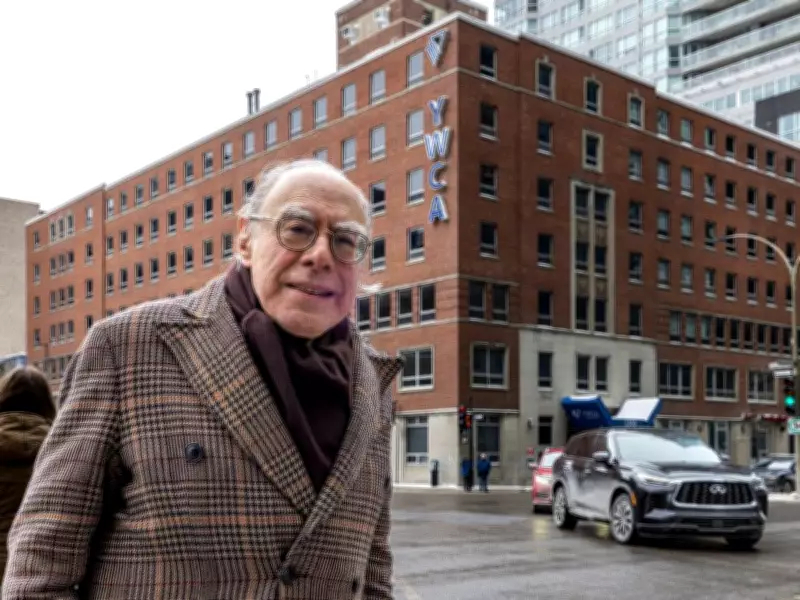
Montreal Community Group Urges Borough to Block YWCA Demolition for Highrise Development
A downtown Montreal community organization is calling on the Ville-Marie borough to deny a request to demolish the former YWCA building, contending that plans to construct a 30-storey mixed-use residential and commercial tower in its place do not align with the neighborhood's most pressing requirements.
Advocates Push for Preservation of Low-Cost Housing Resources
The Peter McGill Community Table is advocating for the preservation of the seven-storey structure located at 1355 René-Lévesque Blvd. W., proposing its continued use for affordable housing, which they assert is severely lacking in the western downtown area. "We don't need more condos, that's not the most urgent need," emphasized Robert Hajaly, a community activist with the group. "There's very little cheap housing for people in need, and on the other hand, there's a lot of expensive housing going up in these highrise towers, which, of course, these people cannot afford."
Hajaly submitted written opposition to the demolition by the February 9 deadline, highlighting the building's historical role. "My chief reason for objecting to this demolition is that this building, when it was operated by the YWCA, offered about a hundred single rooms to house women in need, as well as offering recreational facilities and social services for these women," he wrote. "In addition, a further 85 rooms in this building could be adapted to provide more such housing. If this building is demolished, these rooms and facilities and services will be permanently lost to those who need them, a considerable human loss."

YWCA Relocation Due to Costly Renovations and Safety Concerns
The Women's Y relocated to De Lorimier Avenue last year after determining that selling the building was more feasible than undertaking extensive renovations. The organization had occupied the site for 70 years, but the structure requires significant repairs. Nadine Gelly, chair of the YWCA's board of directors, explained that analyses revealed it would cost "tens and tens of millions of dollars" merely to bring the building up to code.
Key findings from the report included:
- Widespread asbestos contamination with lead particles
- Inability to upgrade the building to meet modern energy standards
- Extensive replacement needed for the damaged facade
- Structural components, such as concrete and terracotta walls, failing to meet current seismic standards
"It was impossible to stay there for two reasons: the money just to bring the current building up to code, and the time as well," Gelly stated. "There would have been an interruption in our services for years before being able to start offering them again." The new location has already increased their service capacity by 50 percent, with plans for 96 housing units for women in need underway.
Municipal Perspective and Development Plans
Leslie Roberts, the city councillor for the Peter-McGill district and associate councillor responsible for the downtown core, acknowledged the building's historical significance but noted that demolition appeared inevitable given its condition. "Once I learned the state of the building, having met with the people who run the Women's Y, I quickly realized that it was probably destined for demolition, anyway," he said. "It doesn't make sense to buy it and renovate it, because it's just cost prohibitive."
According to a public notice from the Ville-Marie borough, the proposed redevelopment project by real-estate developer Groupe HD includes 401 housing units in a mixed-use commercial and residential building. Roberts mentioned that the developer has agreed to incorporate a commemoration of the historical significance of the former YWCA building, including a public space, as requested by the organization.

Roberts also addressed the broader issue of affordable housing shortages, referencing Mayor Soraya Martinez Ferrada's recent initiative to ease regulations for developers to tackle the housing crisis. The city aims for a "partnership-based approach" involving the municipality, non-profits, and the private sector, rather than mandating affordable units within projects. "Our goal is the same," Roberts remarked. "It's just how we get there is different."
Ongoing Community Engagement and Next Steps
The borough's demolition review committee is scheduled to meet on February 18 at 5:30 p.m., with residents permitted to attend. Roberts confirmed that he maintains regular communication with the Community Table and understands their concerns. "I know where they stand, and I would agree, but we're working on it as an administration," he said. "It is one of the top priorities, affordable and social housing, and family housing, to keep people in the city."
Groupe HD has not responded to requests for comment regarding the community group's apprehensions. The outcome of the upcoming meeting will determine the future of the site, balancing development interests with the critical need for affordable housing in Montreal's downtown core.