Calgary's Real Estate Landscape Transforms into Collection of Micro-Markets
The latest outlook from the Calgary Real Estate Board (CREB) paints a complex picture for the city's property market in 2026, revealing what industry experts describe as "a collection of micro-markets" rather than a unified housing landscape.
Mixed Forecast with Regional Variations
Released in late January, the CREB market outlook predicts aggregate prices and sales will decline in 2026 compared to the previous year. This would mark the second consecutive year of decreasing prices and activity following a pullback in 2025. However, the situation varies dramatically across different property types and neighborhoods.
"Calgary is moving into a more normal and sustainable market environment, but one where the outcomes will depend heavily on property type, price and location," explains realtor Doug Cabral with Royal LePage Benchmark in Calgary.

Divergent Performance Across Housing Segments
The CREB forecast indicates that semi-detached and single-family detached homes will likely experience modest price increases and steady resales compared to last year. These traditional housing types continue to demonstrate resilience despite broader market challenges.
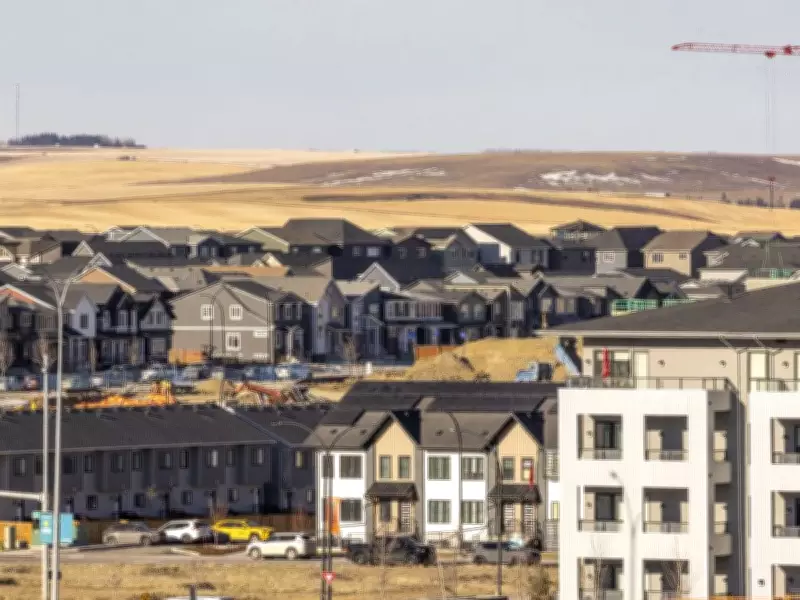
In contrast, apartment and row homes face different circumstances. These segments are expected to see price declines and struggle to expand sales volumes, partly due to rising supply from new multi-family developments. New home construction in Calgary has maintained record or near-record activity levels since 2022, fueled significantly by a substantial increase in purpose-built rental projects.
Shifting Buyer Dynamics and Market Fragmentation
What has become increasingly clear to veteran realtors like Cabral is that Calgary's market no longer revolves predominantly around single-family detached homes as the default choice for first-time buyers. "Calgary has turned into a collection of micro-markets," Cabral emphasizes, noting that affordability now appears more frequently in row and apartment housing types, which have become attractive options for first-time buyers with expanded choices.
Meanwhile, affordable semi-detached and single-family detached homes have become less abundant in accessible price ranges. Even on a neighborhood-by-neighborhood basis, demand, supply, and pricing can vary dramatically, justifying the "micro-markets" perspective that now characterizes Calgary's real estate environment.
Moderate Sales Projections Amid Economic Headwinds
Despite the anticipated declines, 2026 is not expected to be a disastrous year for Calgary's real estate market. CREB forecasts approximately 22,500 sales by year's end, slightly below the 22,751 sales recorded throughout 2025.
The market faces several headwinds beyond ongoing economic uncertainty, including volatile relations with the United States administration regarding free trade agreements. Additionally, immigration is projected to continue declining from its peak in previous years, as is inter-provincial migration. Both factors significantly drove demand over the past three years or more.
Paired with record housing development, particularly in the multi-family sector, demand is unlikely to push sales substantially higher. Nevertheless, Calgary maintains a relatively healthy market position compared to major centers like Toronto and Vancouver, according to Don Kottick, president of Re/Max Canada.
The evolving dynamics suggest that Calgary's real estate market has matured into a more nuanced ecosystem where success depends increasingly on understanding localized conditions rather than relying on broad market generalizations.