Calgary Cafe Owner Challenges Sudden Eviction Notice for Infrastructure Project
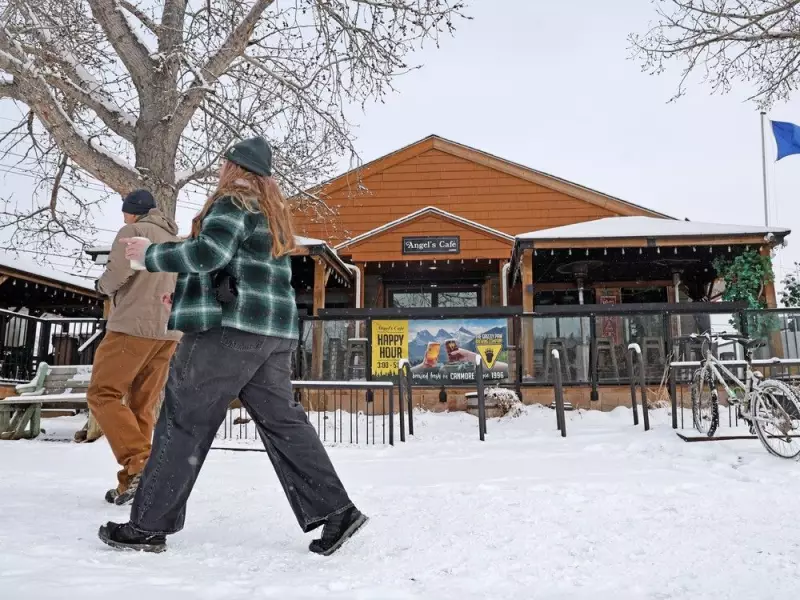
In a sudden development that has shaken Calgary's Montgomery community, city officials delivered a stark ultimatum to Angel's Cafe: vacate the premises within thirty days to make way for critical water infrastructure repairs. The notification, delivered on Thursday, left longtime owner Cathy Jacobs reeling as she faced the potential dismantling of her business establishment of twenty-eight years.
A Business Legacy Threatened by Municipal Necessity
The closure demand stems from Calgary's ambitious South Bearspaw feeder main replacement initiative, a substantial infrastructure undertaking requiring construction access precisely where Angel's Cafe currently operates. According to municipal representatives, the replacement pipeline's proximity necessitates complete removal of the cafe structure to facilitate essential repair work.
"It took me a night's sleep to be able to wrap my head around the shock of all of this," Jacobs revealed on Saturday, describing the emotional impact of receiving what initially appeared as a terminal notice for her business. The timing proved particularly difficult as the cafe had recently exercised a lease renewal option in January, securing another five years of operation at their current location.

Community Support Sparks Alternative Proposal
Following widespread media coverage of the impending closure, Jacobs experienced an outpouring of community solidarity. Beginning early Friday morning, her phone began ringing continuously with expressions of support from regular patrons, neighborhood residents, and even larger corporate entities offering assistance.
"People are shocked and devastated," Jacobs observed, noting how this groundswell of community backing revitalized her determination to find a workable solution. Rather than accepting permanent closure, she developed an alternative proposal that could potentially benefit both her business and municipal taxpayers.
A Creative Compromise Emerges
Jacobs' counterproposal involves relocating the entire cafe structure to an adjacent parking area, effectively removing it from the immediate construction zone while preserving the business for future operation. This approach, she argues, would conserve both municipal resources and her personal investment while minimizing disruption.
"I'm asking for two weeks to finish operations," Jacobs explained, outlining a phased approach that would allow proper business wind-down. Her plan includes hosting a farewell celebration to clear existing inventory before coordinating professional building relocation services.
The owner acknowledges that moving the structure carries risks, including potential damage to windows, flooring, and ceiling components that would require subsequent repairs. However, she emphasizes this represents a far more hopeful scenario than complete business termination. "That gives us a little more hope than 'you're terminated, it's indefinite, you're never allowed to come back,'" Jacobs stated.
Municipal Response and Political Intervention
Jacobs described the initial notification process as particularly distressing, with city officials delivering the news to her manager in what she characterized as an emotionally detached manner. "Jimmy said they were so cold, like their eyes were vacant," she recalled of the exchange.
Seeking intervention, Jacobs visited Calgary's municipal headquarters on Friday for direct discussions with elected representatives. She met with Ward 7 Councillor Myke Atkinson and Ward 14 Councillor Landon Johnston, both of whom expressed surprise at the situation's urgency.
"They were so shocked," Jacobs reported. "They said, what can we do?" During these conversations, she emphasized the practical challenges of her thirty-day timeline, noting that original building assembly required six months of coordinated effort.
Potential Resolution Pathways
Councillor Atkinson confirmed the infrastructure necessity in a Friday text message, explaining that "it would require construction access at the location" due to the replacement pipe's proximity. However, political representatives indicated willingness to explore extended timelines and alternative arrangements.

Jacobs reported that council members expressed hope for securing an additional month for the transition process. Furthermore, she proposed that municipal authorities might collaborate on temporary storage solutions, potentially allowing the cafe structure to be reinstalled once pipeline repairs conclude.
This developing situation highlights the complex balance municipalities must maintain between essential infrastructure maintenance and supporting established local businesses that form community cornerstones. As discussions continue between Jacobs and city officials, the outcome will determine whether a twenty-eight-year Calgary institution can adapt to municipal necessities or faces permanent closure.