BC Hydro has initiated legal proceedings against a family in Vancouver, seeking a court order to allow work to proceed on a critical transmission line project that the family has blocked. The case highlights the tensions that can arise between infrastructure development and property rights.
The Legal Dispute Over Access
The heart of the matter is a major transmission line project that requires access or work on or near the family's property. According to court documents, the family has refused to grant the necessary permissions, effectively halting progress on a segment of the infrastructure. BC Hydro, as the provincial Crown corporation responsible for power generation and distribution, argues that the project is of significant public importance and that the blockade is causing costly delays.
The utility filed the court action on December 3, 2025. The legal move is seen as a last resort after attempts to negotiate access with the property owners reached an impasse. The specific details of the blockage and the family's reasons for it are outlined in the court filings but have not been publicly disclosed in full.

Connection to the Skeena Transmission Line
This dispute is directly tied to the broader Skeena Transmission Line project, a major initiative to bolster electrical infrastructure in northwestern British Columbia. The project includes the construction of new substations and hundreds of kilometers of high-voltage transmission lines.
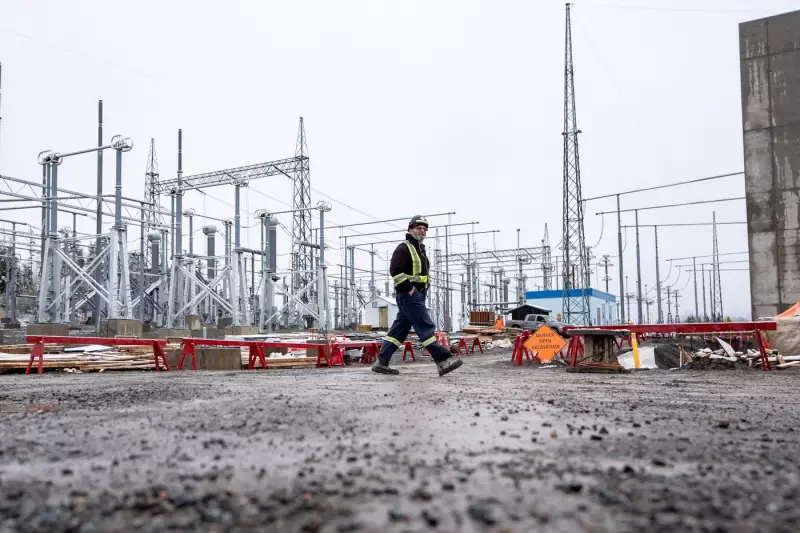
Work is actively underway, as evidenced by recent activity at the BC Hydro Skeena Substation in Terrace, B.C.. A worker was photographed on site on Thursday, November 13, 2025, demonstrating the scale of the ongoing construction. The Vancouver family's obstruction reportedly affects a crucial link in this larger network, potentially impacting the timeline for bringing enhanced power reliability to the region.
Implications and Next Steps
The outcome of this court case could set a precedent for how similar disputes between utilities and landowners are resolved in the future. BC Hydro's position underscores the challenge of balancing individual property rights with the collective need for modernized, reliable energy infrastructure that supports economic growth and community needs.
If the court rules in BC Hydro's favour, it would likely grant an injunction or another form of court order compelling the family to allow the work to proceed. A ruling for the family would force the utility to seek an alternative, potentially more expensive and time-consuming, route or solution. The case is now in the hands of the British Columbia justice system, with both sides preparing their legal arguments.