A leading property tax expert is warning that the financial fallout from a landmark court decision on Aboriginal title in British Columbia could be far greater than the provincial government has acknowledged. According to Paul Sullivan, principal at the global tax firm Ryan LLC, the province may need to provide up to $1 billion in loan guarantees to stabilize the real estate market affected by the ruling, a figure that dwarfs the $150 million initially promised by Premier David Eby.
The Cowichan Ruling and Its Financial Fallout
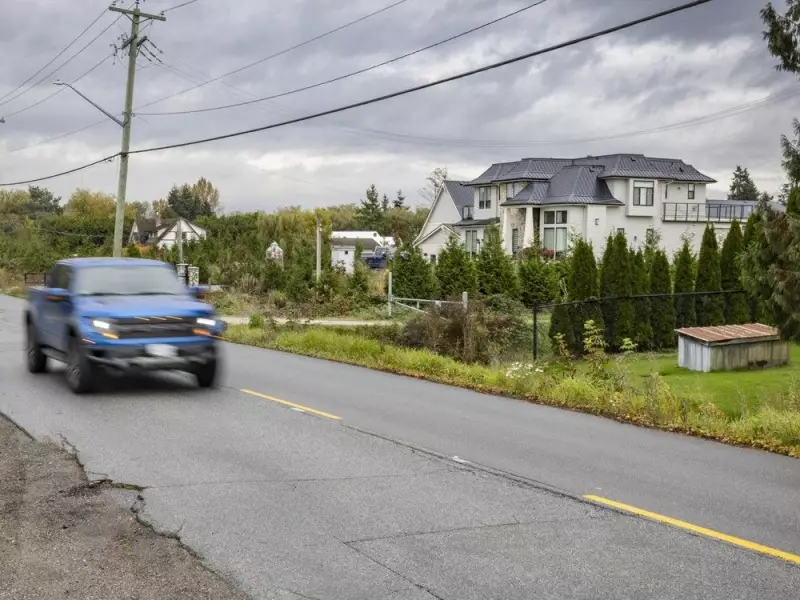
In August 2025, the B.C. Supreme Court granted the Cowichan Tribes Aboriginal title to approximately 7.5 square kilometres of southeastern Lulu Island and an additional two-thirds of a square kilometre along the Fraser River shoreline in south Richmond. The area was historically a summer fishing village. This decision has injected significant uncertainty into the local property market, leaving homeowners and developers questioning the future value of their assets and their ability to secure or renew mortgages and development financing.
At a Vancouver Chamber of Commerce event in mid-December, Premier Eby sought to reassure stakeholders, vowing his government would "go to the wall" to defend private property rights. He pointed to initial estimates, noting that developer Montrose Properties—which owns about a third of the land in the title area—faced roughly $100 million in financial challenges, while residential mortgages in the region totaled about $54 million.

A "Sound Bite" Without Substance?
Despite the Premier's assurances, Paul Sullivan argues the promise lacks critical detail and scale. "This feels like a sound bite without any interpretive detail," Sullivan stated. The core issue, he explains, is whether the government's guarantee is meant to ensure access to financing generally or to prop up the assessed property values, which may decline due to the title decision.
"Are you guaranteeing a value of the property for financing purposes? Are you just guaranteeing that you will be able to get your financing, but you’ve got to go get your value agreed to with the bank," Sullivan questioned. This lack of clarity could be problematic if major financial institutions become nervous about the legal risks associated with the titled land.
The Billion-Dollar Math Behind the Warning
Sullivan's projection of up to $1 billion in potential provincial exposure is based on standard banking practices and current property valuations. He estimates the total current value of properties within the Aboriginal title area is roughly $1.3 billion. Banks typically lend between 70 to 75 percent of a property's value.
Therefore, if the province were to backstop loans at a 70 percent loan-to-value ratio across the entire affected area, the guarantee required would approach $910 million—far exceeding the currently pledged $150 million. This shortfall, Sullivan warns, could leave property owners in a lurch if lenders retreat, potentially freezing sales, development, and refinancing in the region.
The situation highlights the complex and costly intersection of Indigenous rights reconciliation and economic stability in British Columbia. As the province works to implement the court's decision, all eyes will be on the details of its financial backstop and whether it can prevent a crisis of confidence in one of Metro Vancouver's key municipalities.