The warning signs for Canada's economy are now impossible to ignore. The country is experiencing its weakest period of per-capita GDP growth among developed nations, a decline not seen since the Great Depression. This economic stagnation threatens the future prosperity of young Canadians and the nation's overall quality of life.
A Call for Nation-Building Meets a Workforce Shortage
In response, the newly elected federal government under Prime Minister Mark Carney has announced ambitious nation-building projects. These include a major copper and zinc mine in Saskatchewan and a new liquefied natural gas (LNG) export facility on the coast of British Columbia. These initiatives are designed to bolster Canada's industrial base, increase productivity, and create jobs in the face of uncertain international trade policies.
However, a formidable obstacle stands in the way: an unprecedented shortage of skilled trades workers. A recent Deloitte analysis reveals that Canada will need an additional 500,000 tradespeople just to meet federal goals for accelerated home construction and major infrastructure. This number becomes even more daunting when considering retirements.

The Canadian Apprenticeship Forum forecasts that roughly 700,000 skilled trades workers will retire by 2028. When combined with new demand, the total gap could swell to well over 800,000 in the coming years. This crisis extends nationwide, with Alberta's own $26-billion capital plan adding thousands more to the list of required workers.
Grassroots Efforts to Inspire the Next Generation
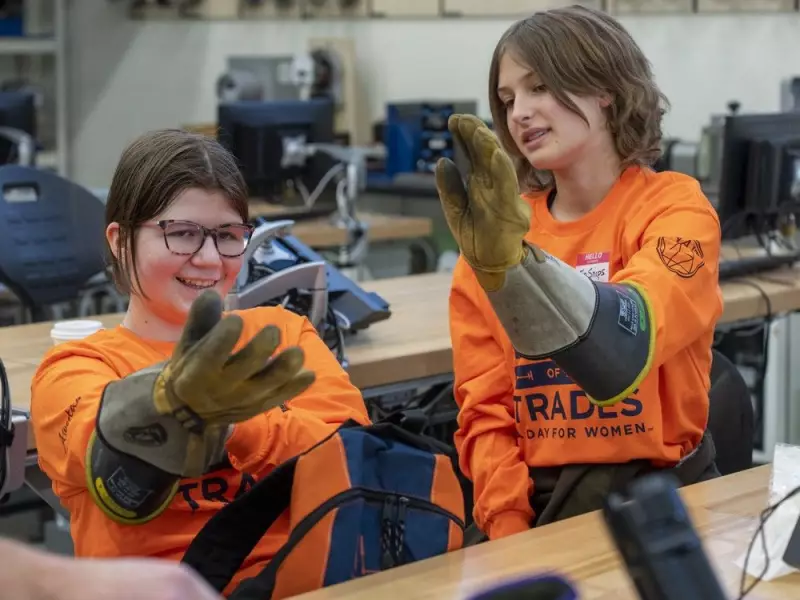
While governments grapple with policy, hands-on initiatives are working to change perceptions and build the pipeline of future tradespeople. On Thursday, November 27, 2025, about 200 students from grades 9 to 12 gathered at the Northern Alberta Institute of Technology (NAIT) in Edmonton for the Jill of all Trades workshop.
The event, which included a group from Yellowknife, empowered young women and youth to explore careers in skilled trades. Participants like 16-year-old Lexi Conner and 15-year-old Stella Jentnar from McNally High School tried on protective equipment and gained hands-on experience in fields such as electrical work, ironworking, powerline technology, plumbing, and welding.
These experiences are critical for challenging stereotypes and showcasing the rewarding, high-tech careers available in the trades. Provincial governments, including Alberta's, have begun modernizing apprenticeship systems, but experts agree these measures alone are insufficient given the scale of the challenge.
The Path Forward for a Stronger Canada
The contrast is stark: a country with a proud history of monumental projects like the Canadian Pacific Railway now risks being unable to build its own future due to a lack of skilled hands. The solution requires a concerted, national effort.
Sustained investment in education, promotion, and apprenticeship support is essential. As the Jill of all Trades workshop demonstrates, early exposure is key to attracting diverse talent. Without a significant and immediate focus on building up the trades, Canada's ambitious plans for economic renewal and nation-building may remain blueprints, never becoming reality.